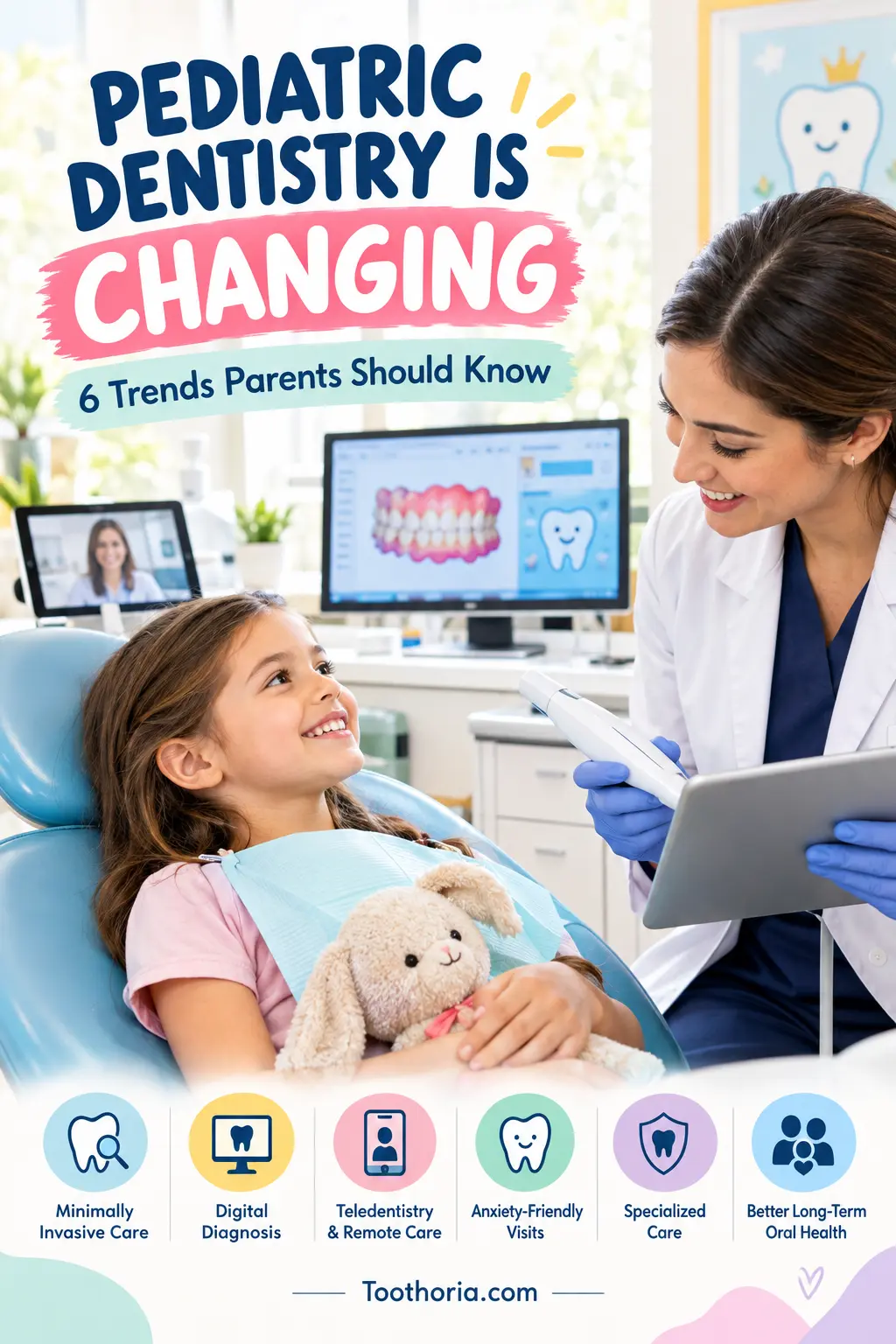
The last time I sat in a pediatric dental waiting room, I noticed something odd. There was no drill sound coming from the back. No crying. Just a kid watching cartoons on the ceiling while the hygienist worked. That visit is what got me digging into the latest trends in pediatric dentistry, because the appointment I remembered from my own childhood and the one my kid just had were barely the same experience.
If you’re a parent who hasn’t been inside a children’s dental office in a few years, you’re in for a surprise. The tools changed. The approach changed. Even the way dentists talk to kids changed. This isn’t a list copied from a dental journal. It’s what these shifts actually look like in practice, and how to use that knowledge the next time you’re picking a dentist for your child.
Why These Trends Actually Matter for Your Family
It’s easy to assume “trends” just means shinier gadgets. In pediatric dentistry, though, most of these changes solve a real problem: kids who dread the dentist grow into adults who avoid the dentist. Every shift below, from preventive dentistry to sensory-friendly care, is really aimed at breaking that cycle early.
If you want a broader look at how far the field has come, modern kids dentistry covers the shift from reactive treatment to proactive, comfort-first care in more detail.
Minimally Invasive Care Is Replacing “Drill and Fill”
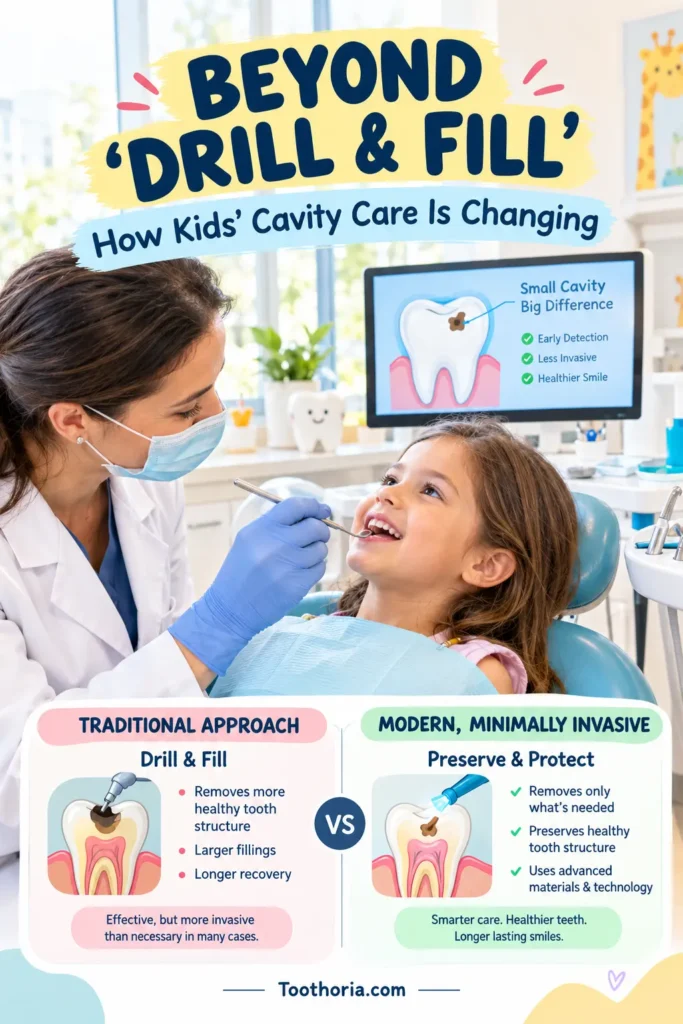
The biggest change I noticed isn’t a gadget at all. It’s philosophy. Dentists now try to save the tooth structure a child already has instead of jumping straight to a filling.
The tool doing most of that work is silver diamine fluoride (SDF), a liquid that stops a cavity from spreading without drilling or numbing. My daughter had a small spot treated with it, and the whole thing took about two minutes. No needle, no noise, no tears.
Sealants are the other half of this shift. A thin coating gets painted onto the back molars, where most cavities start, sealing off the grooves before bacteria can settle in. If you want the deeper mechanics of how fluoride actually protects enamel, fluoride in pediatric dentistry breaks it down well. And if your child is still a toddler, preventive dental care for toddlers is worth reading before that first molar even fully erupts.
Practical takeaway: ask your dentist directly whether SDF or a sealant is an option before agreeing to a filling on a baby tooth. It’s not always the right call, but it’s worth the question.
Digital Technology and AI Are Making Diagnosis More Accurate
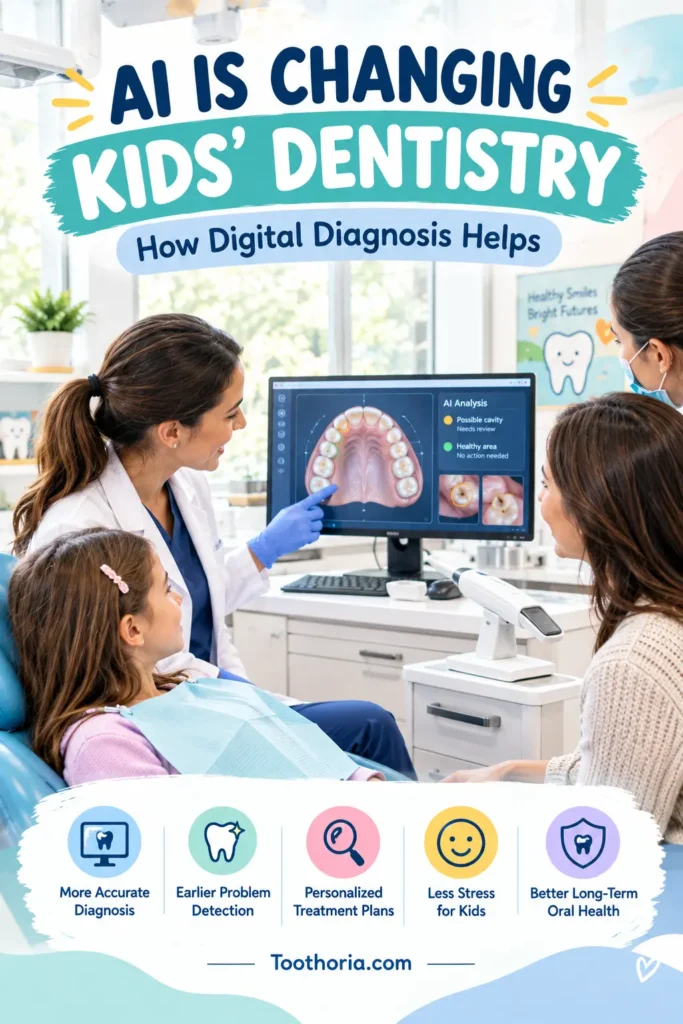
This is the part that genuinely surprised me. The dentist pulled up an X-ray on a screen, and software had already circled a spot on a molar that looked completely normal to my eye. That’s AI-assisted cavity detection, and it’s becoming standard in a lot of practices.
Digital X-rays themselves cut radiation exposure significantly compared to old film, which matters more for kids than adults since their tissue is still developing. The American Academy of Pediatric Dentistry has published guidance on radiation safety in children that’s worth a look if you want the clinical backing behind this (source: aapd.org).
Intraoral cameras are the other piece. Instead of the dentist describing what they see, your kid gets to watch it on a screen too, which weirdly makes the whole thing less scary for most children. For a wider rundown of what’s showing up in modern offices, dental technologies and intraoral scanners both go into more depth than I can here.
Teledentistry Solved a Problem I Didn’t Know I Had
I’ll be honest, I was skeptical of a video call replacing a dentist visit. Then my son chipped a tooth on a Saturday, and a fifteen-minute virtual consult told us it wasn’t urgent and could wait until Monday. That saved us an unnecessary emergency room trip.
Teledentistry works well for:
- Quick triage after a fall or minor chip
- Follow-up checks after a filling or extraction
- Simple questions about brushing habits or a loose tooth
It doesn’t replace a real exam or a cleaning, but for the “is this actually an emergency” moments, it’s genuinely useful. What is teledentistry walks through exactly how these virtual visits work if you’ve never tried one.
3D Printing Means Tools Actually Fit Kids’ Mouths
Adult dental equipment scaled down never quite fits a child’s mouth properly, and 3D printing is finally fixing that. Custom mouthguards, space maintainers, and even clear aligners are now printed to match a child’s exact bite instead of being trimmed from a generic mold.
If your kid plays contact sports, this is worth paying attention to. A properly fitted mouthguard protects teeth far better than the boil-and-bite kind from a sporting goods store. Mouth guards in pediatric dentistry goes into which type actually makes sense depending on the sport and age.
Anxiety-Free Visits Are Now Treated as Part of the Treatment
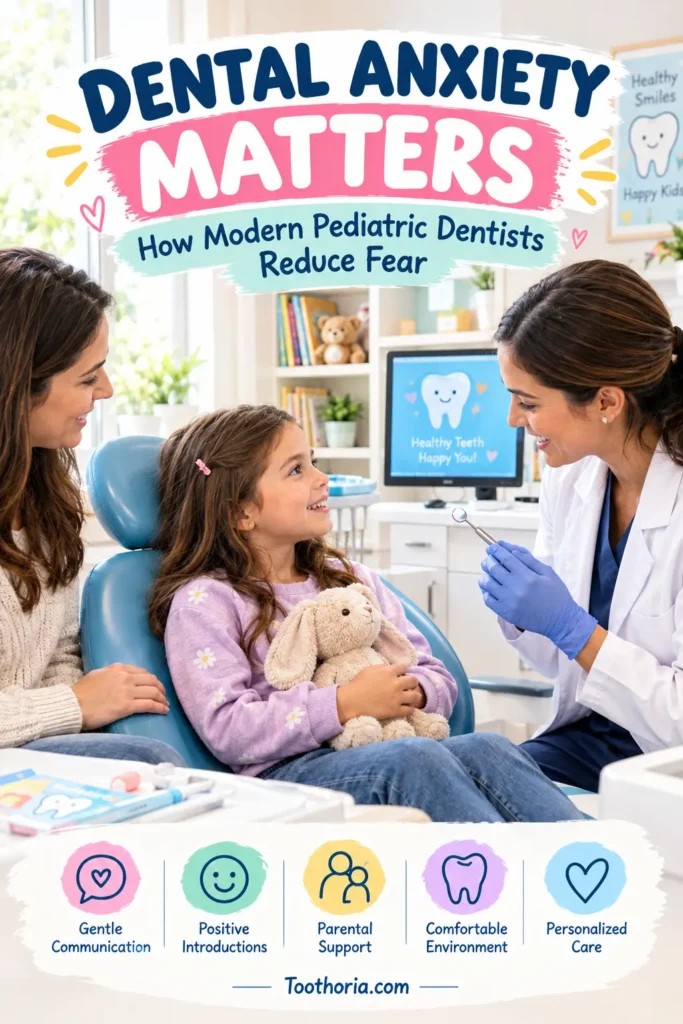
Dental anxiety isn’t just an inconvenience. It’s one of the main reasons people skip checkups well into adulthood. So pediatric offices have started treating the experience as seriously as the procedure itself.
What that looks like in practice:
- Tell-show-do, where the dentist explains a tool, shows it on their own hand, then uses it, so nothing feels sudden
- Noise-canceling headphones and dimmable lights for kids who get overstimulated easily
- Sedation options, from nitrous oxide to deeper sedation, for procedures that would otherwise be too stressful for a young child
None of this is about making the dentist “fun” for the sake of it. It’s about a child’s first few visits shaping how they feel about oral health for the next fifty years.
Early Orthodontic Screening Can Save You Money Later
This one caught me off guard. Most pediatric dentists now recommend an orthodontic evaluation by age seven, long before all the permanent teeth are even in.
The logic actually makes sense once you hear it. A child’s jaw is still soft and moving at that age, so small interventions like a space maintainer or a palatal expander can guide growth in a way that’s much harder to achieve once the jaw has finished developing. Catching a crowding issue early sometimes means shorter, simpler treatment later, or occasionally none at all.
If braces are already on your radar, cost of orthodontic braces is a solid resource for understanding what you’re actually budgeting for down the line.
Specialized Care for Kids with Special Needs
This trend doesn’t get talked about enough. More pediatric dentists are getting specific training to work with children who have autism, sensory processing differences, or complex medical needs, things like longer appointment slots, quieter rooms, and closer coordination with a child’s other care providers.
If you’re navigating this, it’s worth asking any potential dentist directly about their experience here rather than assuming a general children’s practice will automatically be a good fit. And if you’re still deciding between a general family dentist and a pediatric specialist for your child overall, kids dentist or family dentist lays out the actual differences that matter.
Whole-Child Health: Nutrition, Sleep, and Breathing
The mouth doesn’t exist in isolation, and more dentists are treating it that way. Nutrition counseling now often comes up during checkups, not just “eat less candy” but a real conversation about snacking patterns and how they affect cavity risk. Prevent cavities at home has some practical, low-effort habits that made a real difference for my own kids between visits.
Dentists are also watching for signs of mouth breathing or disrupted sleep, since both can affect jaw development and, oddly enough, daytime behavior and focus. It’s a small shift, but it means a dental checkup can flag something a pediatrician might not catch first.
Common Mistakes Parents Make With All of This
A few things I’ve seen (and made myself):
- Waiting too long for the first visit. The American Academy of Pediatrics recommends a first dental visit by age one, which sounds early until you realize how fast baby teeth can decay (source: healthychildren.org).
- Assuming baby teeth “don’t matter” since they’ll fall out anyway. They hold space for permanent teeth and affect speech and chewing in the meantime.
- Skipping the sealant conversation because it sounds optional. It’s usually quick, painless, and cheaper than treating a cavity later.
- Not asking about sedation options out of assumption they’re only for major procedures. Sometimes a mild option makes a routine cleaning far less stressful for an anxious child.
How to Actually Use This Information
- Before your next appointment, ask directly whether the practice uses digital X-rays, AI-assisted diagnostics, or SDF for early decay.
- If your child is anxious, ask about behavior management techniques and sensory accommodations before the day of the visit, not during it.
- Schedule an orthodontic screening by age seven even if teeth look straight.
- Use teledentistry for the “should I be worried” moments instead of defaulting straight to an emergency visit.
- Reinforce oral hygiene habits at home between visits. Small daily habits do more than any single office visit.
FAQs
What is the newest technology in pediatric dentistry? AI-assisted cavity detection and 3D-printed custom appliances are among the newest additions, alongside wider use of digital imaging and teledentistry.
Is silver diamine fluoride safe for kids? Yes, it’s a widely used, non-invasive way to stop early decay. The main downside is cosmetic: treated spots can darken slightly.
At what age should my child see an orthodontist? Most guidelines suggest an initial evaluation by age seven, even without visible crowding.
Does teledentistry replace regular checkups? No. It’s useful for triage and follow-ups, not for cleanings or hands-on exams.
How do I know if a dentist is keeping up with current trends? Ask directly about digital X-rays, minimally invasive options like SDF, and their approach to dental anxiety. Their answers usually tell you everything you need to know.
Final Thoughts
None of these changes are about chasing the newest gadget for its own sake. Every shift in pediatric dental care, from AI diagnostics to anxiety-free visits, is aimed at the same outcome: kids who don’t dread going to the dentist, and parents who can actually trust what’s happening in that chair. The next time you’re booking an appointment, use this as a checklist rather than background reading. It’s a fast way to tell whether a practice is actually keeping up, or just using the same approach from twenty years ago with a nicer waiting room.