
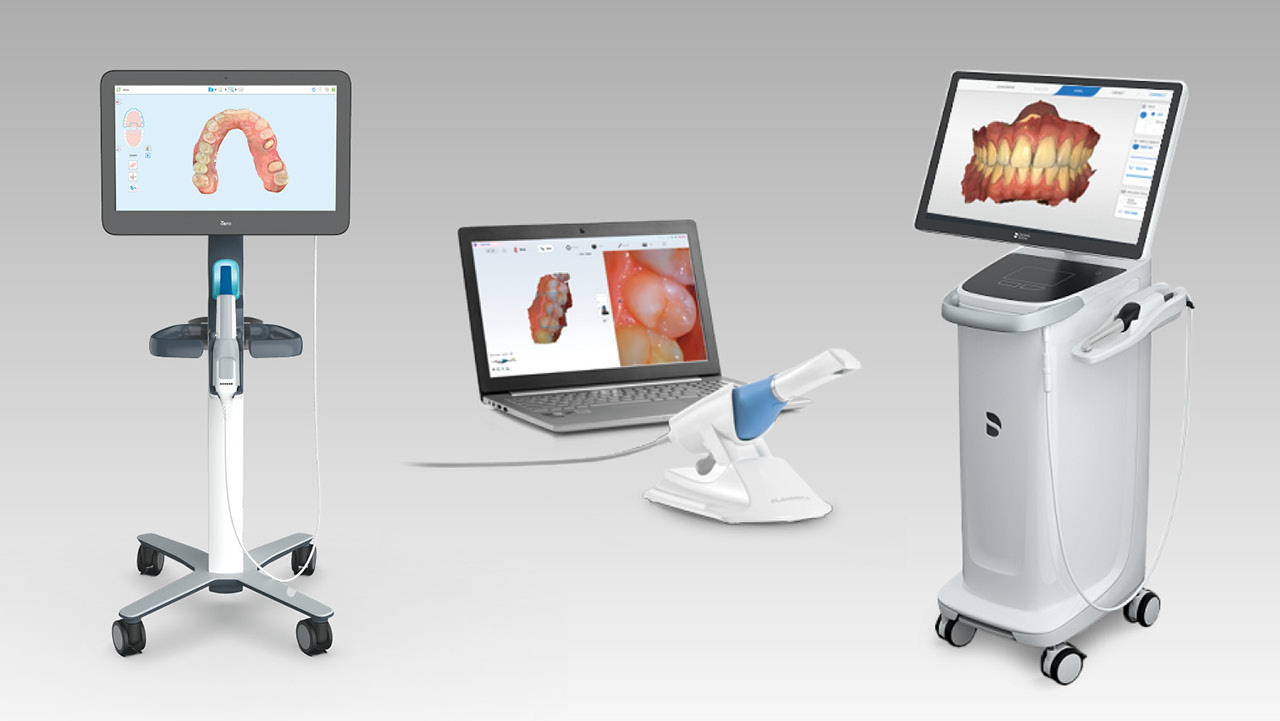
If you have ever visited a dentist and noticed them using a small handheld wand instead of that messy putty-like material in your mouth, you have already seen an intraoral scanner in action. These devices are reshaping modern dentistry across the United States, making appointments faster, cleaner, and far more comfortable for patients.
Intraoral scanners in dentistry are no longer optional for competitive practices. In 2026, they are quickly becoming the standard of care. Whether you run a solo practice or a multi-location clinic, understanding this technology can help you make smarter investment decisions and deliver better patient outcomes.
This guide covers everything from types of intraoral scanners and the top 10 intraoral scanners to pricing and real clinical value.
What Are Intraoral Scanners?
Intraoral scanners are handheld digital devices that capture a precise 3D model of a patient’s teeth and gums in real time. Instead of using traditional impression materials, the dentist moves a small wand around the patient’s mouth while a connected computer builds a detailed digital model instantly.
These digital models are used for crowns, bridges, implants, orthodontic planning, and Invisalign treatment. The scan takes two to five minutes, involves no discomfort, and eliminates the mess and inaccuracy of old-school impressions.
How Do Intraoral Scanners Work?
The scanner tip emits structured light or a laser onto the tooth surface. As it captures thousands of images per second, the software stitches them into a full 3D model on screen. Patients can actually watch their teeth appear on the monitor in real time, which also helps with patient education and case acceptance.
The accuracy of intraoral scanners today is exceptional. Research on the trueness and precision of intraoral scanners confirms that modern devices are clinically reliable for single-tooth and full-arch cases alike.
Types of Intraoral Scanners
Understanding the types of intraoral scanners helps you choose the right device for your practice needs.
Structured light scanners are the most common type. They project a light pattern onto teeth and calculate surface shape from how that light bends. Most top brands use this method.
Laser-based scanners use a focused laser to measure depth and distance. They offer very high accuracy and are preferred in research and specialist settings.
Confocal microscopy scanners capture multiple focal layers simultaneously for extremely detailed scans. These are used in high-precision prosthodontics and implant work.
Video-based scanners record continuous footage as the clinician moves the wand, making them fast and efficient for busy practices.
Top 10 Intraoral Scanners in 2026
Here are the top 10 intraoral scanners leading the US market in 2026 based on accuracy, workflow integration, and clinical feedback.
1. iTero Element 5D Plus by Align Technology remains the gold standard for Invisalign practices. Its NIRI cavity detection feature adds real diagnostic value beyond impressions.
2. Dentsply Sirona Primescan AC is the fastest scanner on the market with AI-assisted quality control built in. Ideal for high-volume crown and bridge work.
3. 3Shape TRIOS 5 is wireless, color-accurate, and integrates with virtually every lab software. A top pick for cosmetic and restorative practices.
4. Medit i700 delivers premium accuracy at a more accessible price point. It is open architecture, meaning it connects to any lab or software without restrictions.
5. Planmeca Emerald S is compact and lightweight with a small tip, making it excellent for pediatric dentistry and patients with limited mouth opening.
6. Carestream CS 3800 is a reliable workhorse for general practices already using Carestream digital workflows.
7. Shining3D Aoralscan 3 is the best value option for practices seeking the cheapest intraoral scanner without sacrificing clinical performance.
8. Dental Wings DWIO is favored in prosthodontics for its open-format data output and compatibility with major milling systems.
9. Condor Scan is gaining popularity in US clinics looking for mid-range performance at a lower entry cost.
10. Kulzer cara Scan 4.0 rounds out the list with solid resolution and smooth integration into the Kulzer digital lab workflow.
Intraoral Scanner Price: What to Expect in the US
Intraoral scanner price varies significantly based on brand, features, and bundled software.
Entry-level scanners start around $10,000 to $15,000. Mid-range options like Medit i700 or Carestream fall between $20,000 and $30,000. Premium devices like the iTero 5D Plus or Primescan range from $35,000 to $50,000 or above.
Many manufacturers offer monthly subscription plans or bundled financing, which makes adoption easier for smaller practices. For affordable intraoral scanners for small to mid-size dental clinics, the Medit i700 and Shining3D Aoralscan 3 are the most recommended starting points in 2026.
Invisalign Accepted Intraoral Scanners 2026
US orthodontists offering Invisalign need Align Technology-approved scanners. The confirmed compatible list includes the iTero Element series, 3Shape TRIOS, Medit i700, Primescan, Planmeca Emerald, and Carestream CS 3800. Always verify the latest list directly on the Align Technology website, as it updates regularly.
LEARN ABOUT DENTAL TECHNOLOGIES
Frequently Asked Questions
Q: What is the best intraoral scanner for a small US dental practice in 2026?
The Medit i700 is the most recommended option for small practices. It combines clinical accuracy with open software compatibility and a reasonable price point compared to premium brands.
Q: What is the cheapest intraoral scanner available?
The Shining3D Aoralscan 3 is currently one of the most affordable options without a significant drop in accuracy. It suits budget-conscious practices entering digital dentistry for the first time.
Q: How accurate are intraoral scanners?
Very accurate. Peer-reviewed research confirms that modern intraoral scanners meet or exceed the clinical accuracy of traditional impressions for most procedures, including crowns, bridges, and orthodontic planning.
Q: Can intraoral scanners be used for Invisalign?
Yes. Several intraoral scanners are Invisalign accepted, including iTero, TRIOS 5, Medit i700, and Primescan. Scans are sent digitally to Align Technology to fabricate aligners.
Q: Are intraoral scanners worth the investment?
For most US practices, yes. They reduce lab remakes, improve patient experience, speed up workflows, and increase case acceptance when patients can see their teeth on screen.
Q: What are the main types of intraoral scanners?
The four main types are structured light, laser-based, confocal microscopy, and video-based scanners. Most commercial devices sold in the US use structured light technology.
Conclusion
Intraoral scanners have moved from a premium upgrade to a practical necessity for US dental practices in 2026. They improve accuracy, eliminate patient discomfort, and streamline digital workflows from scan to final restoration.
Whether you are comparing the top 10 intraoral scanners, exploring intraoral scanner price options, or trying to understand which types of intraoral scanners fit your specialty, the core message is the same: going digital pays off. Start with a device that fits your budget and patient volume, ensure it integrates with your lab and software, and your practice will see the benefits quickly.