
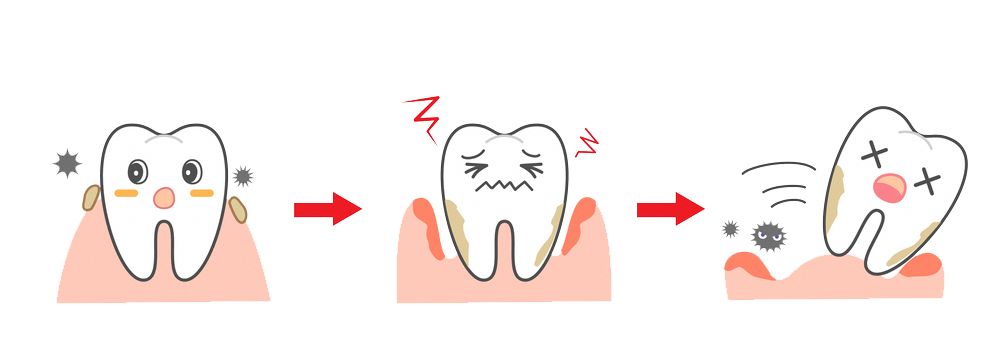
You notice something feels off when you bite into your food. Your tooth moves slightly. You press it with your tongue and it shifts. That moment of realizing a permanent tooth is loose is one of the most unsettling feelings for any adult.
The truth is, the stages of a loose tooth in adults do not happen overnight. There is a clear progression to how a tooth becomes loose and moves through each stage. Every stage of a loose tooth in adults carries its own signs, risks, and treatment options. The earlier you identify which stage you are in, the better your chances of saving the tooth.
This guide walks you through every stage of a loose tooth in adults, what is happening inside your gum and bone at each point, and exactly what you should do before things get worse.
What Happens Inside Your Mouth When a Tooth Gets Loose?
Before diving into the stages of a loose tooth in adults, it helps to understand the structure holding your teeth in place.
Every tooth sits in a socket inside your jawbone. Around the root is a network of tiny fibers called the periodontal ligament. This ligament connects the tooth to the bone like a suspension system. It absorbs pressure when you chew and keeps the tooth stable.
When something damages the gum, bone, or ligament, the tooth begins to lose its anchor. This is what causes teeth to be loose in adults. The damage can come from gum disease, injury, grinding, or bone loss. As the damage builds, the tooth moves through recognizable stages.
Stage 1: Barely Noticeable Movement
This is the earliest stage of a loose tooth in adults. The movement is so small that most people miss it completely. The tooth shifts less than 1 millimeter in any direction.
What You Might Feel
At this stage, you probably will not feel the tooth moving at all. But you may notice:
- Gums that bleed when you brush or floss
- Slight tenderness around one tooth
- Gums that look a little redder than usual
- Mild bad breath that does not go away
Most adults at this stage assume the bleeding is from brushing too hard. They ignore it. This is the biggest mistake you can make when it comes to the stages of a loose tooth in adults.
What Is Happening Inside
The periodontal ligament is under stress. The gum tissue is inflamed. In many cases, early gum disease called gingivitis is present. The bone has not yet been affected significantly, which is why this stage is the most treatable.
What You Should Do
This is the best time to act. A professional dental cleaning can remove the plaque and tartar causing the inflammation. With improved brushing and flossing habits at home, many teeth at this stage fully stabilize.
Home steps that help at the earliest stages of a loose tooth in adults:
- Brush twice daily with a soft bristle toothbrush
- Floss every single day
- Use a salt water rinse to reduce gum inflammation
- Book a dental cleaning as soon as possible
Stage 2: Noticeable Wobbling
At this stage of the stages of a loose tooth in adults, the tooth is loose but still attached and you can now feel the movement clearly. The tooth moves between 1 and 2 millimeters when you press it. This is what most people describe as a wobbly permanent tooth.
What You Might Feel
- You can feel the tooth shift with your tongue
- Mild to moderate pain when chewing
- The gum around the tooth may look like it is pulling away
- Sensitivity to hot and cold foods
- The tooth may look slightly longer than before because the gum is receding
What Is Happening Inside
Gum disease has progressed from gingivitis to early periodontitis. The infection has started attacking the bone that supports the tooth. The periodontal ligament is partially damaged. Pockets are forming between the gum and tooth where bacteria collect and multiply.
This is a critical turning point in the stages of a loose tooth in adults. The bone loss at this stage can sometimes be reversed or stabilized with the right treatment. But without treatment, it will keep getting worse.
What You Should Do
You need professional dental care now. Home remedies alone will not be enough at this stage.
Professional treatments at Stage 2:
- Scaling and root planing: A deep cleaning procedure that goes below the gum line to remove bacteria and tartar from the roots
- Antibiotics: Sometimes prescribed to fight the infection in the gum pockets
- Improved home care plan: Your dentist will give you specific instructions
After deep cleaning, many teeth at Stage 2 firm back up over the following weeks. The key is consistency with home care after treatment.
Stage 3: Significant Mobility
This is where the stages of a loose tooth in adults become truly urgent. The tooth is now moving more than 2 millimeters. You can move it side to side and sometimes slightly up and down. This is advanced periodontitis territory.
What You Might Feel
- Obvious movement that you can see as well as feel
- Pain or pressure even when not chewing
- The gum has visibly receded and the root may be partially exposed
- Pus or discharge around the tooth
- A bad taste in your mouth that does not clear up
- The tooth may look tilted or shifted from its original position
What Is Happening Inside
Significant bone loss has occurred around the tooth. The periodontal ligament is severely damaged. The tooth has very little structural support remaining. Teeth shifting may also begin at this stage as neighboring teeth try to compensate for the instability.
This stage answers the question many people have about how long does a loose tooth take to fall out in adults. At Stage 3, without treatment, the tooth can be lost within weeks to months.
What You Should Do
You need to see a dentist as an emergency appointment. Do not wait for your next scheduled visit.
Treatments at Stage 3:
- Splinting: The loose tooth is bonded to neighboring stable teeth using a thin wire or composite material. This holds the tooth in place while healing happens around it
- Bone grafting: Synthetic or donor bone material is placed where bone has been lost. This can rebuild the foundation around the tooth
- Surgical gum treatment: In some cases, flap surgery is needed to clean the deep pockets and reshape the bone
- Extraction assessment: Your dentist will be honest about whether the tooth can realistically be saved
Many patients at this stage ask how to fix loose teeth in adults and whether it is too late. Understanding the stages of a loose tooth in adults helps you realize that the answer depends on how much bone remains. Your dentist will take X-rays to measure the bone levels and give you a realistic picture.
Stage 4: The Tooth Is About to Fall Out
At Stage 4, the tooth is hanging on by very little. It may be moving in all directions including vertically. The gum tissue around it may be swollen and painful. This is end-stage tooth mobility.
What You Might Feel
- The tooth moves easily in every direction
- Severe pain or, in some cases, numbness if the nerve is badly affected
- Visible gap between tooth and gum
- The tooth may feel like it could come out at any moment
- Difficulty eating anything on that side of the mouth
What Is Happening Inside
The bone around the tooth has been largely destroyed. The periodontal ligament has failed. The tooth is essentially sitting in soft tissue only. The infection at this stage may be spreading to surrounding teeth and bone.
What You Should Do
At this stage, saving the tooth is often not possible. Your dentist will assess the situation, but extraction is frequently the recommended path. This brings up the question many people ask: my tooth is loose, can I pull it out myself?
The answer is no. Even at this late stage, you should not attempt to pull the tooth yourself. Here is why:
- Broken roots can be left behind causing infection
- You cannot control bleeding the way a dentist can
- You can damage the bone and neighboring teeth
- You have no way to clean and close the wound properly
Let your dentist handle the extraction safely. Once the tooth is removed, discuss replacement options immediately to prevent teeth shifting into the gap.
What Happens After a Tooth Is Lost?
Losing a tooth is not the end of the story. What happens next matters just as much.
When a tooth is gone, the bone in that area begins to shrink because it no longer receives stimulation from chewing. This is one of the most serious consequences of reaching the final stages of a loose tooth in adults. Neighboring teeth begin drifting toward the gap. This teeth shifting can change your bite, make cleaning harder, and put stress on remaining teeth.
Replacement options to discuss with your dentist:
- Dental implant: The closest thing to a natural tooth. A titanium post is placed in the bone and a crown is attached on top. Prevents bone loss.
- Dental bridge: A false tooth held in place by crowns on neighboring teeth. Does not prevent bone loss but restores function and appearance.
- Partial denture: A removable option that fills the gap. More affordable but less permanent.
The sooner you replace a missing tooth, the less bone loss and shifting occurs.
How Long Does a Loose Tooth Take to Heal?
The healing time depends entirely on the stage and the treatment used.
- Stage 1 treated with cleaning: Tooth can stabilize within 2 to 4 weeks
- Stage 2 treated with deep cleaning: Stabilization can take 4 to 8 weeks
- Stage 3 treated with splinting and surgery: Recovery takes 2 to 6 months
- Stage 4 extraction and implant: Full implant healing can take 3 to 6 months
Consistency with home care during healing makes a significant difference in how quickly things improve.
Can You Speed Up Healing at Home?

Yes. While you cannot replace professional treatment, these home steps support faster healing at every stage.
To support healing after dental treatment:
- Rinse with warm salt water three times a day
- Avoid smoking, as it dramatically slows gum healing
- Eat soft foods that do not stress the loose tooth
- Take any prescribed antibiotics for the full course
- Use a night guard if your dentist recommends one for grinding
- Keep every follow-up appointment your dentist schedules
Knowing how to tighten a loose tooth at home means supporting the professional treatment, not replacing it.
Signs You Are Moving to the Next Stage
Many people want to know how to recognize when their situation is getting worse. Watch for these warning signs that a loose tooth is progressing:
- The movement is increasing noticeably
- Pain is getting worse rather than better
- The gum is visibly pulling back further
- A new tooth in the same area is starting to feel loose
- You develop swelling in your jaw or face
- You have a fever alongside the tooth symptoms
Any of these signs means you need to contact your dentist immediately rather than waiting.
Who Is Most at Risk for Advanced Stages of a Loose Tooth in Adults?
Certain people are more likely to progress through the stages faster. Understanding the risk factors helps you stay ahead of the problem.
Higher risk groups include:
- People with diabetes, as it impairs gum healing
- Smokers, as tobacco restricts blood flow to the gums
- People with osteoporosis, as bone density is already reduced
- Adults who have not had a dental cleaning in over a year
- People who grind their teeth at night without a guard
- Pregnant women due to hormonal changes affecting gum tissue
- Anyone with a family history of gum disease
If you fall into any of these groups, you should be extra vigilant about checking for early signs of looseness and seeing your dentist regularly.
Conclusion
The stages of a loose tooth in adults tell a clear story. Stage 1 is very treatable. Stage 2 responds well to deep cleaning. Stage 3 requires more aggressive intervention. Stage 4 often means the tooth cannot be saved. The thread connecting all four stages is time. The earlier you act, the more options you have.
Loose teeth in adults are not something to manage on your own with home remedies alone. Understanding what causes teeth to be loose in adults, recognizing which stage you are in, and getting professional care quickly are the three steps that make the difference between keeping and losing a tooth. Do not wait until Stage 4 to take action. One dental visit at Stage 1 could save you years of treatment and thousands in costs down the road.
FAQs
Q1: Can a loose tooth go back to being tight?
Yes. If caught at the early stages of a loose tooth in adults, proper dental cleaning and home care can help the tooth firm back up. Early treatment gives the best results.
Q2: Is a loose tooth a dental emergency?
It depends on the stage. If the tooth is visibly moving, painful, or was knocked loose by injury, yes, see a dentist the same day.
Q3: What is the fastest way to stabilize a loose tooth?
See a dentist for deep cleaning or splinting. At home, rinse with salt water, avoid hard foods, and stop touching or wiggling the tooth.