
When you lose a single tooth, the financial reality of permanent replacement options like dental bridges or implants can feel overwhelming. A removable bridge for one tooth, technically called a removable partial denture, offers an affordable alternative that restores your smile without the significant investment or invasive procedures required for fixed restorations. These appliances have evolved considerably in recent years, with modern materials providing better comfort and aesthetics than previous generations.
Understanding whether a removable option suits your specific situation requires examining the different types available, realistic cost expectations, daily care requirements, and how they compare to permanent alternatives. This guide provides the practical information you need to make an informed decision about temporary tooth replacement solutions.
What Is a Removable Bridge for One Tooth
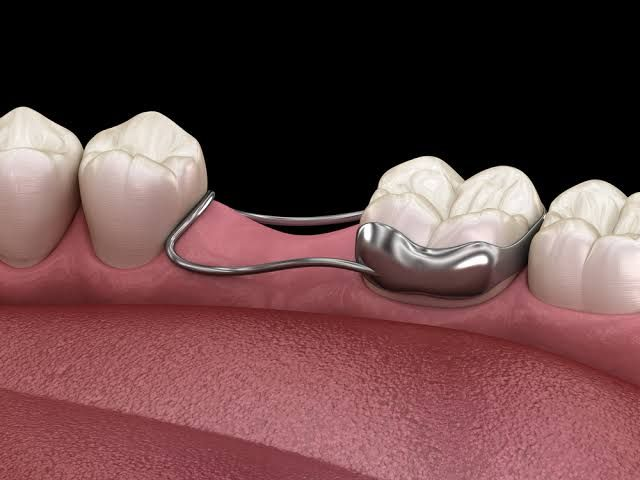
A removable bridge for one tooth is a custom-made dental appliance designed to replace a single missing tooth while clipping onto or resting against your remaining natural teeth. Unlike traditional fixed bridges that require permanently cementing crowns to adjacent teeth, these appliances can be taken out for cleaning and sleeping, giving you control over when you wear them.
The device consists of an artificial tooth (called a pontic) attached to a base material that matches your gum color, along with clasps or other retention mechanisms that secure it to neighboring teeth. Modern removable partials use various materials, including acrylic, flexible thermoplastic resins, or metal frameworks, depending on the tooth location and your aesthetic preferences.
These appliances serve multiple purposes beyond simple aesthetics. They help maintain proper spacing by preventing adjacent teeth from drifting into the gap, support your facial muscles to prevent a sunken appearance, and restore basic chewing function. However, they work best as interim solutions rather than permanent replacements for most patients.
Types of Single-Tooth Removable Bridges
Acrylic Flipper Denture
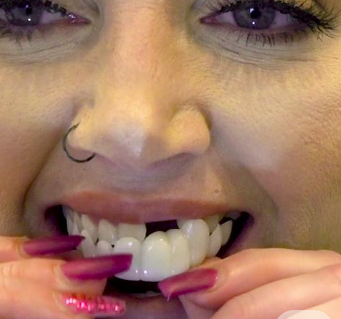
The most economical option, an acrylic flipper, costs $300 to $500 and uses a lightweight pink acrylic base with an attached tooth. Dentists often recommend flippers as temporary solutions immediately after tooth extraction while you heal before permanent restoration. The thin acrylic design makes them less noticeable but also more fragile than other options.
Flippers work well for front teeth where aesthetics matter most and chewing forces remain minimal. They’re called “flippers” because they can flip in and out of your mouth easily. Most patients receive them within a few days of tooth loss, making them ideal for maintaining your appearance during the healing period before implants or fixed bridges.
Flexible Partial Denture
Flexible partials made from thermoplastic materials like Valplast or Flexite cost $700 to $2,000 for a single tooth replacement. These newer materials offer superior comfort compared to traditional acrylic, with thin, flexible clasps that blend with your gum tissue color rather than using visible metal wires.
The flexibility allows these partials to move slightly with your mouth’s natural motion, creating a more comfortable wearing experience. They’re particularly popular for replacing front teeth where metal clasps would show when you smile. The material resists staining better than acrylic and typically lasts 3-5 years with proper care.
Cast Metal Partial Denture
The most durable removable option, cast metal partials, ranges from $1,200 to $3,000, even for single tooth replacement. These feature a thin metal framework (usually chrome-cobalt alloy) that provides exceptional strength while remaining relatively lightweight. The metal base allows for a more precise fit and better distribution of chewing forces.
Cast metal partials work particularly well for replacing molars where strength matters more than the aesthetics of visible metal clasps. With proper maintenance, these appliances can last 5-10 years, making them cost-effective despite higher upfront investment. Dentists often recommend them for patients who need long-term temporary solutions while saving for implants.
Nesbit Partial
A Nesbit partial represents the smallest removable option, designed specifically for replacing one or two teeth. Costing $400 to $800, these tiny appliances use minimal material, just enough base to support the replacement tooth and simple wire clasps for retention. Their compact size makes them less obtrusive than larger partials.
Nesbits work best when replacing teeth with strong, healthy neighbors on both sides that can provide stable retention points. Their small size means less coverage of your palate or gums, which many patients find more comfortable for speech and taste sensation.
Realistic Cost Expectations
Understanding the complete financial picture helps you budget appropriately. Initial fabrication costs represent just the beginning of ownership expenses. Most removable bridges require professional adjustments within the first few weeks as your mouth adapts, typically costing $50 to $150 per visit.
Annual maintenance, including relines to maintain proper fit, costs $150 to $400. Relines become necessary because your gum tissue and bone gradually change shape over time, causing the appliance to fit loosely. Without regular relines, you’ll experience movement during eating and speaking, along with an increased risk of damage to the partial or your remaining teeth.
Replacement becomes necessary every 3-8 years depending on material quality and care. When calculating true cost over time, a $500 flipper replaced every 3 years costs approximately $167 annually, while a $2,000 flexible partial lasting 5 years costs $400 annually. This long-term perspective helps compare removable options against permanent alternatives like bridges or implants.
Dental insurance typically covers 50-80% of removable partial costs after deductibles, making them more accessible than fixed bridges or implants. Unlike bridges and implants, removable partials rarely face coverage limitations from missing tooth clauses, as they’re considered basic prosthetics rather than major restorative work.
Daily Life with a Removable Bridge
Wearing Schedule
Most dentists recommend removing your partial denture during sleep to give your gum tissue time to recover from daily pressure. This nightly removal also allows thorough cleaning and reduces bacterial accumulation that could lead to gum disease or bad breath. Many patients report initial discomfort that gradually improves as they adapt to the appliance over 2-4 weeks.
You’ll need to remove the partial for cleaning after meals, which some patients find socially awkward in public settings. Planning ahead by carrying a discrete storage case helps manage these situations. Most people develop routines that make removal and insertion feel natural after the initial adjustment period.
Eating Considerations
Chewing capacity with removable partials typically reaches 25-35% of natural tooth function, significantly less than fixed bridges (70-85%) or implants (90-95%). Sticky foods like caramel or chewing gum can dislodge the appliance or stick to it uncomfortably. Hard foods require careful management, as excessive force can crack acrylic materials or bend metal clasps.
Many patients develop strategies for eating with partials, such as cutting food into smaller pieces, chewing on the side opposite the replacement tooth, or temporarily removing the appliance for particularly challenging foods. These adaptations become second nature over time but represent compromises compared to permanent restorations.
Speech Adjustment
The bulk of the partial, particularly designs that cover the palate area, affects speech patterns initially. Common challenges include difficulty with “s” and “t” sounds or feeling like you’re speaking with something in your mouth, because you are. Most patients adapt within 2-3 weeks through practice, though some retain subtle speech differences permanently.
Reading aloud when alone helps accelerate speech adaptation. If speech problems persist beyond a month, your dentist can often adjust the appliance to minimize interference while maintaining adequate retention and stability.
Care Requirements
Proper maintenance extends appliance lifespan and protects your oral health. Remove and rinse the partial after eating to prevent food particle accumulation. Use a soft-bristled brush with denture cleaner (not regular toothpaste, which scratches the surface) to clean all surfaces daily.
Store the partial in water or denture solution when not wearing it to prevent warping, as most materials dry out and become brittle when exposed to air. Never use hot water, which can distort the shape permanently. Handle the appliance over a folded towel or sink filled with water, as dropping it on hard surfaces often causes irreparable damage.
When Removable Bridges Make Sense
Temporary Solutions
Removable partials excel as interim options while saving for permanent restorations. If you need immediate tooth replacement after extraction but can’t afford an implant’s $3,000-$6,000 cost right away, a $500 flipper maintains your appearance and function during the 12-24 months you’re accumulating funds for definitive treatment.
They also serve well during implant healing periods. After implant surgery, you’ll wait 3-6 months for osseointegration before receiving your permanent crown. A removable partial bridges this gap, preventing you from going toothless during healing while avoiding pressure on the surgical site.
Medical Contraindications
Some patients can’t undergo surgery required for implants due to medical conditions, medication use, or inadequate bone structure. Others have adjacent teeth too weak or damaged to support fixed bridges. Removable partials provide tooth replacement when permanent options aren’t medically feasible.
Patients taking bisphonate medications for osteoporosis face jaw bone complications from dental surgery, making removable options safer. Similarly, uncontrolled diabetes increases surgical complications, often leading dentists to recommend removable appliances until blood sugar stabilizes.
Budget Constraints
For patients without dental insurance or those who’ve exhausted annual maximum benefits, removable partials offer the only financially accessible tooth replacement. The $300-$3,000 cost range fits more budgets than the $3,000-$15,000 required for fixed bridges or $3,000-$6,000 for single implants.
Some patients use removable partials indefinitely by choice, finding them adequate for their needs despite limitations. Others prioritize other financial obligations while accepting temporary tooth replacement, planning to upgrade when circumstances allow.
Comparing to Permanent Alternatives
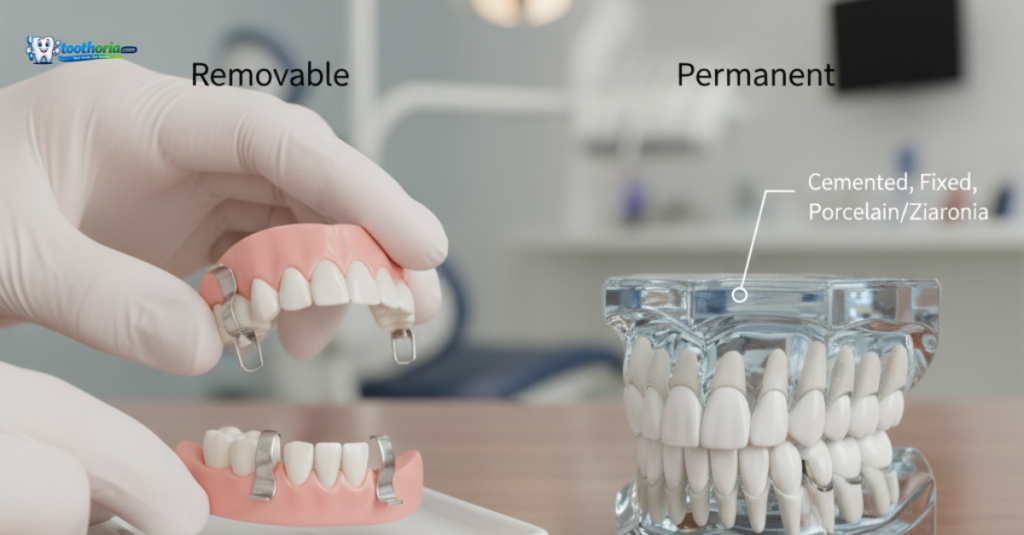
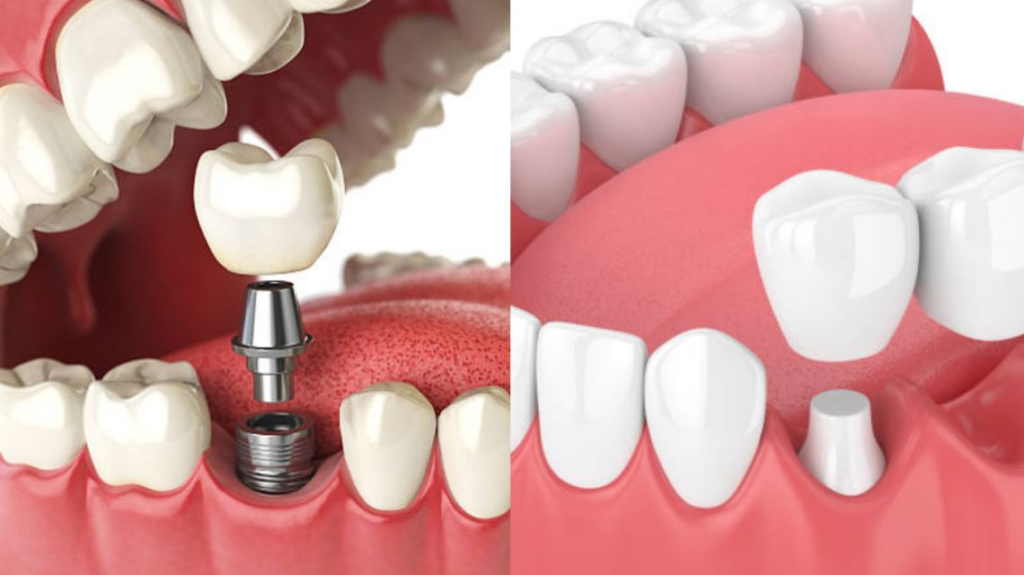
Fixed dental bridges offer superior stability, comfort, and function but cost $3,000-$12,000 for a three-unit structure and require permanently altering adjacent healthy teeth. They last 10-15 years versus 3-8 years for removable options but involve irreversible tooth preparation that some patients prefer to avoid.
Dental implants provide the most natural tooth replacement, preserving adjacent teeth and preventing bone loss, but require surgical procedures, 3-6 month healing periods, and investments of $3,000-$6,000 per tooth. Insurance coverage remains limited for implants compared to more generous benefits for removable partials.
The removable bridge for one tooth represents the most conservative, affordable, and reversible option. While sacrificing some function and convenience, it preserves your natural tooth structure, requires no surgery, and costs a fraction of permanent alternatives, making it ideal for specific situations despite its limitations.
Conclusion
A removable bridge for one tooth serves as a practical, affordable solution for single tooth replacement when permanent options remain out of reach financially or medically. Understanding the different types available, realistic cost expectations including long-term maintenance, and daily life adaptations helps you make informed decisions aligned with your circumstances.
These appliances work best as temporary solutions or for patients with specific medical or financial constraints that make permanent restoration impractical. While they require daily care, periodic adjustments, and eventual replacement, their accessibility and reversibility make them valuable tools in comprehensive dental care. Consider consulting with your dentist about which removable option best suits your specific tooth location, budget, and timeline for potentially upgrading to permanent restoration in the future.