
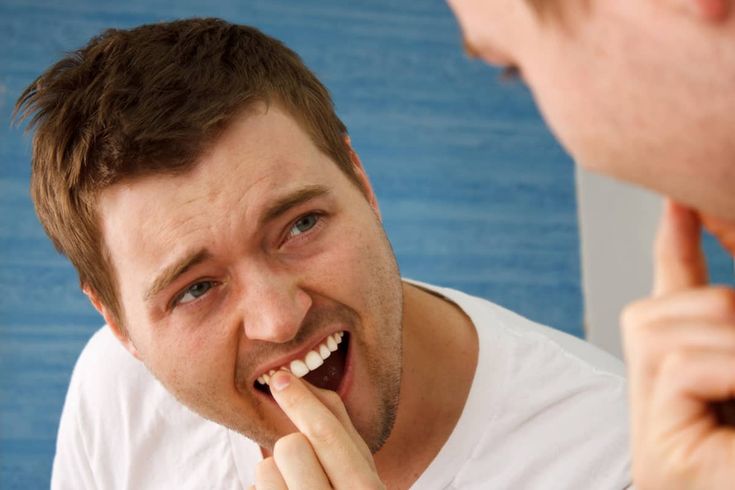
Have you ever touched your tooth and felt it move? That slight wiggle can send your heart racing. Loose teeth in adults are not like loose baby teeth. They do not just fall out and grow back. When a permanent tooth starts to move, it is a sign that something needs attention right away.
Most people ignore a wobbly tooth hoping it will settle on its own. Sometimes it does. But most of the time, the underlying cause keeps getting worse quietly. The longer you wait, the harder it becomes to save that tooth.
This guide covers everything you need to know. From what causes of loose teeth in adults, to the stages of a loose tooth, to how to fix loose teeth in adults at home and at the dentist. By the end, you will know exactly what to do.
What Does a Loose Tooth in Adults Feel Like?
A loose teeth in adults feel different from a child’s wobbly tooth. It may move slightly when you press it with your tongue or finger. You might feel pressure or mild pain when chewing. Sometimes the gum around the tooth looks red, puffy, or pulls away from the tooth.
Some people also notice:
- Bleeding gums when brushing
- Bad breath that does not go away
- A gap forming between the tooth and gum
- Sensitivity to hot or cold foods
These are early warning signs. Do not brush them off.
Is It Normal for Teeth to Wiggle a Little?
This is one of the most common questions people ask. And the answer is: a very tiny amount of movement is technically normal. Every tooth has a ligament around it that acts like a shock absorber. This allows for a microscopic level of flexibility.
But if you can see or feel your tooth moving, that is not normal. Visible movement means the supporting structures, the bone, gum, or ligament, are weakened. This needs to be checked.
So is it normal for teeth to wiggle a little? Only at an invisible level. Anything you can feel or see is a warning sign.
What Causes Teeth to Be Loose in Adults?
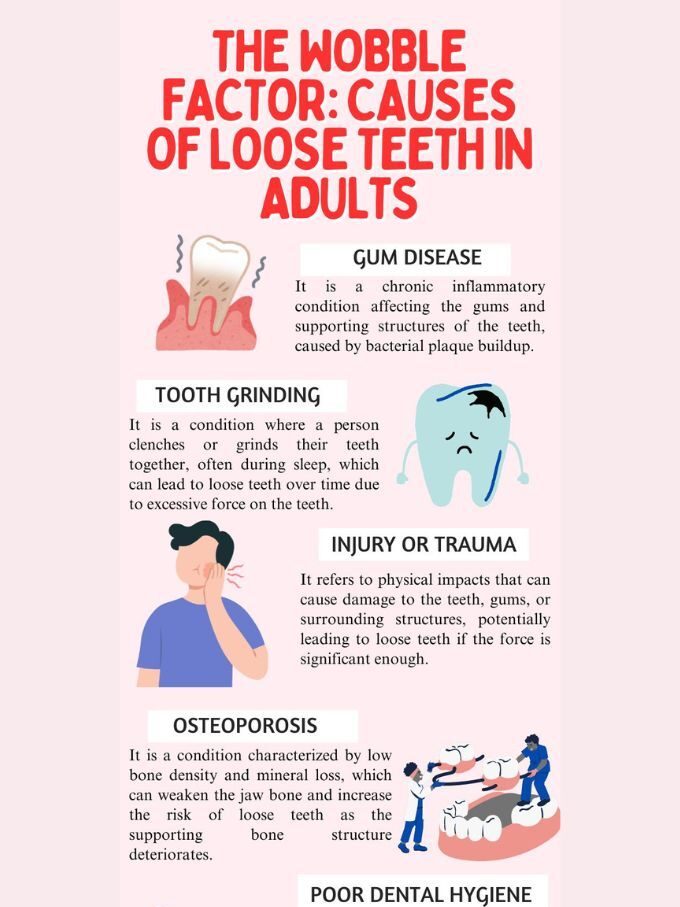
Understanding why do loose teeth in adults become helps you take the right steps. There is never just one answer. Several things can cause this problem.
Gum Disease (The Number One Cause)
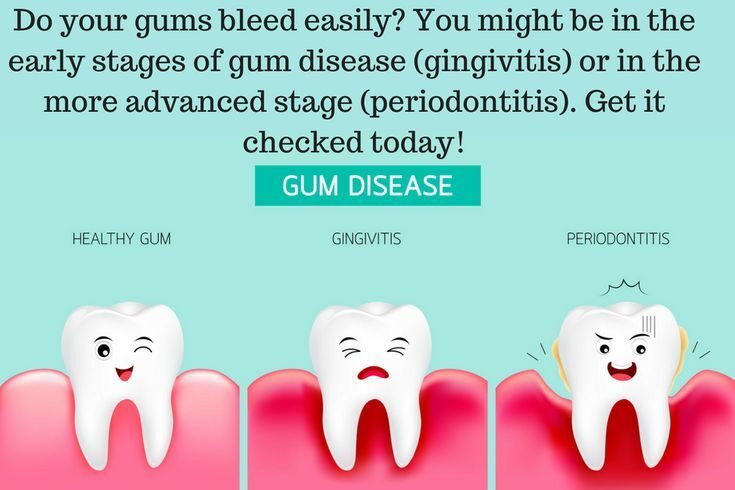
Gum disease is behind most cases of loose teeth in adults. It starts as gingivitis, which causes red and bleeding gums. If left untreated, it becomes periodontitis. This is a serious infection that destroys the bone and tissue holding your teeth.
Over time, your teeth lose their foundation and start to move. This is the most common reason adults experience teeth shifting or wobbly permanent teeth.
Teeth Grinding (Bruxism)
Many people grind their teeth at night without knowing it. This puts enormous pressure on teeth and gradually loosens them. If you wake up with jaw pain or headaches, you might be grinding.
Injury or Trauma
A hit to the mouth during sports, an accident, or even biting into something hard can loosen a tooth. The ligament around the tooth stretches or tears. Sometimes the tooth tightens back up. Sometimes it does not.
Bone Loss
As we age, bone density decreases throughout the body, including the jaw. Conditions like osteoporosis can cause causes of loose teeth in adults that are easy to overlook.
Hormonal Changes
Pregnancy changes hormone levels dramatically. These hormones can affect the bone and tissue around teeth. Many pregnant women notice their teeth feel slightly loose. This usually improves after delivery.
Poor Dental Hygiene
Skipping brushing and flossing allows plaque to build up. Over time, this leads to gum disease and bone loss, which directly causes loose teeth in adults.
Stages of a Loose Tooth in Adults
Knowing the stages of a loose tooth in adults helps you understand how serious your situation is.
Stage 1: Slight Mobility The tooth moves less than 1mm in any direction. This is the earliest stage. Treatment at this point has the best results.
Stage 2: Moderate Mobility The tooth moves between 1mm and 2mm. You can feel it clearly. The gum may be receding. Bone loss has likely started.
Stage 3: Severe Mobility The tooth moves more than 2mm or can be pushed up and down. The tooth is at serious risk of falling out. Emergency dental care is needed.
Stage 4: Natural Loss The tooth falls out or hangs by barely any tissue. At this stage, extraction is often the only option.
The earlier you act, the better your chances of fixing loose teeth in adults successfully.
How Long Does a Loose Tooth Take to Fall Out in Adults?
This depends on the cause and the stage. A tooth that became loose due to trauma might tighten back up in a few weeks if the ligament heals properly. But a tooth loosened by advanced gum disease can fall out within months if untreated.
How long does a loose tooth take to fall out in adults has no single answer. Some teeth stay wobbly for years before falling out. Others go quickly. The key variable is whether the cause is being treated or not.
If you are treating the cause, the tooth may actually firm up again. If you are doing nothing, it will continue to loosen.
My Front Tooth Is Loose: What Can I Do?
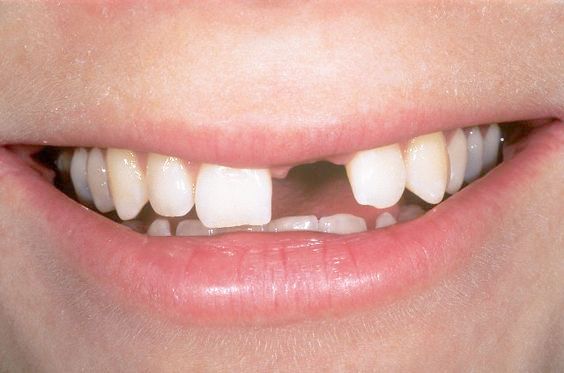
A loose front tooth is especially alarming because it is visible. My front tooth is loose, what can I do? This is a question many adults panic about.
First, do not wiggle it. Do not push it with your tongue constantly. This makes things worse.
Second, call your dentist the same day if possible. A loose front tooth is almost always considered an urgent dental issue. The dentist will take an X-ray to check bone levels and determine the cause.
Third, avoid hard or crunchy foods until you are seen. Stick to soft foods to reduce pressure on the tooth.
How to Fix Loose Teeth in Adults
There are two main paths: home remedies for mild cases, and professional dental treatments for moderate to severe cases.
How to Tighten a Loose Tooth at Home
Home care will not replace professional treatment. But for early-stage looseness, especially when caused by gum inflammation, these steps can genuinely help.
Salt Water Rinse Mix half a teaspoon of salt in a glass of warm water. Rinse for 30 seconds twice a day. Salt water reduces bacteria and inflammation in the gums. This is one of the simplest ways on how to tighten a loose tooth at home.
Oil Pulling Swish a tablespoon of coconut oil in your mouth for 10 to 15 minutes. Spit it out. This ancient practice has evidence behind it for reducing gum bacteria.
Turmeric and Black Pepper Paste Mix a small amount of turmeric with black pepper and a drop of mustard oil. Massage gently onto the gums. Turmeric has natural anti-inflammatory properties.
Hydrogen Peroxide Rinse Dilute hydrogen peroxide 50/50 with water and use it as a rinse. It kills bacteria that contribute to gum disease.
Improve Your Brushing Technique Use a soft-bristled brush. Brush gently in circular motions for two minutes, twice a day. Aggressive brushing damages the gum line.
These methods are useful alongside dental treatment. They are not substitutes for professional care.
How to Tighten a Loose Tooth Fast: Professional Options
If you need to know how to tighten a loose tooth fast, only a dentist can make that happen at a meaningful level. Here are the main treatments:
Deep Cleaning (Scaling and Root Planing) This removes tartar and bacteria from below the gum line. It is the first treatment for gum disease-related loose teeth. Many patients see their teeth firm up significantly after this procedure.
Splinting The loose tooth is bonded to the neighboring teeth using a thin wire or fiber. This holds the tooth steady while the bone and tissue heal around it. It is a very effective treatment for a tooth that is loose but still attached in adults.
Bone Grafting If bone loss is significant, a bone graft can rebuild the foundation around the tooth. This is a surgical procedure but has excellent success rates.
Bite Guard for Grinding If teeth grinding is the cause, a custom night guard prevents the damage. Over time, the tooth may tighten as the pressure is removed.
Antibiotics For active gum infections, your dentist may prescribe antibiotics alongside cleaning to bring the infection under control.
Tooth Is Loose but Still Attached: What Does That Mean?
A tooth that is loose but still attached to adults is actually a good sign. It means the tooth has not yet detached from the gum and bone completely. There is still a chance to save it.
In this state, the periodontal ligament is damaged but not completely destroyed. With prompt treatment, the tissue can heal. Splinting combined with deep cleaning gives these teeth a real chance of survival.
Do not wait until the tooth is hanging or falling out. Act while it is still attached.
My Tooth Is Loose, Can I Pull It Out?
My tooth is loose, can I pull it out? This is a question many adults ask, especially when the tooth is painful or very wobbly.
The honest answer is: no, you should not pull it out yourself in most cases. Here is why:
- You can break the tooth and leave roots behind
- You can introduce serious bacteria into the wound
- You can damage surrounding teeth and bone
- The bleeding may be hard to control at home
Only a dentist should extract a tooth. They have the tools and training to do it safely. If a tooth must come out, it should be replaced with an implant, bridge, or partial denture to prevent teeth shifting.
The only exception is if a tooth is hanging by a thin thread of tissue, causing no bleeding, and the dentist has already told you it needs to come out. Even then, use clean hands and gauze.
Teeth Shifting: The Hidden Consequence of Losing a Tooth
When you lose a tooth and do not replace it, the surrounding teeth begin shifting toward the gap. This is one of the most overlooked problems in adult dental health.
Teeth shifting changes your bite, makes cleaning harder, and can lead to more teeth becoming loose over time. It can also change the shape of your face over years.
Replacing a missing tooth quickly prevents this cascade effect. Implants are the gold standard. A dental bridge or partial denture also prevents shifting.
How to Pull Out a Tooth Safely (Dental Approach)
This section is not about pulling teeth at home. This explains how a dentist performs how to pull out a tooth so you know what to expect.
The dentist numbs the area completely with local anesthesia. You will not feel pain, only pressure. They then use an instrument called an elevator to loosen the ligament. Then forceps are used to gently rock and remove the tooth.
Healing takes a few days to two weeks depending on the size of the tooth. You will be given instructions on diet, cleaning, and what signs of infection to watch for.
Knowing this process helps reduce fear. Tooth extraction by a dentist is safe, fast, and much less painful than most people expect.
When Should You See a Dentist Immediately?
Some situations with loose teeth in adults cannot wait for a scheduled appointment. Go to a dentist the same day if:
- Your tooth is visibly moving or hanging
- You have severe pain around a loose tooth
- There is swelling in your jaw or face
- You have a fever alongside a loose tooth
- The tooth was knocked loose by an injury
- Your front tooth is loose and you cannot bite
These are dental emergencies. Waiting even a few days in these situations can mean the difference between saving and losing the tooth.
Preventing Loose Teeth in Adults
Prevention is always better than treatment. Here is how to keep your teeth firmly in place for life.
Daily habits that protect your teeth:
- Brush twice a day with fluoride toothpaste
- Floss once a day to remove plaque between teeth
- Use an antibacterial mouthwash
- Wear a mouthguard during contact sports
- Wear a night guard if you grind your teeth
Lifestyle choices that matter:
- Quit smoking (smoking is a major risk factor for gum disease)
- Eat a diet rich in calcium and vitamin D
- Stay hydrated to maintain saliva production
- Manage diabetes carefully, as it increases gum disease risk
Regular dental visits:
See your dentist every six months for a check and clean. Many cases of loose teeth in adults are caught early this way, before serious damage is done.
FAQs Loose Teeth in Adults
Will a loose tooth tighten back up?
Yes, it can, but only if the cause is treated early. If gum disease or inflammation is caught in the early stage, proper cleaning and care can help the tooth firm back up. Teeth loosened by injury sometimes tighten on their own within a few weeks. However, if bone loss is severe, the tooth may not recover without professional dental treatment like splinting or bone grafting.
How to deal with losing teeth?
First, do not panic. See your dentist as soon as possible to discuss replacement options. The best options are dental implants, bridges, or partial dentures. Replacing the tooth quickly is important because gaps cause surrounding teeth to shift. Also focus on your oral hygiene, diet, and any underlying health conditions that contributed to the loss.
How long does a loose tooth take to heal?
It depends on the cause and treatment. A tooth loosened by minor trauma can stabilize within 2 to 4 weeks. A tooth treated for gum disease may take several weeks to a few months to firm up after deep cleaning. If splinting is done, the healing period is usually 6 to 8 weeks. The earlier you treat it, the faster the recovery.
What happens when your tooth is loose?
When a tooth becomes loose, the supporting structures around it, including the gum, bone, and periodontal ligament, are weakened or damaged. The tooth starts to move when you chew or touch it. Over time, if untreated, the bone continues to break down, the gum pulls away, and the tooth eventually falls out. It can also affect neighboring teeth and cause further shifting and bone loss in the jaw.
Conclusion
Loose teeth in adults are more common than most people realize, and they are almost never something to ignore. Whether you are dealing with a wobbly permanent tooth, wondering what causes teeth to be loose teeth in adults, or trying to figure out how to fix loose teeth in adults, the message is the same: act early and act smart.
The stages of a loose tooth move fast once gum disease or bone loss sets in. Knowing how to tighten a loose tooth at home with salt water rinses and better brushing habits can support your recovery, but only a dentist can address the root cause. If your front tooth is loose, if your tooth is loose but still attached, or if you are worried about teeth shifting after a loss, do not wait. One dental visit today could save a tooth that might otherwise be lost forever. Your smile is worth it.