

Kids dentist choices shape your child’s dental future more than most parents realize. That first appointment can either build confidence or create lifelong fear. Many families choose the closest dentist without asking a crucial question: Does this person truly specialize in children?
Here’s what matters. Children need different care than adults. They communicate differently, are easily scared, and require special handling. A pediatric dentist trains for extra years specifically for young patients. They master child psychology and gentle techniques that regular dentists never fully learn. Choosing between a kids dentist and a family dentist isn’t just preference. It directly impacts your child’s comfort, oral health, and lifelong dental habits.
What Is a Kids Dentist?
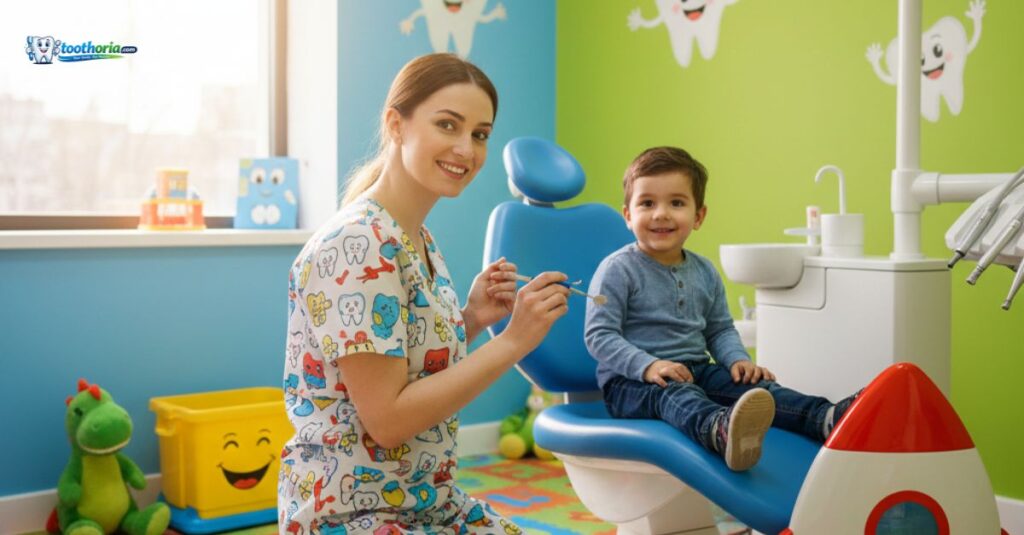
A kids dentist, officially called a pediatric dentist, completes extensive training beyond regular dental school. After earning a dental degree, they pursue two to three additional years of residency focused entirely on children’s dental health. To understand how professional cleanings differ for children, see our guide on children’s professional dental cleaning.
What Makes Them Special
Why pediatric dentists stand out:
- Complete 2-3 extra years of specialized training
- Master child psychology and behavior management
- Understand developmental stages perfectly
- Use communication methods that kids actually get
- Create positive experiences that last
Pediatric dentists know how to talk with toddlers who can’t explain their pain. They recognize when a wiggly baby tooth signals trouble versus normal growth. Their offices have child-sized equipment that feels comfortable and safe. These professionals handle everything from infant oral health screenings to complex teen procedures.
What Is a Family Dentist?
Family dentists treat everyone from grandparents to grandkids in one practice. They complete four years of general dental school and cover routine care for all ages.
What They Offer
- Care for every age group
- Convenient one-stop appointments
- Treatment for cavities and cleanings
- Long-term family relationships
However, family dentists don’t get the same pediatric training depth. They learn the basics about treating children, but spend minimal time on child behavior or development. Most welcome kids, but lack specialized, tiny-sized equipment. Some naturally excel with children through experience. Others struggle with anxious young patients.
Kids Dentist vs Family Dentist: Key Differences
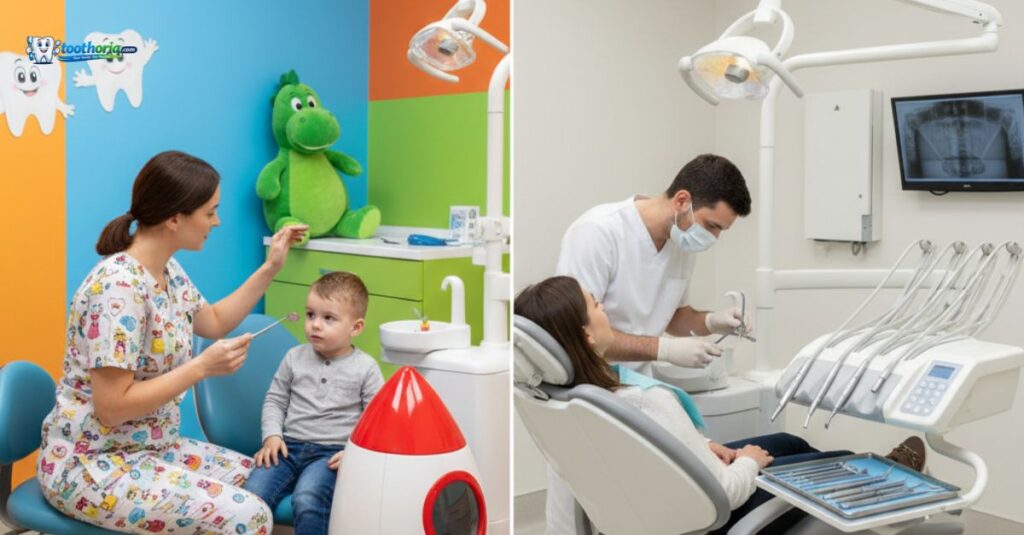
| Factor | Kids Dentist | Family Dentist |
| Training | 2-3 years pediatric residency | Standard dental school only |
| Age Focus | Birth through teens | All ages |
| Environment | Child-friendly with toys | Professional, adult-oriented |
| Equipment | Pediatric-sized tools | Standard adult equipment |
| Behavior Skills | Advanced child psychology | Basic communication |
| Special Needs | Extensive experience | Limited expertise |
Why This Matters
The real differences:
- Training depth – Years studying child-specific issues, not just weeks
- Equipment sizing – Tools that fit little mouths comfortably
- Communication – Kid-friendly language that reduces fear
- Atmosphere – Playful offices instead of clinical spaces
- Anxiety handling – Techniques that actually calm nervous kids
Pediatric dental training emphasizes prevention for growing children. These specialists understand baby teeth eruption patterns and catch problems early. They turn scary visits into fun adventures.
The #1 Mistake Parents Make
Parents often pick convenience over specialization. They choose the nearest office or whoever their insurance covers without digging deeper.
Common Mistakes
- Choosing based only on location
- Picking for insurance coverage alone
- Assuming all dentists treat kids equally
- Ignoring a child’s anxiety or special needs
- Skipping office visits beforehand
What Goes Wrong
The biggest mistake? Ignoring your child’s emotions. Toddlers can’t explain their fears like adults can. They need professionals trained to read subtle cues. When dentists lack these skills, appointments become nightmares. Kids leave traumatized instead of empowered.
The consequences:
- Lasting dental anxiety develops
- Future visits become battles
- Issues get missed until serious
- Treatment gets complicated and expensive
- Poor oral health habits form early
One parent shared how their family dentist missed their daughter’s crowding issue for three years. By the time a pediatric dentist saw her, she needed major orthodontic work that earlier care could’ve prevented.
When a Kids Dentist Is Better
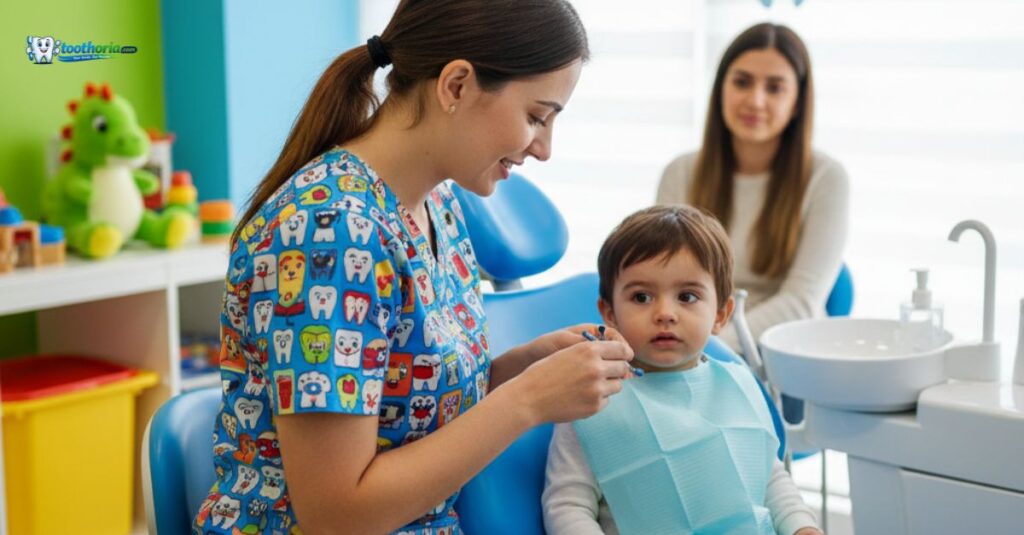
Your child’s first dental visit should happen around their first birthday or when their first tooth appears. These early visits set everything up.
You Need a Specialist When
- Your child is under 3 years old
- It’s their very first visit
- Your child shows dental fear
- Your child has special needs
- Sedation might be needed
- Complex dental problems exist
- You want developmental expertise
Why Specialists Win Here
Toddlers need patient pros who have short attention spans. First visits shape lifelong attitudes. Anxious children need gentle techniques that most general dentists never master. Special needs kids benefit from sensory-friendly environments.
Pediatric dentists use games, positive words, and distraction to make visits fun. They offer sedation dentistry for kids using child-safe protocols when needed. Treatments like dental sealants and fluoride treatments for kids get applied perfectly for small mouths.
Can Family Dentists Work for Kids?
Yes, sometimes. Older kids without anxiety or complex issues often do fine with family dentists.
When It Works
- The child is over 8 years old
- No dental anxiety exists
- The child cooperates easily
- Healthy teeth, no major issues
- The dentist has pediatric experience
- Office feels kid-friendly
Questions to Ask
- How much experience with young children?
- What percentage of patients are kids?
- How do you handle anxious kids?
- What pediatric training do you have?
- Can you handle child emergencies?
Trust your gut. Does your child feel comfortable? Does the dentist explain things in ways kids understand? Your instincts matter here.
Conclusion
Choosing between a kids dentist and a family dentist shapes your child’s relationship with oral health forever. Don’t default to convenience. Pediatric dentists bring specialized training and child-focused care that general dentists can’t match.
Remember These Points
- Pediatric dentists train for 2-3 extra years
- Young and anxious kids need specialists
- First visits should happen by age one
- Early positive experiences prevent lifelong fear
- Family dentists can work for older, calmer kids
- Comfort matters as much as health
First dental visits matter tremendously. Early positive experiences prevent years of anxiety. Whether you pick a specialist or generalist, put your child’s comfort first. They deserve care that makes them feel safe and builds healthy habits for life.
Don’t let convenience decide. The right dentist creates positive memories that stick. Take time to choose wisely.
FAQs
At what age should a child start to see a dentist?
Children should visit by their first birthday or within six months after their first tooth appears. Early visits catch problems before they get serious.
What is the 7 4 rule for teeth?
Kids around age seven need their first orthodontic check. By age four, they should have good brushing habits and regular dental visits.
Should my 2-year-old go to the dentist?v
Absolutely yes. Two-year-olds need checkups every six months. These visits monitor development and prevent cavities while building comfort early.
Should you take your kid to a pediatric dentist?
Pediatric dentists offer specialized care perfect for young children. They excel at managing anxiety and special needs. For most kids under eight, a pediatric dentist beats general dentists hands down.