
Introduction
Picture this. Your child comes home from soccer practice with a busted lip, a wobbly front tooth, and a story about a collision near the goal post. It happens more often than most parents expect, and it’s usually the moment mouth guards in pediatric dentistry stop being an afterthought and start becoming a priority. A good mouth guard is one of the cheapest, easiest ways to keep a fun afternoon on the field from turning into an emergency dental visit. If you’ve ever sat in a waiting room wondering whether that trip could have been avoided, this guide is for you.
Pediatric dentists see this pattern constantly. Kids fall off bikes, get elbowed during basketball, or grind their teeth so hard at night that parents hear it from down the hall. A properly fitted mouth guard addresses both problems, and understanding how they work can save you a lot of stress, and money, down the road.
Why Mouth Guards Matter More Than Parents Realize
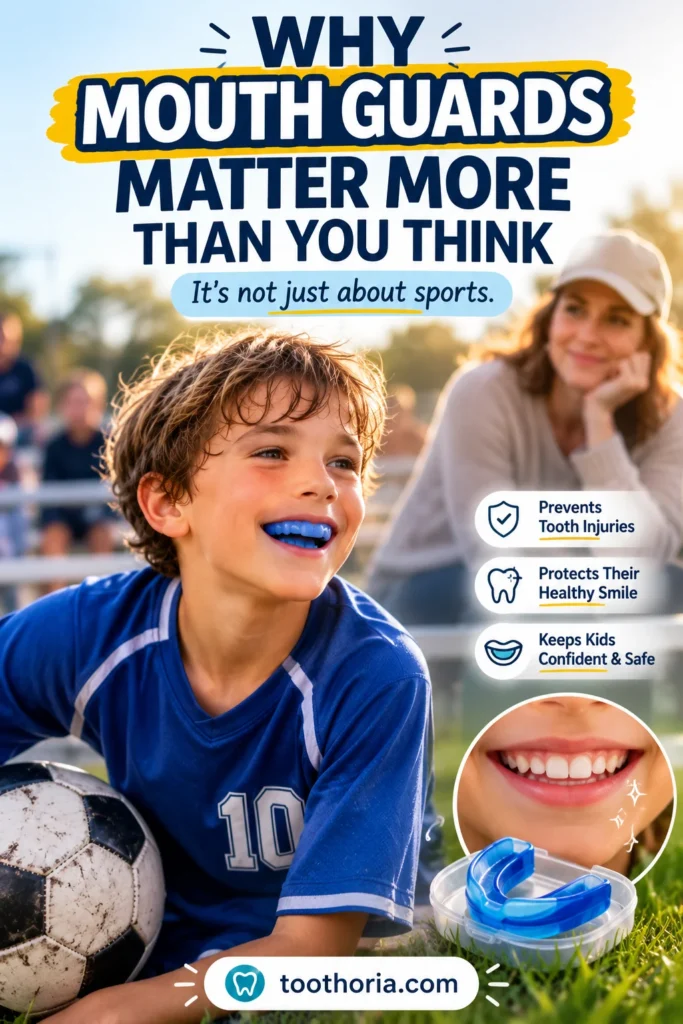
A mouth guard is a protective device that cushions the teeth, gums, and jaw against sudden impact. In pediatric dentistry, they’re used for two very different situations: sports-related dental trauma and nighttime teeth grinding, also known as bruxism.
Kids’ teeth are more vulnerable than adults realize. Enamel is still developing, many children are mid-way through orthodontic treatment, and baby teeth or newly erupted permanent teeth can be knocked loose far more easily than a fully mature adult tooth. If your child already has braces, a hit to the mouth can damage both the teeth and the hardware itself, which is one more reason dentists push this topic so hard.
The American Dental Association notes that a large share of childhood dental injuries happen during sports, and most involve the upper front teeth, the ones that show every time your kid smiles for a school photo. You can read more on this from the ADA’s own resource on mouthguards and dental protection.
Sports Injuries Aren’t the Only Reason Dentists Recommend Them
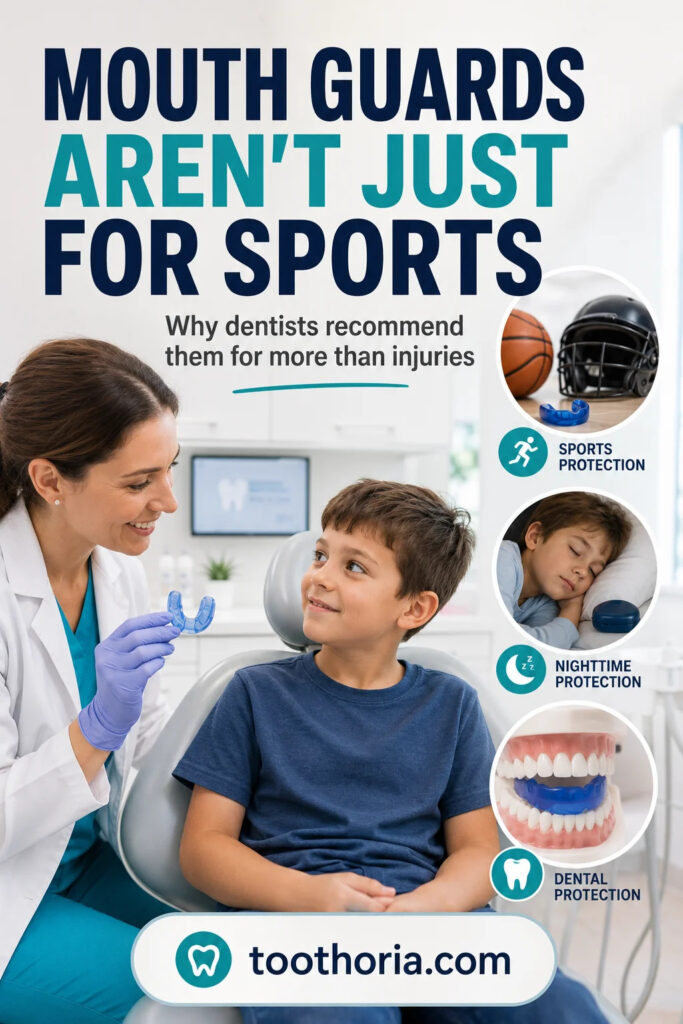
Protecting Teeth During Physical Activity
Contact sports get the most attention, and for good reason. Leagues for football, ice hockey, lacrosse, and wrestling often make mouth guards mandatory equipment, right up there with helmets and pads.
But here’s what a lot of parents miss. Non-contact activities cause plenty of dental injuries too. Bike riding, skateboarding, gymnastics, and even backyard trampoline sessions send kids to the dentist’s chair regularly. A sports mouth guard absorbs and spreads out the force of a fall or collision, which reduces the chance of a chipped, cracked, or fully knocked-out tooth.
If your child is just starting a new sport, this is also a good time to review broader preventive dentistry for kids, since good habits established early tend to stick. Establishing this kind of foundation pairs well with the basics covered in preventive dentistry for kids, which walks through the everyday habits that protect a child’s mouth beyond just mouth guards.
Managing Bruxism, or Nighttime Teeth Grinding
Teeth grinding is surprisingly common in children, and it often shows up between ages three and ten. Some grinding is harmless and gets outgrown, but persistent bruxism can wear down enamel, trigger jaw soreness, and even disrupt sleep.
For kids who grind heavily, a dentist may recommend a custom night guard, sometimes called an occlusal splint. Unlike a sports guard, this one is built for comfort during sleep rather than absorbing a hard hit. If you’re noticing your child complain about jaw pain or morning headaches, it’s worth asking your dentist about this at the next visit, similar to how routine checkups during early pediatric dental care help catch small issues before they grow into bigger ones.
Guarding Braces and Orthodontic Work
If your child is currently in braces, a blow to the mouth can be a double problem: damaged teeth and bent or broken brackets. A mouth guard designed to fit over orthodontic appliances protects both the teeth and the soft tissue inside the cheeks and lips, which otherwise get cut on the metal during impact. Parents weighing Invisalign vs braces for their child should factor this into the decision too, since guard compatibility can differ slightly depending on the appliance type.
The Three Types of Mouth Guards Pediatric Dentists Use
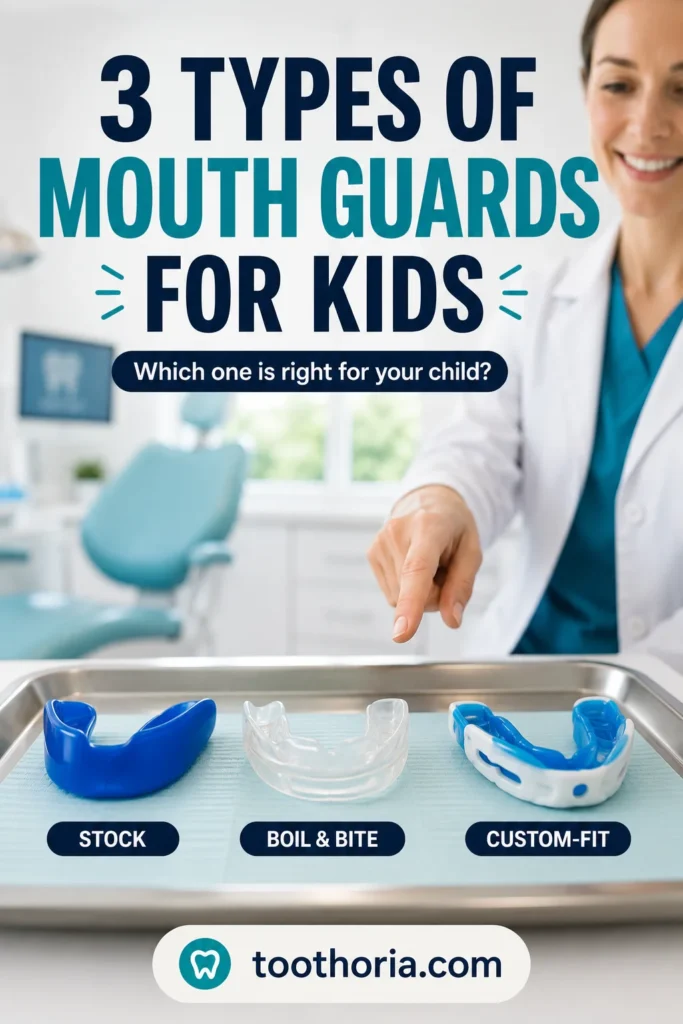
Not every mouth guard offers the same level of protection. Dentists generally group them into three categories.
Stock Mouth Guards
These come pre-formed and ready to wear straight from the package. They’re the cheapest option and easy to find at any sporting goods store.
The catch is fit. A one-size-fits-all guard is often bulky, makes it hard to talk or breathe comfortably, and kids tend to stop wearing them within a few weeks because they’re annoying.
Boil-and-Bite Mouth Guards
This type softens in hot water and molds to your child’s teeth once they bite down while it’s still warm. It’s a step up from stock guards in terms of fit, and it’s widely available at pharmacies.
The downside is consistency. The fit depends entirely on how well the guard was molded at home, and it can loosen faster than a professionally made option.
Custom-Fitted Mouth Guards
These are made from an actual impression of your child’s teeth, taken by a pediatric dentist. The result is a guard that fits precisely, feels comfortable, and doesn’t shift around during activity.
Custom guards cost more upfront, but they’re generally considered the gold standard, especially for kids in competitive sports or those who need a dedicated night guard for bruxism. A better fit also means your child is far more likely to actually wear it consistently, which is really the whole point.
When Should a Child Start Wearing One?
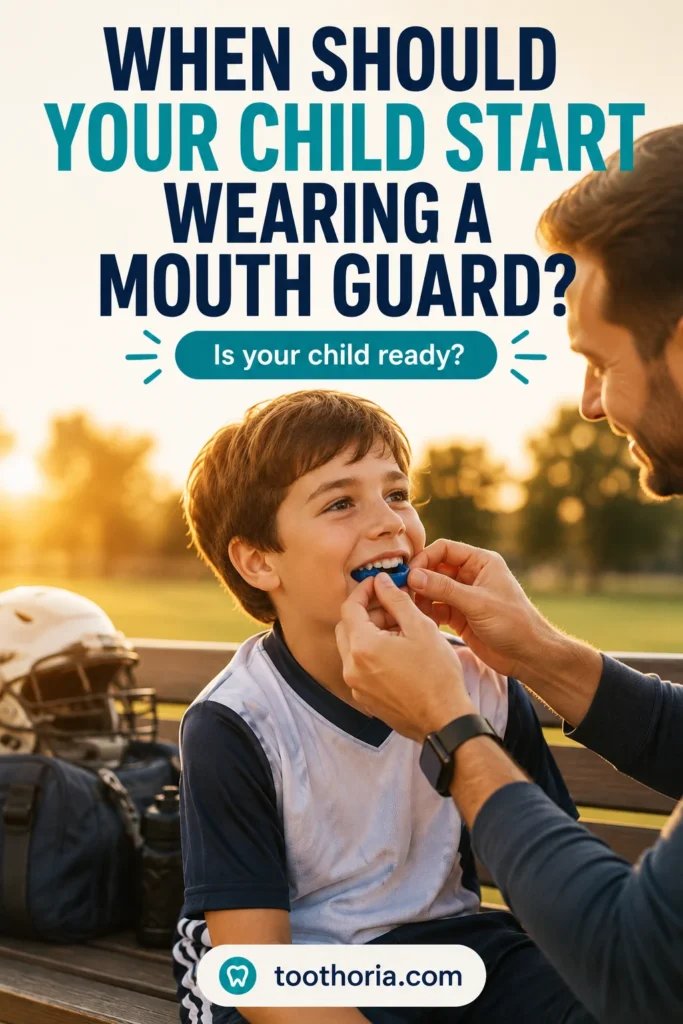
There’s no single magic age. It comes down to activity level and risk, not a birthday.
As a general rule of thumb:
- Once organized sports begin, often around age five or six, a properly sized guard should be part of the gear bag.
- When braces go on, a guard built to accommodate the hardware becomes important for any physical activity.
- If a dentist spots signs of bruxism, such as flattened tooth surfaces or jaw tenderness, a night guard may be suggested regardless of age.
Because kids’ mouths change so quickly, especially while permanent teeth are coming in, mouth guards should be reassessed at regular checkups. This ties directly into the value of modern kids dentistry practices that track growth and development over time rather than treating each visit as a one-off.
How to Choose the Right One for Your Child
A few practical questions can guide the decision:
- What sport or activity are they doing, and how physical is it?
- Do they currently wear braces or other orthodontic devices?
- Is this for daytime sports protection or overnight bruxism management?
- Will they actually wear it consistently, or is comfort a dealbreaker?
- Would letting them pick a color or style improve compliance?
If you’re unsure, bring it up at your next dental visit. A dentist can examine your child’s mouth and recommend the option that actually fits their situation instead of guessing based on a store shelf.
Mistakes Parents Commonly Make
- Buying a stock guard and assuming it’s “good enough.” Poor fit is the number one reason kids abandon their mouth guard within weeks.
- Skipping guards for non-contact sports. Falls during biking or skateboarding cause plenty of dental trauma too.
- Forgetting to replace outgrown guards. A mouth guard that fit last season may not fit once new teeth come in.
- Mixing up sports guards and night guards. They serve different purposes and usually aren’t interchangeable.
- Storing it loose in a bag. Heat and pressure can warp the material, so a ventilated case matters more than people think.
Caring for a Mouth Guard So It Actually Lasts
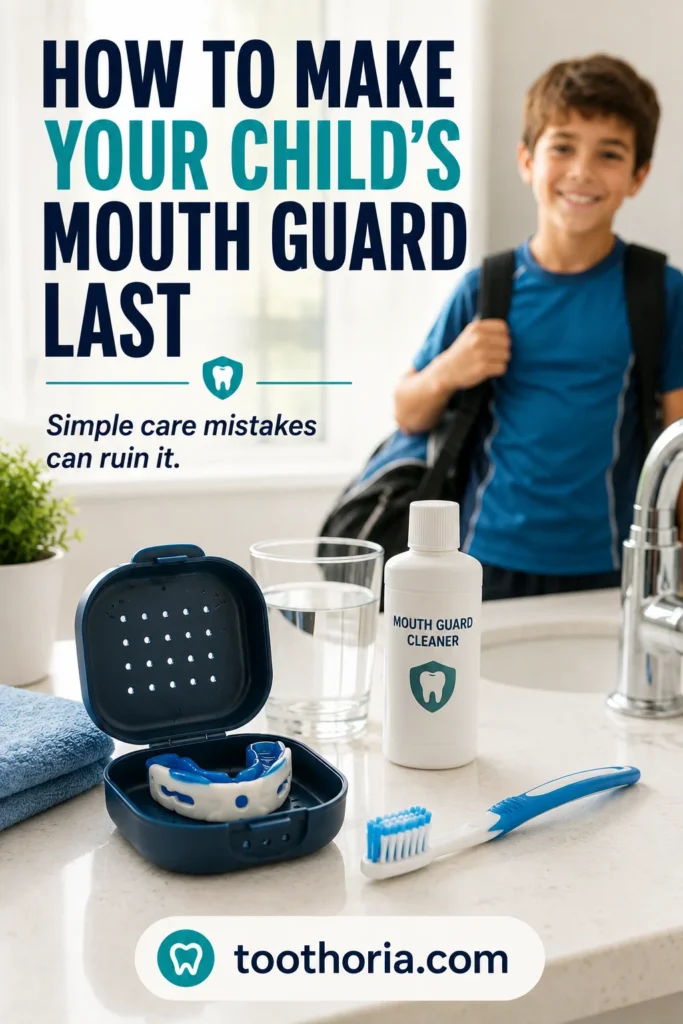
Cleaning and storage matter just as much as the initial fit.
Rinse the guard with cool water before and after each use. Hot water can warp the shape, especially with boil-and-bite versions. Brush it gently with a soft toothbrush occasionally, and keep it in a rigid, ventilated case rather than a sports bag pocket. Replace it right away if it cracks, feels loose, or your child mentions discomfort.
Good daily habits around the mouth guard also connect to broader oral hygiene routines, similar to the tips shared in dental hygiene food tips, where small consistent habits add up to fewer dental problems overall.
Frequently Asked Questions
Do all kids in sports need a mouth guard, or just contact sports? Contact sports like football and hockey typically require one, but dentists also recommend them for non-contact, high-fall-risk activities like skateboarding and gymnastics.
How do I know if my child grinds their teeth at night? Watch for flattened tooth edges, morning jaw soreness, headaches, or actual grinding sounds during sleep. A dentist can confirm bruxism during a routine exam.
Are custom mouth guards worth the extra cost? For kids in competitive sports or those needing a night guard, yes. Better comfort usually means better compliance, which is what actually prevents injury.
Can a mouth guard be worn with braces? Yes. Dentists can recommend or create guards specifically shaped to fit over brackets and wires.
How often should a mouth guard be replaced? Typically every sports season, or sooner if it’s worn, ill-fitting, or your child has lost or gained teeth since it was made.
Final Thoughts
A mouth guard seems like a small, unremarkable piece of gear until the day it actually stops a chipped tooth or a split lip. The upfront cost and the extra dental visit for a custom fit are minor compared to the time, pain, and expense of treating a serious dental injury later. If your child is active, in braces, or grinding their teeth at night, talk to your pediatric dentist about which type makes sense for their specific situation. It’s a small habit that protects a smile for years to come.
For more background on how the American Academy of Pediatrics approaches this topic, their guide on mouthguards for children is a solid additional read, as is the Cleveland Clinic’s overview of mouthguard types and purposes.