
Most kids don’t exactly jump for joy when you tell them it’s time to go to the dentist. And honestly, that’s fair. For a long time, dental visits were uncomfortable loud drills, cold metal tools, that long needle for numbing. It was a lot for a child to handle.
But things have changed. A lot.
Today’s pediatric dentistry looks nothing like what most parents grew up with. Dentists are using tools and techniques that are gentler, faster, and far less scary. Some kids actually leave the appointment happy which, if you’d asked a parent ten years ago, might have sounded impossible.
This guide is for parents who want to understand what modern kids’ dentistry actually involves, which techniques work, and how to help their child have a genuinely positive experience in the dental chair.
Why Children Fear the Dentist and Why It Matters
The Psychology of Dental Anxiety in Children
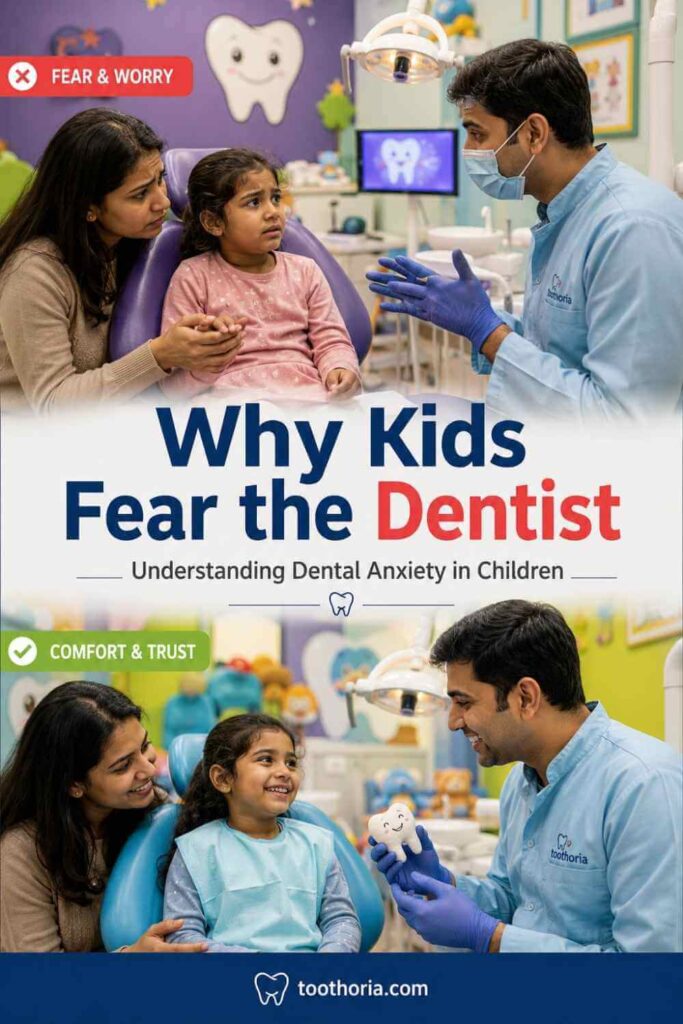
Dental anxiety in children is extremely common. According to research published by the National Institutes of Health (NIH), anywhere from 16% to 20% of school-age kids experience noticeable fear around dental visits. And it’s not always irrational kids pick up on cues from their environment. A dentist who seems rushed, a room that smells strongly of chemicals, or the sound of a drill in the next room can all trigger real anxiety.
The tricky part is that dental phobia doesn’t stay in the dentist’s office. It often follows kids into adulthood. The World Health Organization (WHO) notes that oral diseases, many of which are rooted in years of avoidance, affect nearly 3.5 billion people globally, making them among the most widespread health conditions worldwide. Adults who avoided the dentist as children tend to have more tooth decay, gum disease, and untreated oral health issues all because of a fear that started young.
How Early Fear Shapes Lifelong Oral Health Habits
Think about it this way: if a child has one terrible dental experience around age five, they carry that memory. By the time they’re a teenager, they may avoid going altogether. By adulthood, the avoidance often gets worse, not better.
That’s why early childhood dental care matters so much. Getting the first experience right making it calm, gentle, and even slightly fun sets the tone for decades of oral health behavior.
If you want to understand why starting early makes such a difference, this breakdown of early pediatric dental care explains what parents should know before that first visit.
Signs Your Child Has Dental Phobia (And What to Do)
Watch for these common signs:
- Your child cries or has a meltdown before appointments (not just on the day, but days before)
- They complain of stomachaches or headaches before a dental visit
- They become unusually clingy or refuse to discuss it
- Older kids make excuses or “forget” appointments
If you notice these patterns, don’t push through them with force. The solution is finding a child-centered pediatric dentist who is trained in managing anxiety and using the modern techniques described in this article.
What Is Modern Pediatric Dentistry?
How It Differs from Traditional Kids’ Dental Care
Traditional dentistry was built around adults. The tools, the chair, the procedures are all designed for grown-up mouths and grown-up coping skills. Kids were just… expected to manage.
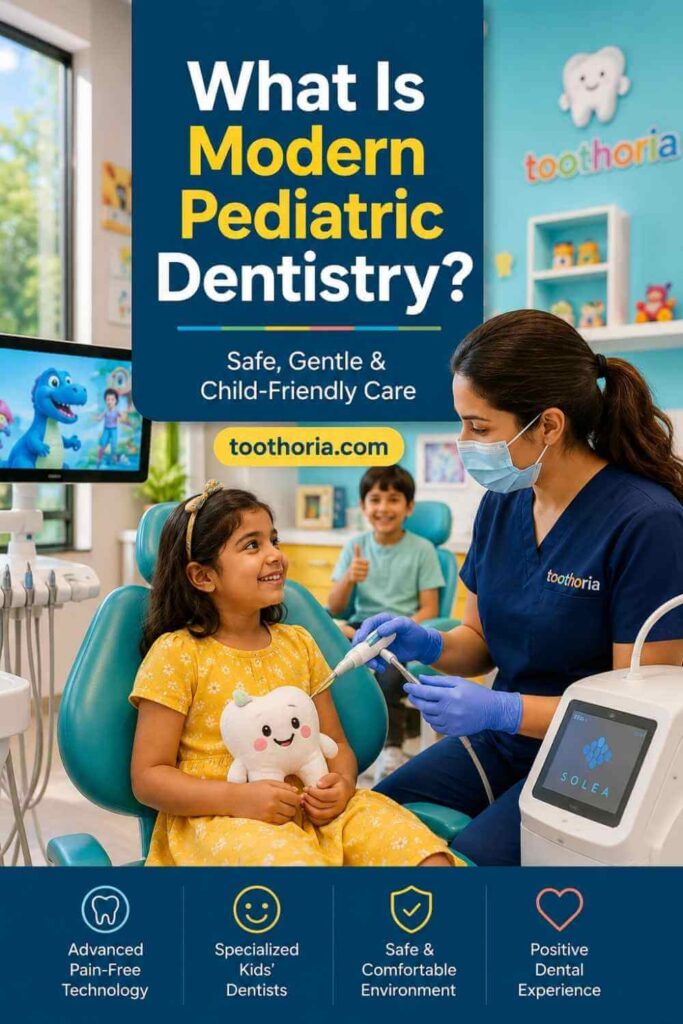
Modern pediatric oral health care is designed from the ground up with children in mind. That means smaller instruments, calmer environments, behavior-guidance techniques, and pain-management options that work with a child’s nervous system rather than against it.
The goal isn’t just to fix teeth. It’s to fix teeth and leave the child feeling okay about coming back.
The Role of Pediatric Dentists vs. General Dentists
A board-certified pediatric dentist has completed two to three years of specialty training beyond dental school focused entirely on treating children from infancy through adolescence. According to the American Academy of Pediatric Dentistry (AAPD), this specialty training covers everything from infant oral health to treating kids with special healthcare needs, children with developmental differences, and patients who are medically complex.
A general dentist can treat children too, but they don’t receive the same depth of training in child psychology, behavior guidance, or pediatric sedation.
If your child has significant anxiety or has had a difficult dental experience before, a pediatric specialist is usually the better choice. This article on choosing between a kids’ dentist or family dentist walks through exactly when to make that call.
Core Principles: Minimally Invasive and Child-Centered Care
The two big ideas driving modern pediatric dentistry right now are:
Minimally invasive dentistry (MID) treats only what needs treatment, removes as little healthy tooth structure as possible, and uses materials that help protect teeth long-term.
Child-centered care every decision is made with the child’s comfort, trust, and emotional experience in mind, not just the clinical outcome.
These two principles work together. Less drilling means less fear. Less fear means the child cooperates better. Better cooperation means better outcomes. It’s a positive cycle.
Top Pain-Free Techniques Used in Children’s Dentistry Today
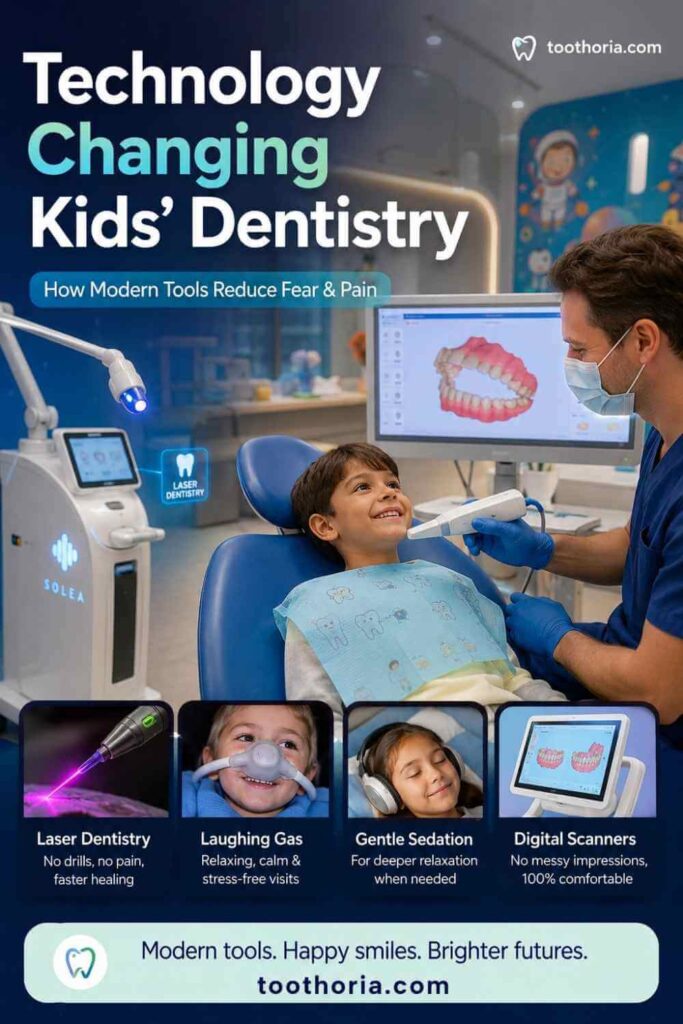
Laser Dentistry: No Drill, No Fear
This is one of the most significant shifts in pediatric dental treatment over the past decade.
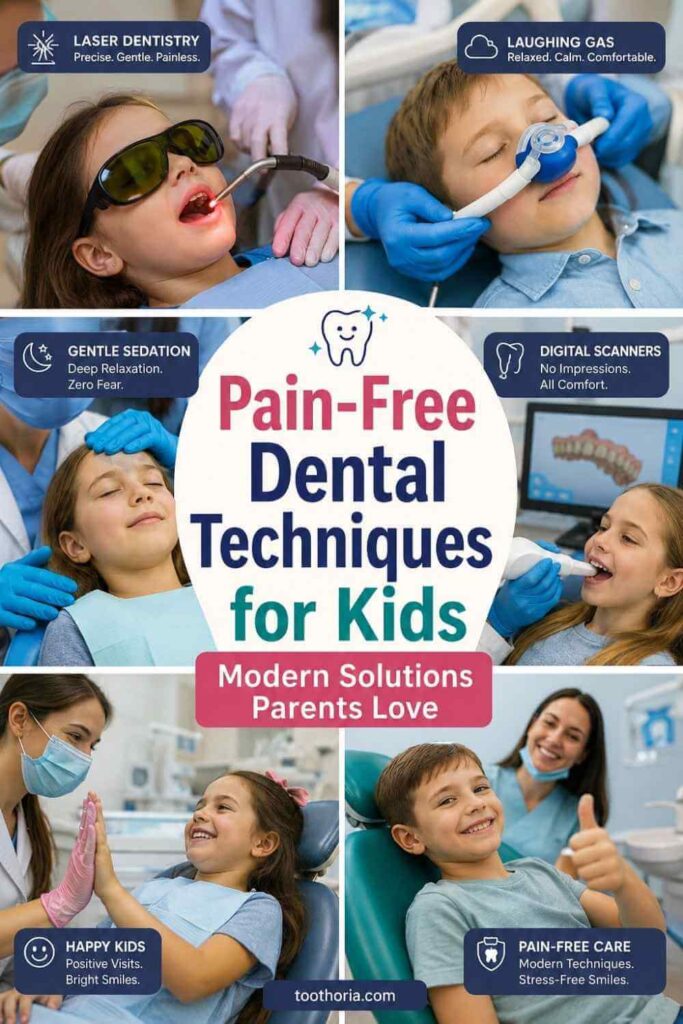
Dental lasers use concentrated light energy to remove decayed tooth tissue, treat gum problems, and even prepare teeth for fillings all without the noise, vibration, or discomfort of a traditional drill. For many small cavities, kids don’t need any numbing at all.
No drill sound. No vibration. No needle. For anxious children, this alone can be life-changing.
Laser dentistry also reduces bleeding during soft tissue procedures like frenectomies (tongue-tie release), which is increasingly common in infants and toddlers.
Nitrous Oxide (Laughing Gas): How It Works and Is It Safe?
Nitrous oxide commonly called laughing gas is a mild sedative delivered through a small mask that sits over the nose. It helps children feel relaxed and slightly floaty, while staying fully awake and able to respond to the dentist.
It’s been used safely in dentistry for over 100 years. It works within a few minutes, wears off almost immediately after the mask is removed, and has no lasting effects. Most kids can have a normal day afterward. The American Dental Association (ADA) considers nitrous oxide one of the safest forms of sedation available for dental patients of all ages.
It’s not a magic fix for every child; some don’t respond to it as strongly as others but for mild to moderate anxiety, it works very well and has an excellent safety profile.
Computer-Controlled Anesthesia Delivery (CCLAD / The Wand)
Traditional dental injections deliver anesthetic in a quick burst, which causes the uncomfortable pressure and stinging sensation most people associate with “the needle.” The fear of that shot is one of the top reasons children (and adults) avoid the dentist.
Computer-controlled local anesthesia delivery (CCLAD), often called “The Wand,” changes that completely. It delivers the anesthetic at a slow, computer-regulated rate so slow that the tissue barely notices it. The result is a numbing experience that most children describe as painless.
Research from 2023–2025 consistently shows that CCLAD produces significantly lower anxiety and pain scores in children compared to traditional syringes. A clinical review published in the Journal of Dental Anesthesia and Pain Medicine confirmed that computer-controlled delivery systems offer a meaningfully less distressing injection experience for pediatric patients.
Topical Numbing Gels and Needle-Free Options
Before any injection, most pediatric dentists apply a topical anesthetic gel directly to the gum. This numbs the surface tissue so the child doesn’t feel the needle going in. It takes about 60 to 90 seconds to work.
Small but important detail: the flavor matters enormously with kids. Strawberry or bubblegum topical gels are dramatically more accepted than plain or medicinal-tasting ones. Good pediatric dentists know this.
Air Abrasion: Drill-Free Cavity Removal Explained
Air abrasion is essentially a tiny sandblaster for teeth. It uses a pressurized stream of fine particles to gently remove early tooth decay, no drill, no vibration, no heat.
It works best on small, early-stage cavities. The big advantages: it’s often painless without any numbing, it preserves more healthy tooth structure than drilling, and kids tolerate it much better than the traditional approach.
Pair air abrasion with a tooth-colored composite resin filling and you have a repair that’s gentle, effective, and invisible.
Oral Sedation for Highly Anxious Children
For children with severe anxiety, medical complexity, or very young toddlers who can’t cooperate, oral sedation is an option. The child takes a liquid medication before the appointment that makes them drowsy and relaxed though still breathing on their own and semi-responsive.
This is different from general anesthesia, which is reserved for more extensive procedures or children who cannot be treated any other way.
Oral sedation always requires a thorough health evaluation first, careful monitoring during the procedure, and a responsible adult to take the child home. It’s not something to take lightly, but when it’s the right call, it can allow a child to get necessary dental treatment that would otherwise be impossible.
Technology Transforming Pediatric Dental Visits
Digital X-Rays and Intraoral Cameras: Less Radiation, Better Results
Digital radiography has replaced traditional film X-rays in most modern practices. The radiation exposure is up to 80% lower than old-film X-rays, already very small to begin with and the images appear on a screen instantly, which means less time waiting and repositioning.
Intraoral cameras are small, pen-sized cameras that show a live image of the inside of the mouth on a monitor. Kids often find it fascinating to see their own teeth up close. And when a parent can see exactly what the dentist is pointing to, it builds enormous trust.
For more on how these tools are changing dental care, the overview of dental technologies is worth reading.
AI-Powered Cavity Detection: Catching Decay Before It Starts
Artificial intelligence in dentistry is no longer science fiction. Several dental practices now use AI software that analyzes digital X-ray images and flags areas of early decay that the human eye might miss.
This matters because catching a cavity early when it’s still in the enamel layer often means it can be treated without drilling at all. Fluoride treatment, remineralizing toothpaste, or dietary changes may be enough to reverse the decay.
Early intervention saves children from painful procedures and saves families from expensive ones.
Virtual Reality Distraction: Turning Treatment into an Adventure
Some pediatric practices now offer VR headsets during procedures. The child puts on a headset and watches a movie or plays a simple game while the dentist works. The result: they’re less focused on what’s happening in their mouth, and their perception of time and discomfort drops significantly.
It sounds gimmicky, but the research supports it. A study published in the Journal of Dental Research found that children who used VR distraction during dental procedures reported lower pain scores and showed lower heart rates, a measurable sign of reduced stress compared to those without it.
Teledentistry: Virtual Checkups for Busy Families
Teledentistry allows parents to connect with a pediatric dentist via video call for non-urgent concerns, a new spot on the gum, a question about tooth eruption, and follow-up after a procedure.
It doesn’t replace in-person care, but it removes the friction for small questions that might otherwise go unanswered for months. For families in rural areas or with limited transportation, it can be genuinely important.
You can read more about how this works in practice at the teledentistry guide.
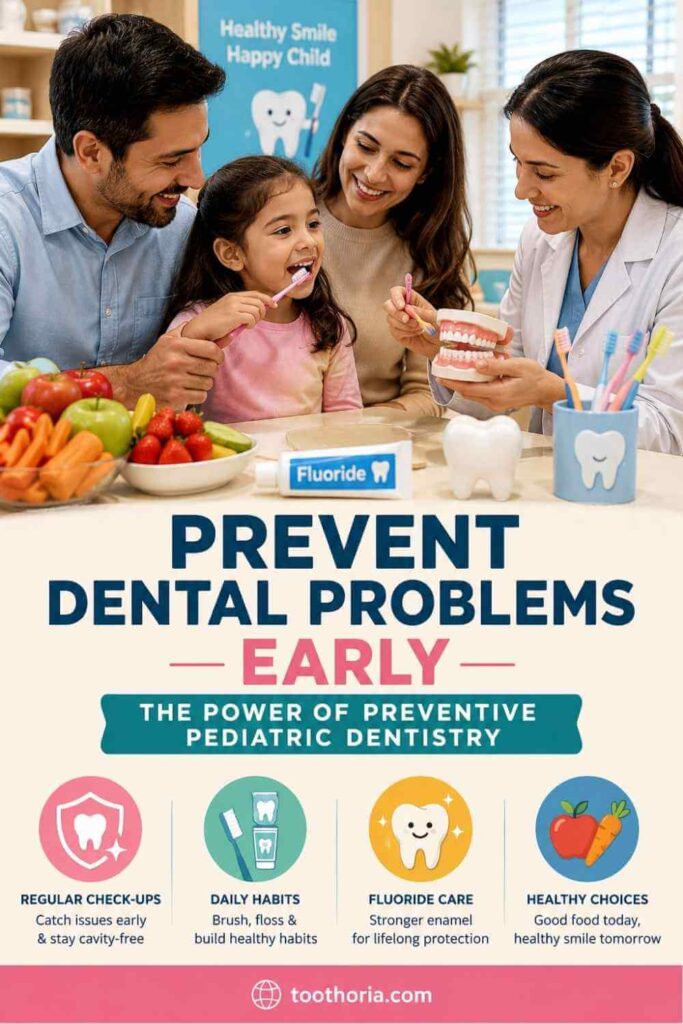
Preventive Pediatric Dentistry: Stop Problems Before They Start
Dental Sealants for Kids: What Parents Need to Know
Dental sealants are thin plastic coatings applied to the chewing surfaces of back teeth and the molars. These surfaces have deep grooves where food and bacteria collect, making them prime spots for cavities.
Sealants fill those grooves and create a smooth surface that’s easy to clean. According to the Centers for Disease Control and Prevention (CDC), dental sealants can reduce the risk of cavities in back teeth by nearly 80% and children without sealants are three times more likely to develop cavities than children who have them.
The American Academy of Pediatric Dentistry (AAPD) recommends sealants for most children as soon as their permanent molars come in, usually around age six for the first molars and twelve for the second.
For a full breakdown of preventive strategies, see this guide on preventive dentistry for kids.
Fluoride Treatments vs. Fluoride-Free Options
Fluoride is a mineral that strengthens tooth enamel and helps reverse very early stages of tooth decay. Professional fluoride treatments applied in-office as a varnish, gel, or foam deliver a much higher concentration than what’s in toothpaste. The ADA’s MouthHealthy resource notes that professional fluoride is safe, effective, and one of the most proven tools in preventive dentistry.
Some parents have concerns about fluoride, which is understandable. The research consistently supports its safety and effectiveness in the amounts used in dentistry, but parents who prefer fluoride-free options do have some alternatives (like calcium phosphate remineralizing agents) worth discussing with their dentist.
More on how fluoride works in children’s care is covered in this article on fluoride in pediatric dentistry.
Silver Diamine Fluoride (SDF): Stopping Cavities Without a Drill
Silver diamine fluoride is one of the most interesting developments in minimally invasive pediatric dentistry. It’s a liquid solution applied directly to a cavity that stops the decay in its tracks: no drilling, no anesthesia, no sedation required.
The tradeoff: it permanently stains the treated decay black. That sounds alarming until you realize it’s often used on baby teeth that will fall out anyway, or on back teeth where appearance is less of a concern.
For very young children, anxious children, or kids who need treatment urgently but can’t tolerate a procedure, SDF can be a genuinely lifesaving option.
For more on protecting young teeth early, the guide on preventive dental care for toddlers covers this topic well.
When to Schedule Your Child’s First Dental Visit
The AAPD officially recommends scheduling the first dental visit by the time the first tooth appears, or by the child’s first birthday whichever comes first.
That might sound early, but the first visit isn’t really about cleaning teeth. It’s about establishing a relationship, checking for early developmental concerns, and getting the child comfortable with the environment before any real treatment is needed.
The parents who bring kids in at age one consistently report easier dental experiences throughout childhood compared to those who wait until a problem shows up.
How to Choose the Right Pediatric Dentist
Key Qualifications and Certifications to Look For
Look for a dentist who is a board-certified pediatric dentist (diplomate of the American Board of Pediatric Dentistry). This means they’ve passed a rigorous specialty exam on top of their dental degree and residency.
Also check:
- Are they a member of the AAPD?
- Does the practice specialize in children, or is it a general practice that also sees kids?
- How do they handle dental emergencies?
Questions to Ask Before Booking Your Child’s First Appointment
Before committing to a practice, call and ask:
- “How do you manage children who are anxious or uncooperative?”
- “What sedation options do you offer, and what’s your monitoring protocol?”
- “Do you use digital X-rays?”
- “How do you handle a child who’s never been to the dentist before?”
The answers will tell you a lot. A good pediatric practice will have thoughtful, confident answers to all of these.
Red Flags: Signs of an Outdated Dental Practice
Be cautious if:
- The dentist uses papoose boards (physical restraint) as a routine first approach
- There’s no mention of any anxiety management or behavior guidance
- The waiting area has no child-friendly elements at all
- They can’t clearly explain their sedation safety protocols
None of these are dealbreakers on their own, but they’re worth paying attention to.
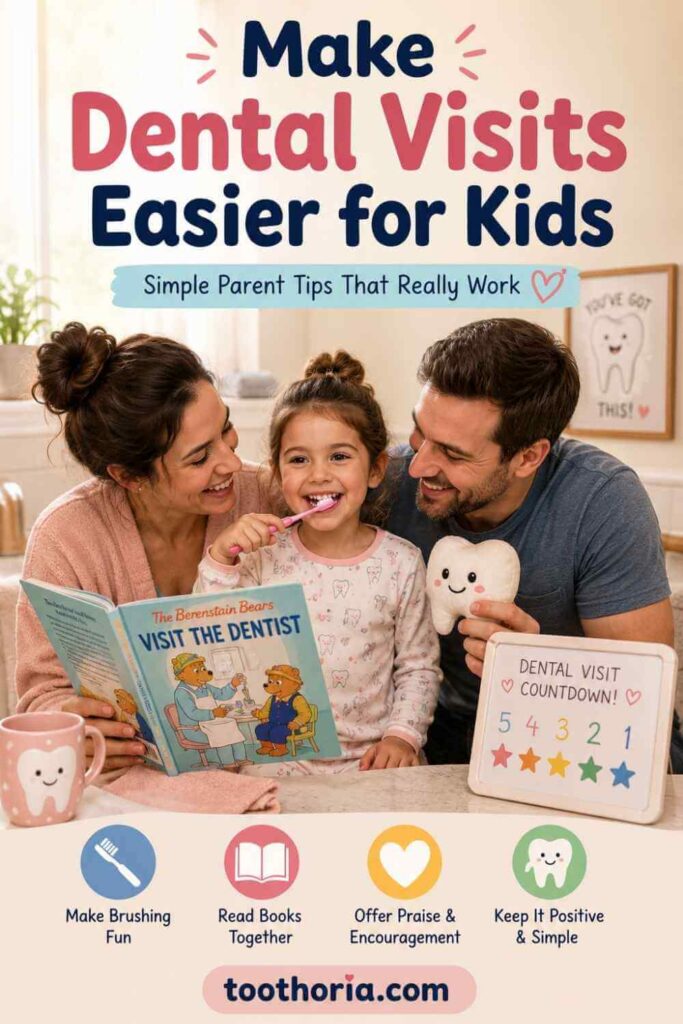
Tips for Parents: Making Dental Visits Easier at Home
How to Talk to Your Child About Going to the Dentist
The language you use matters more than most parents realize. Avoid words like “hurt,” “shot,” “needle,” or “pull.” Even if you’re trying to prepare them, these words plant fear.
Instead, use neutral or positive framing: “The dentist is going to count your teeth and make sure they’re strong.” Let the dental team introduce their own vocabulary. Many pediatric offices use special words like “tooth sleeper” instead of anesthetic, or “tooth counter” for the probe. The ADA’s MouthHealthy parenting guide has more helpful language tips for preparing children of different ages.
Role-Playing and Books That Reduce Dental Fear
Play “dentist” at home a few days before the appointment. Take turns being the dentist and the patient. It sounds simple, but it works and kids process experiences through play.
There are also picture books specifically designed for this. “The Berenstain Bears Visit the Dentist” has been used by parents for decades. “Show Me Your Smile!” from the Dora the Explorer series is popular with younger kids. Reading one before the appointment makes the experience feel familiar rather than unknown.
Reward Systems That Build Positive Dental Experiences
Celebrate after the appointment not with candy, obviously, but with a small toy, a sticker chart, extra screen time, or a trip to a favorite park.
The key is to link the dental visit with something positive after. Over time, the anticipation of the reward genuinely helps reduce anxiety. It’s basic conditioning, and it works.
Common Mistakes Parents Make (And How to Avoid Them)
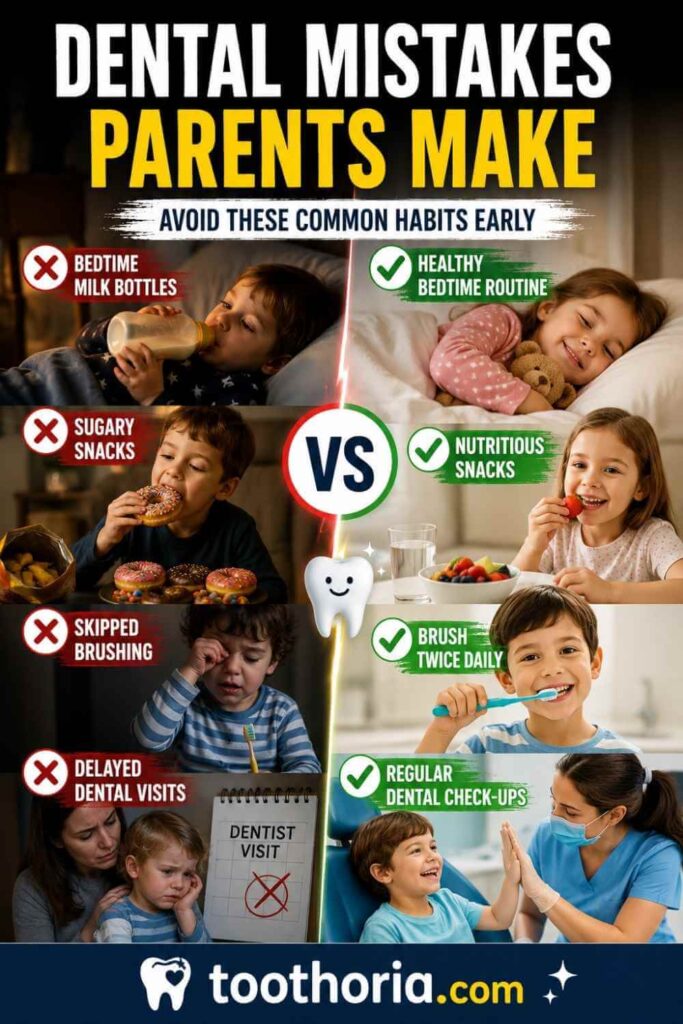
Waiting for pain before going. By the time a child complains of tooth pain, the cavity is usually already significant. Routine checkups catch problems early, when they’re easier and cheaper to treat.
Sharing your own dental fears. If you had bad experiences as a kid, keep that to yourself for now. Children absorb parental anxiety very quickly. Your calm matters.
Skipping baby teeth because “they’ll fall out anyway.” Baby teeth hold space for permanent teeth. When a baby tooth is lost too early due to decay, the surrounding teeth can shift, creating orthodontic problems later. Early childhood caries is a real and serious issue.
Brushing for too short a time. Two minutes, twice a day. Most kids brush for about 45 seconds. According to the CDC’s oral health guidelines, consistent brushing with fluoride toothpaste from an early age is one of the most effective habits for preventing childhood tooth decay. Get a timer or a toothbrush with a built-in two-minute timer. They make a significant difference.
Frequently Asked Questions
Is laser dentistry safe for children?
Yes. Dental laser treatments are FDA-cleared and have been used safely in pediatric dentistry for years. They’re precise, produce less heat than drills, and significantly reduce the need for numbing and drilling. Your dentist will use protective eyewear during the procedure.
At what age should kids start seeing a dentist?
The AAPD recommends the first dental visit by age one, or when the first tooth appears. Early visits build comfort with the environment and allow the dentist to spot any developmental issues before they become problems.
What is the safest sedation option for toddlers?
For most healthy toddlers with mild anxiety, nitrous oxide is considered the safest and most widely used option. It’s gentle, reversible, and has a well-established safety record. For children with more significant anxiety or medical complexity, other sedation options may be discussed after a thorough evaluation.
How do I know if my child needs a filling?
Only a dentist can confirm this but signs that something may be wrong include your child complaining of tooth sensitivity to hot or cold, visible dark spots on the teeth, or pain when chewing. Routine X-rays at checkups often catch cavities before any symptoms appear at all.
Final Thoughts
Here’s the honest truth: if your child is scared of the dentist, it doesn’t mean they’re being dramatic. It means they need the right environment and the right approach and those things exist now in ways they simply didn’t a generation ago.
Modern pediatric dentistry isn’t about forcing kids through procedures. It’s about building trust, using tools that minimize discomfort, and creating experiences that kids can actually tolerate, sometimes even enjoy.
Start early. Choose a dentist who specializes in children. Ask questions. And don’t underestimate how much a calm, prepared parent helps a child feel safe.
Strong teeth start young. So does the habit of taking care of them.
Want to learn more about protecting your child’s oral health? Check out these related reads: