
Most parents focus on feeding, sleep, and vaccines but overlook one critical area: dental health. Early pediatric dental care sets the foundation for your child’s overall health, speech development, and self-confidence. Waiting until a problem appears is a costly mistake. The earlier you start, the better the outcome.
What Early Pediatric Dental Care Actually Means
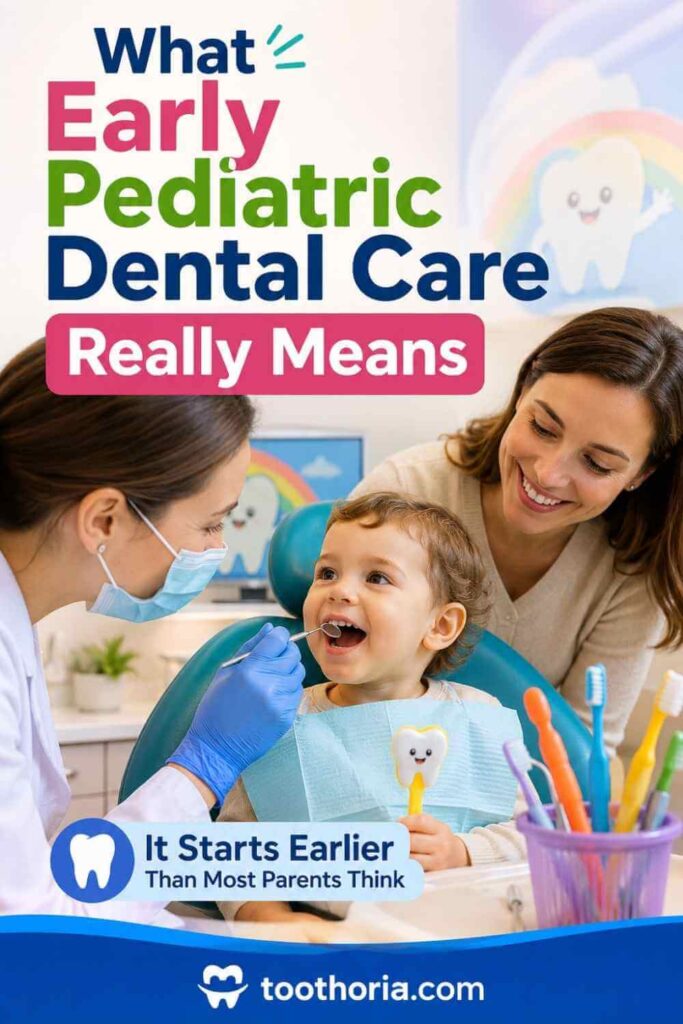
Early pediatric dental care goes far beyond brushing tiny teeth. It covers professional monitoring of jaw development, gum health, bite alignment, and the growth of primary and permanent teeth. Dental care that starts in infancy protects children from pain, infection, and costly procedures later in life.
Parents often assume baby teeth don’t matter since they fall out anyway. That thinking causes real harm. Primary teeth hold space for permanent teeth, support proper speech, and allow children to chew nutritious food. Neglecting them creates a chain of problems that follows children well into adulthood.
When Should a Child First See a Dentist?
The American Academy of Pediatric Dentistry recommends a first dental visit by age one. This early visit lets the dentist catch developmental issues before they escalate. It also helps your child feel comfortable in a dental environment from a young age.
Starting visits early reduces dental anxiety significantly. Children who visit the dentist before problems appear tend to cooperate better and fear less. Early exposure builds trust and normalizes professional oral health care as part of routine life.
What Happens at a First Pediatric Dental Visit?
A first pediatric visit includes a gentle examination of the gums, jaw, and any erupted teeth. The dentist checks for early signs of tooth decay, alignment concerns, and gum inflammation. Parents also receive practical guidance on cleaning techniques and feeding habits.
This appointment focuses on education as much as examination. You’ll learn how to clean your infant’s gums, when to introduce a toothbrush, and which foods to avoid. These early lessons directly reduce your child’s risk of developing cavities before kindergarten.
How Baby Teeth Affect Long-Term Oral Health
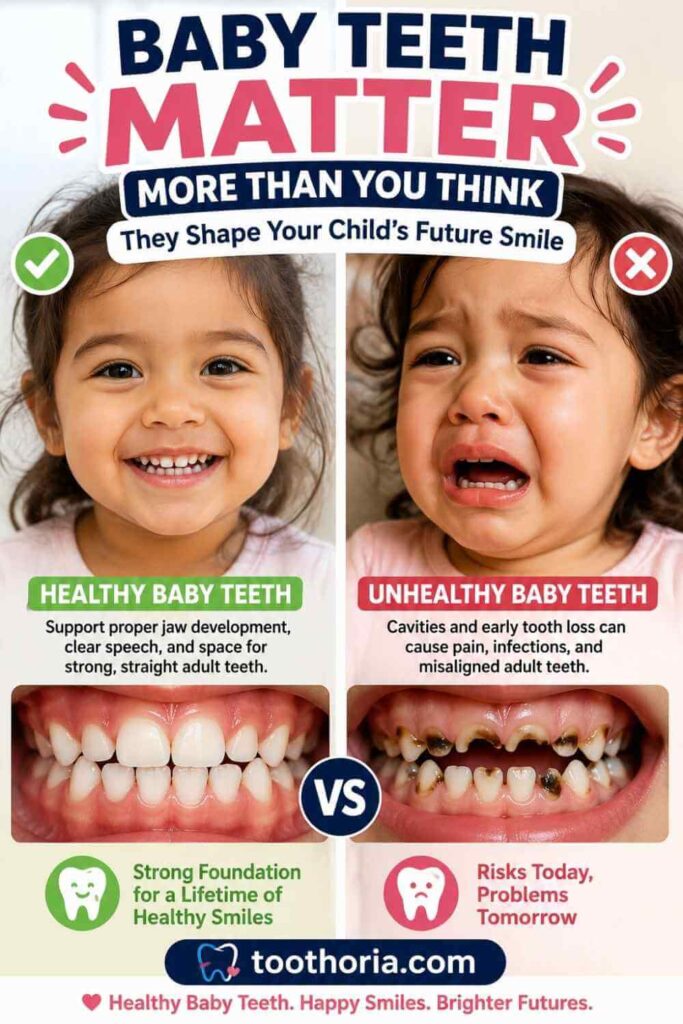
Baby teeth do far more than fill a child’s smile temporarily. They guide the eruption path of permanent teeth and maintain proper jaw spacing. When primary teeth are lost too early, permanent teeth can shift, crowd, or erupt in the wrong position. This often leads to costly orthodontic treatment later.
Research shows that children with untreated tooth decay in primary teeth are three times more likely to develop cavities in permanent teeth. The bacteria responsible for decay spreads easily. Establishing strong oral health care early disrupts that cycle before it starts.
The Role of Primary Teeth in Development
Primary teeth support clear speech and correct articulation from the time a child first begins to talk. Teeth like the upper front incisors are critical for forming sounds like “f,” “v,” and “th.” Premature tooth loss from decay or trauma can delay speech and require therapy.
Beyond speech, baby teeth stimulate healthy jawbone development through daily chewing. That stimulation signals the bone to grow correctly and support incoming permanent teeth. Early pediatric dental care protects this natural developmental process from disruption.
Early Tooth Loss and Its Consequences
Losing a primary tooth too early creates a domino effect in the mouth. Neighboring teeth drift into the open space, narrowing the path for the permanent tooth beneath. The result is crowding, impaction, or misalignment that often requires braces or even oral surgical intervention.
Space maintainers can help when early tooth loss does occur. A pediatric dentist places a small device that holds the gap open until the permanent tooth is ready. Acting quickly limits the long-term damage and keeps development on track.
Common Dental Problems in Young Children
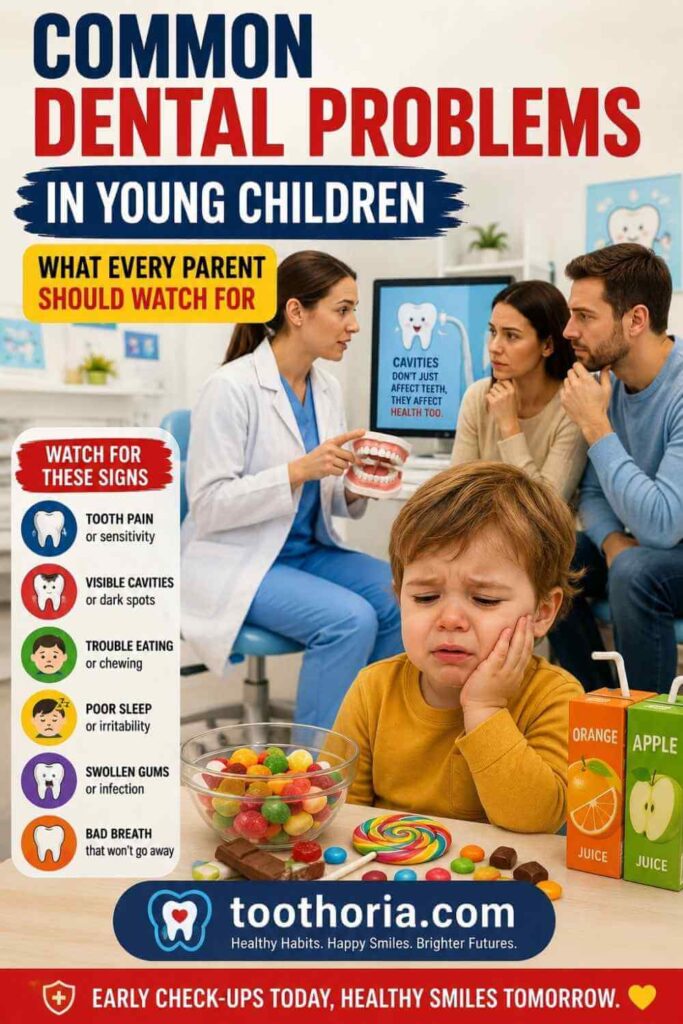
Tooth decay is the most widespread chronic disease in American children, more common than asthma. Yet it’s almost entirely preventable with consistent early pediatric dental care. Identifying risk factors before decay begins is the central goal of preventive dentistry for children. Learn more about comprehensive preventive dentistry for kids to understand what full-spectrum prevention looks like.
Beyond cavities, children commonly experience gum sensitivity, thumb-sucking damage, tongue thrust, and enamel defects. Each of these responds well to early intervention. Catching them late means managing consequences rather than preventing them.
Early Childhood Caries: A Silent Threat
Early childhood caries, commonly called baby bottle tooth decay, affects children as young as six months old. It typically appears on the upper front teeth first and spreads quickly if untreated. The main culprits include sugary liquids in bottles, frequent nighttime feeding, and poor oral hygiene practices.
Left alone, early childhood caries cause pain, infection, and difficulty eating. Severe cases require extraction or dental surgery under general anesthesia. You can prevent this entirely through consistent preventive dental care for toddlers, including proper feeding habits and early professional monitoring.
Gum Health in Toddlers and Young Kids
Healthy gums in childhood directly support healthy teeth throughout life. Gingivitis can appear in children as young as two and often goes unnoticed by parents. Redness, swelling, or bleeding gums during brushing are warning signs that need professional attention.
Poor gum health in childhood links to systemic inflammation and can affect overall wellness. A pediatric dentist evaluates gum tissue at every visit and guides parents on proper brushing technique. Early attention to gum health sets up a lifetime of strong periodontal foundation.
Benefits of Starting Preventive Dental Habits Early
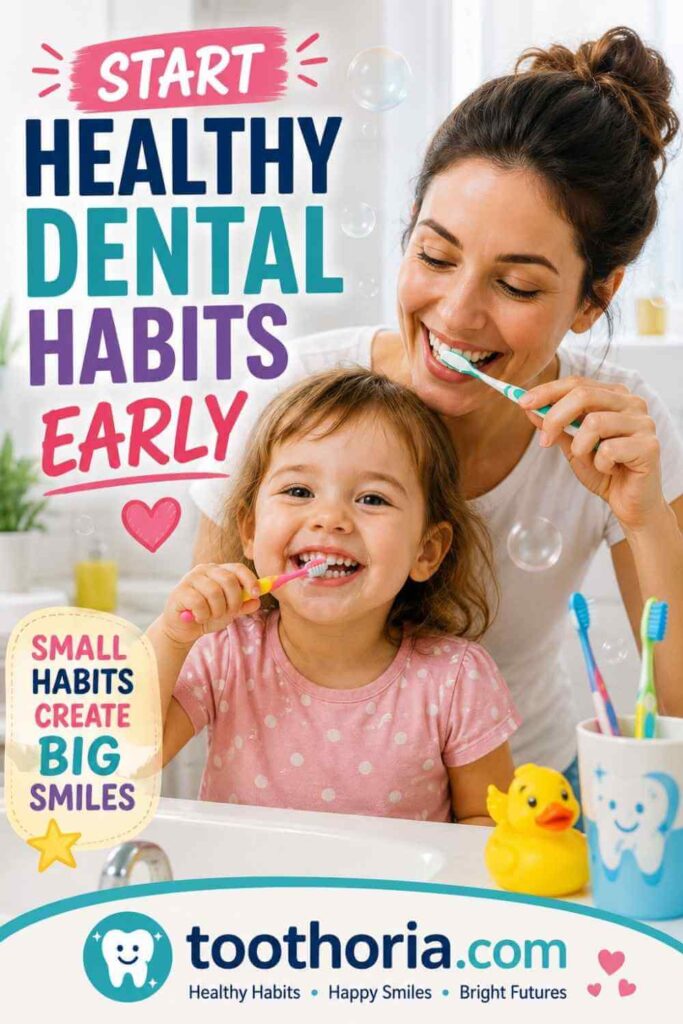
Prevention is always cheaper, faster, and less stressful than treatment. Starting preventive dental habits in the first year of life pays dividends for decades. Regular checkups, fluoride applications, and dental sealants dramatically reduce the risk of tooth decay and gum disease.
Children who receive early preventive care miss fewer school days due to dental pain. Studies by the Centers for Disease Control show that dental disease causes over 34 million school hours lost annually in the United States. Consistent early care prevents that entirely avoidable disruption to your child’s education and social development.
Building Lifelong Oral Hygiene Habits
Children learn by watching and repeating. When oral hygiene becomes part of a daily routine before age two, it becomes automatic rather than a battle. Brushing twice daily and introducing flossing early builds a habit that persists through adolescence and adulthood.
The role of fluoride in pediatric dentistry is significant in building strong, cavity-resistant enamel from the start. Fluoride treatments at routine dental visits strengthen the tooth surface and protect against acid attacks from bacteria. Your child’s dentist will determine the right fluoride protocol based on age and risk level.
How Diet Shapes a Child’s Dental Future
What your child eats directly determines how vulnerable their teeth are to decay. Frequent snacking on sugary or starchy foods creates an acidic environment that breaks down enamel rapidly. Limiting fermentable carbohydrates and encouraging foods that naturally clean the teeth reduces this risk substantially.
Certain foods actually support saliva production, which neutralizes acid and remineralizes enamel naturally. Foods rich in calcium, phosphorus, and water content actively protect teeth between brushing. Understanding dental hygiene food tips helps parents make daily food choices that protect their child’s smile at every meal.
Choosing the Right Dental Professional for Your Child
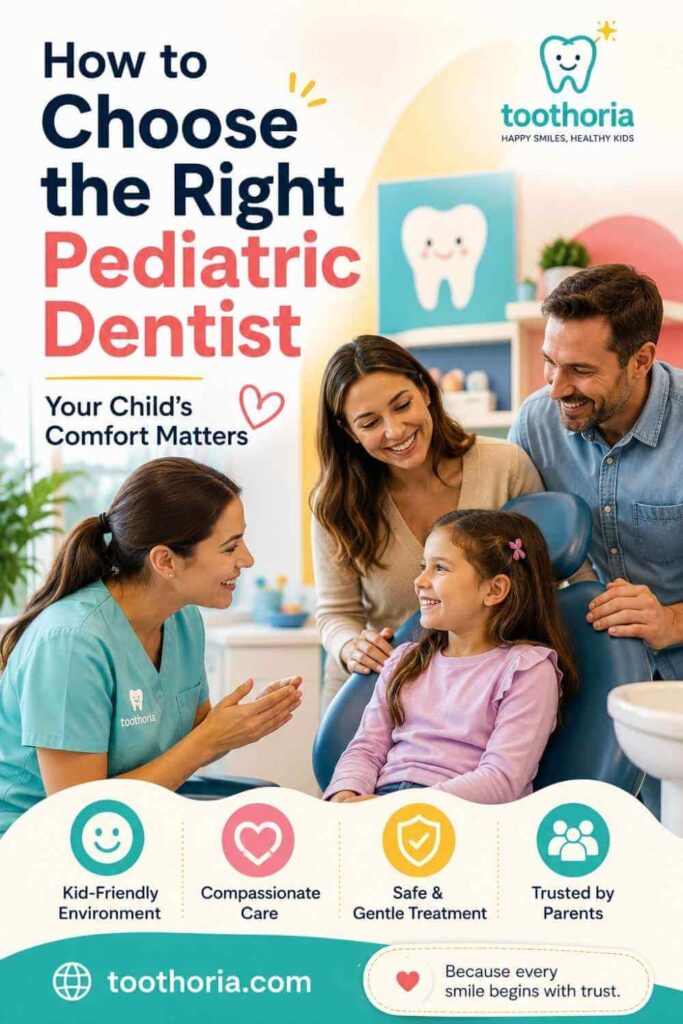
Not every dentist is equally prepared to work with young children. Pediatric dentists complete two to three additional years of specialty training after dental school. That training covers child psychology, sedation techniques, and developmental milestones specific to growing mouths.
A dentist experienced with children uses different communication styles, tools, and office environments than a general practice. The right professional makes dental visits positive rather than traumatic. Positive early experiences shape how your child approaches dental care for the rest of their life.
Pediatric Dentist vs Family Dentist
Choosing between a kids dentist or family dentist is a real decision many parents face. Pediatric dentists specialize exclusively in children and understand developmental stages inside out. Family dentists offer convenience and see all ages but may not have the same specialized training in pediatric behavior management.
For children with anxiety, complex developmental needs, or significant dental issues, a pediatric specialist is often the better choice. For generally healthy children with cooperative behavior, a skilled family dentist may serve well. Always ask about pediatric experience before scheduling your child’s first visit.
Signs Your Child Needs Immediate Dental Attention
Tooth pain, swelling, visible dark spots on teeth, and bleeding gums that don’t resolve with brushing all signal a problem that needs prompt evaluation. A dental infection in a child can spread rapidly and, in rare severe cases, become a serious systemic health threat.
Don’t wait for a scheduled appointment if your child shows these signs. Contact your dentist immediately and describe symptoms clearly. Knowing how serious a tooth infection can become helps parents understand why acting quickly is never optional when infection is involved.
The Cost of Skipping Early Dental Care
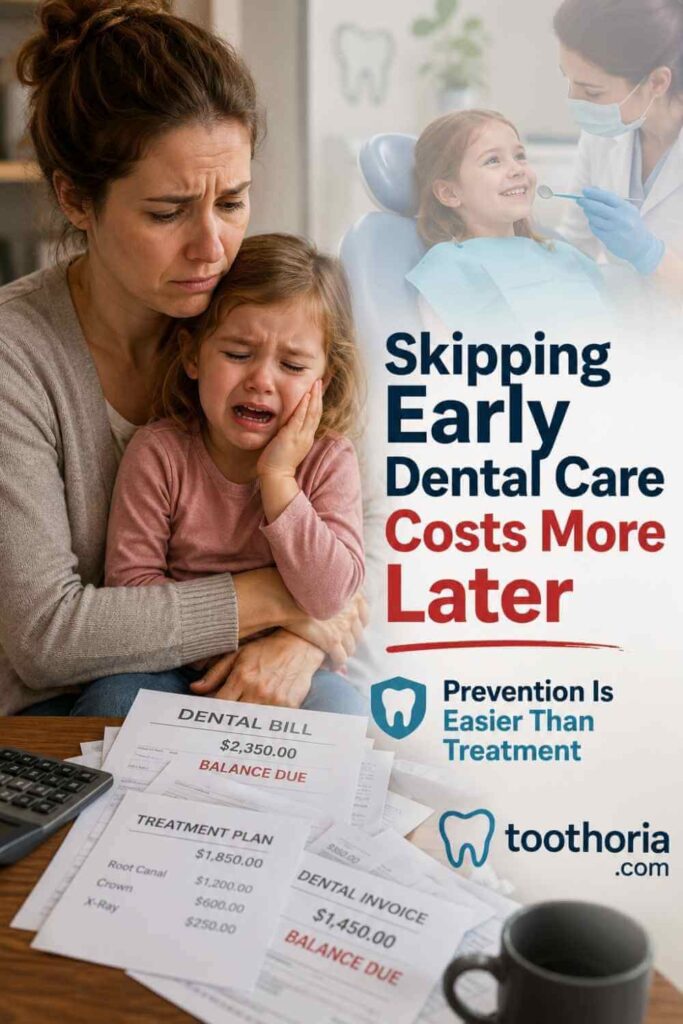
Skipping early pediatric dental visits feels like saving money but actually costs far more over time. A routine checkup costs a fraction of what a dental crown, extraction, or space maintainer costs. Dental emergencies for children are both emotionally painful and financially significant.
Medicaid and CHIP programs in the United States cover dental care for children in low-income families. Many dental offices also offer payment plans or sliding-scale fees. Cost should never be the reason a child misses out on the protective benefits of early professional dental care.
Emotional and Social Impact on Children
Dental pain affects a child’s ability to concentrate, sleep, eat, and interact with peers. Children with visible tooth decay often experience embarrassment, teasing, and lowered self-esteem. These social consequences extend beyond the mouth and affect emotional development in measurable ways.
Healthy teeth support confident smiling, clear speaking, and comfortable eating in social settings. Children who grow up with good oral health carry that confidence into adulthood. Early pediatric dental care protects not just physical health but psychological wellbeing too.
Financial Reality of Delayed Dental Treatment
Treating advanced tooth decay in a young child often requires sedation or general anesthesia, which adds thousands of dollars to the cost. A single pediatric dental procedure under anesthesia can cost between $1,500 and $5,000 depending on the extent of decay. Prevention at $50 to $150 per visit is the far smarter financial decision.
Dental bridge costs, orthodontic treatment, and restorative work in adulthood often trace directly back to untreated childhood dental problems. Investing in early care eliminates or reduces the need for many of these expensive procedures. The math strongly favors prevention at every stage.
Conclusion
Early pediatric dental care isn’t optional. It’s one of the most impactful investments you can make in your child’s health, confidence, and future. Starting dental visits by age one, building consistent oral hygiene habits, choosing the right dental professional, and understanding the consequences of delay all work together to protect your child’s smile for life. Don’t wait for pain to motivate action. Schedule that first visit, stay consistent with checkups, and give your child the lifelong advantage of a healthy mouth from day one.