
Introduction
Preventive dental care for toddlers can feel overwhelming when you’re dealing with brushing battles, bedtime milk, and constant snack requests throughout the day. Many parents think cavities in baby teeth are unavoidable, but in reality, small daily habits make a huge difference. With the right brushing routine, healthy food choices, fluoride use, and regular dental checkups, preventive dental care for toddlers becomes much easier and far less stressful. This guide shares practical, real-life tips to help parents prevent cavities, protect baby teeth, and build healthy oral hygiene habits that last as children grow.
Preventive Dental Care for Toddlers
I still remember a mom bringing her 3-year-old into the clinic for what she thought was “just a tiny brown spot.” By the time we examined it properly, the cavity had already spread between two baby teeth. Her first reaction was something I hear all the time:
“But we brush every night.”
The truth is, preventive dental care for toddlers is rarely about one single habit. It’s usually a mix of brushing technique, snacks, bedtime routines, hidden sugars, and timing.
And honestly? Toddlers are not easy patients.
They bite toothbrushes, refuse toothpaste, scream during flossing, and somehow find crackers at 9 PM after already brushing their teeth. Parents often feel like they’re failing when cavities appear, even when they’re trying hard.
The good news is that toddler dental problems are very preventable once you understand what actually matters most.
Why Preventive Dental Care Matters So Early
A lot of parents assume baby teeth are temporary, so small cavities are not a big deal. I used to hear this almost daily in practice.
But baby teeth do important jobs:
- Help toddlers chew properly
- Support speech development
- Hold space for adult teeth
- Guide jaw growth
- Prevent pain and infections
One untreated cavity can quickly turn into sleepless nights, emergency visits, or even dental surgery under anesthesia. I’ve seen toddlers who stopped eating on one side because a tooth hurt every time food touched it.
That’s why early prevention matters far more than treatment later.
The goal is simple:
- Keep the mouth healthy
- Avoid painful procedures
- Build positive dental habits early
If you already struggle with cavity prevention at home, this guide on preventing cavities naturally at home explains additional daily habits that help reduce decay risk.
When Should Toddlers Start Dental Care?
Earlier than most parents expect.
A good rule is:
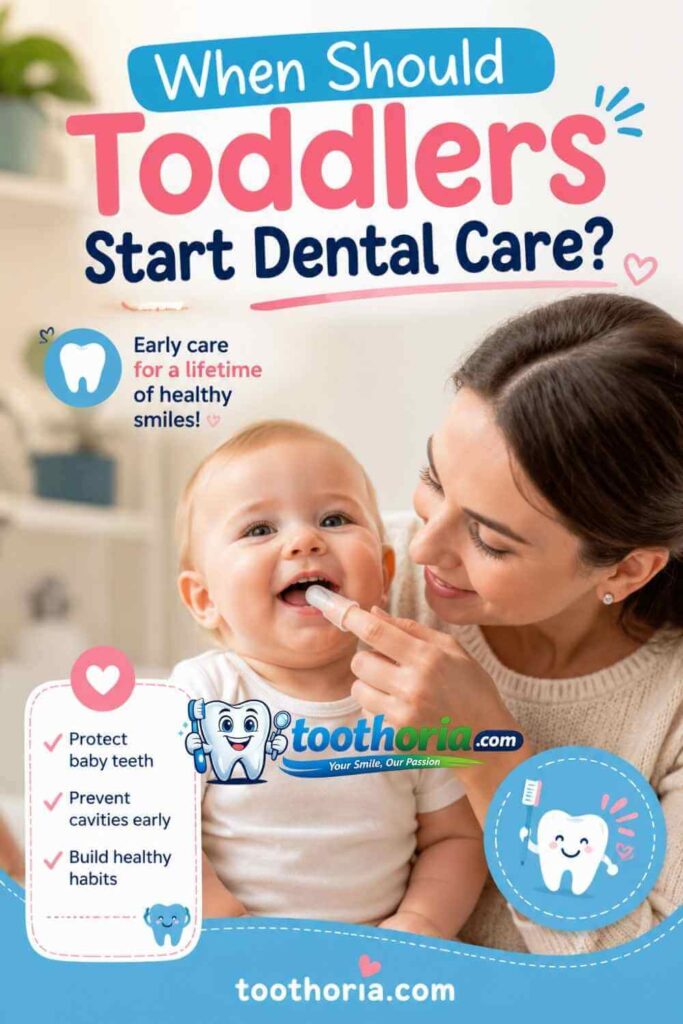
- Clean gums even before teeth appear
- Start brushing as soon as the first tooth erupts
- Schedule the first dental visit by age 1
That first appointment is usually quick and educational. In many cases, toddlers sit on a parent’s lap while we count teeth and check for early decay.
Those early visits help children become comfortable with the dental environment before they ever need treatment.
The American Academy of Pediatric Dentistry also recommends establishing a “dental home” by age one.
The Biggest Mistake Parents Make at Bedtime
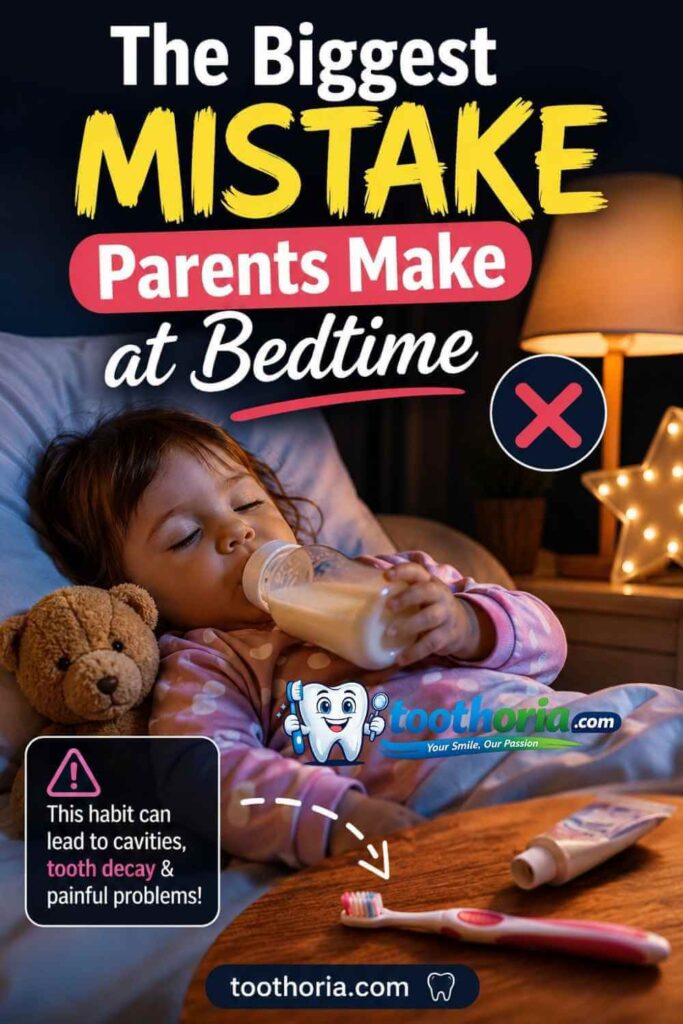
This one causes more toddler cavities than almost anything else.
Milk after brushing.
Especially:
- Warm milk bottles
- Sippy cups in bed
- Chocolate milk before sleep
- Juice at night
During sleep, saliva production drops. Teeth basically sit coated in sugars for hours.
I’ve seen severe decay in otherwise healthy toddlers because of this single habit.
If your toddler absolutely needs comfort at bedtime after brushing, plain water is the safest option.
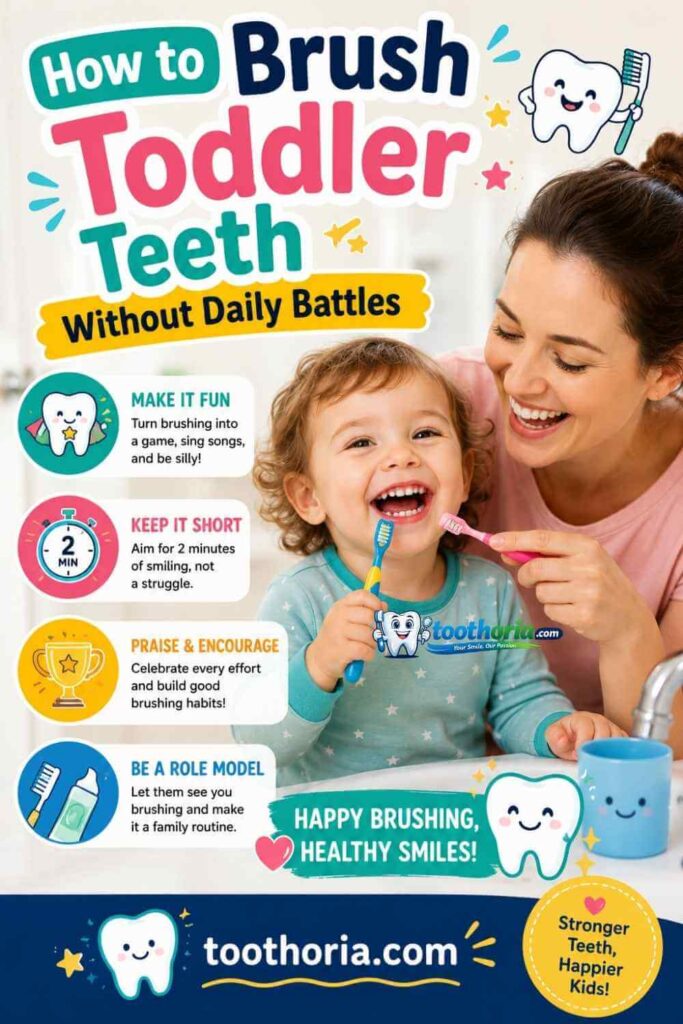
How to Brush Toddler Teeth Without Daily Battles
Some toddlers cooperate beautifully.
Others act like you’re attempting medieval torture.
One thing I learned from parents over the years: flexibility works better than perfection.
What Actually Helps
1. Let Them Hold a Second Toothbrush
This works surprisingly well.
You brush while they “brush” too. Toddlers love imitation.
2. Use Tiny Circular Motions
Many parents scrub aggressively. That usually makes toddlers resist more.
Gentle circles along the gumline work best.
3. Keep It Short
You do not need a 5-minute session.
Even 1–2 effective minutes twice daily makes a huge difference.
4. Use a Rice-Sized Amount of Fluoride Toothpaste
For children under 3:
- Use a smear or rice-sized amount
For ages 3–6:
- Pea-sized amount
If you’re unsure about fluoride safety, this detailed article on fluoride in pediatric dentistry explains the benefits and common misconceptions clearly.
Best Foods for Healthy Toddler Teeth
This part surprises many parents.
The “healthy-looking” snacks are often cavity triggers.
Sticky carbohydrates like crackers, cereal bars, gummies, and dried fruit can cling to teeth longer than chocolate.
Some better tooth-friendly snack ideas:
- Cheese cubes
- Yogurt without added sugar
- Apples
- Cucumbers
- Boiled eggs
- Nuts (if age-appropriate)
- Strawberries
Crunchy foods also help stimulate saliva, which naturally protects teeth.
This guide on foods that increase saliva production explains how saliva helps reduce cavity risk naturally.
Fluoride: Helpful or Harmful?
This question comes up constantly.
From years of clinical experience, I can tell you fluoride is one of the biggest reasons we now see fewer severe childhood cavities compared to decades ago.
But dosage matters.
Too little fluoride may not protect teeth properly.
Too much swallowed toothpaste repeatedly can lead to fluorosis.
That’s why pediatric dentists recommend controlled amounts instead of avoiding fluoride entirely.
The Centers for Disease Control and Prevention (CDC) fluoride guide has useful evidence-based information for parents who want reliable research.
Signs Your Toddler May Already Have Early Cavities
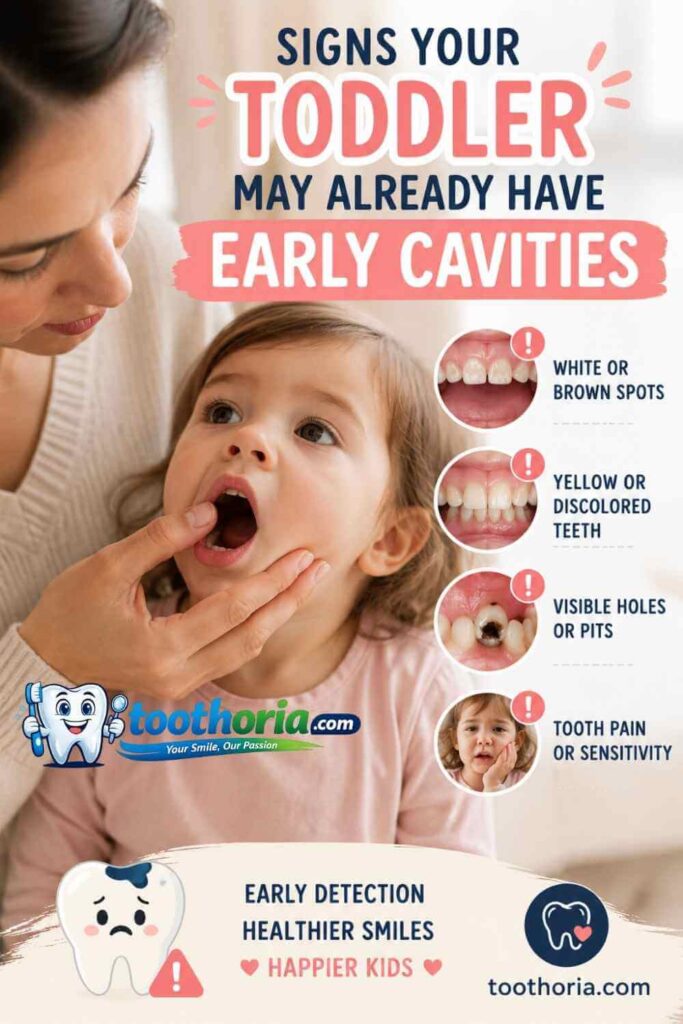
Many parents expect cavities to look dark black immediately.
Early decay often looks like:
- Chalky white spots near gums
- Yellow or brown lines
- Sensitivity during eating
- Food trapping between teeth
- Bad breath
- Swollen gums around a tooth
Persistent bad breath can sometimes point to deeper oral hygiene problems too. This article on causes of bad breath and oral bacteria explains it in simple terms.
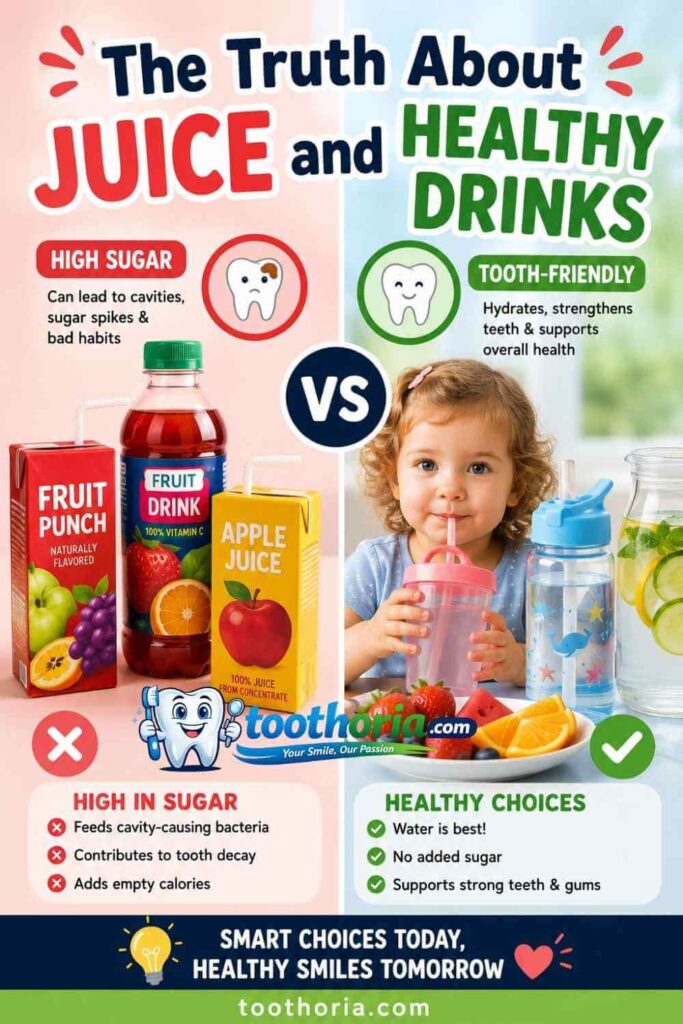
The Truth About Juice and “Healthy Drinks”
I’ve had parents proudly tell me:
“We don’t give soda. Only juice.”
Unfortunately, frequent juice sipping can still cause cavities.
Even 100% fruit juice contains natural sugars and acids.
The bigger issue is frequency, not just quantity.
A toddler slowly sipping juice over two hours exposes teeth continuously.
Better habits include:
- Offer juice only with meals
- Use open cups instead of bottles
- Encourage water between meals
- Avoid overnight drinks besides water
Do Toddlers Need Flossing?
Yes, once teeth touch each other.
This surprises a lot of parents because flossing toddlers sounds nearly impossible.
But cavities between baby teeth are extremely common.
Floss picks designed for children make this much easier than traditional string floss.
You can also learn more about the pros and limitations of traditional flossing methods if you want simpler routines for young children.
How Often Should Toddlers Visit the Dentist?
Most toddlers should visit every 6 months.
Some children with higher cavity risk may need more frequent visits.
Risk factors include:
- Frequent snacking
- Previous cavities
- Sleeping with bottles
- Special healthcare needs
- Dry mouth issues
- High sugar intake
Parents sometimes wonder whether they should choose a pediatric specialist or stay with a family dentist. This helpful comparison on kids dentist vs family dentist choices breaks down the pros and cons clearly.
Common Toddler Dental Mistakes I See Repeatedly
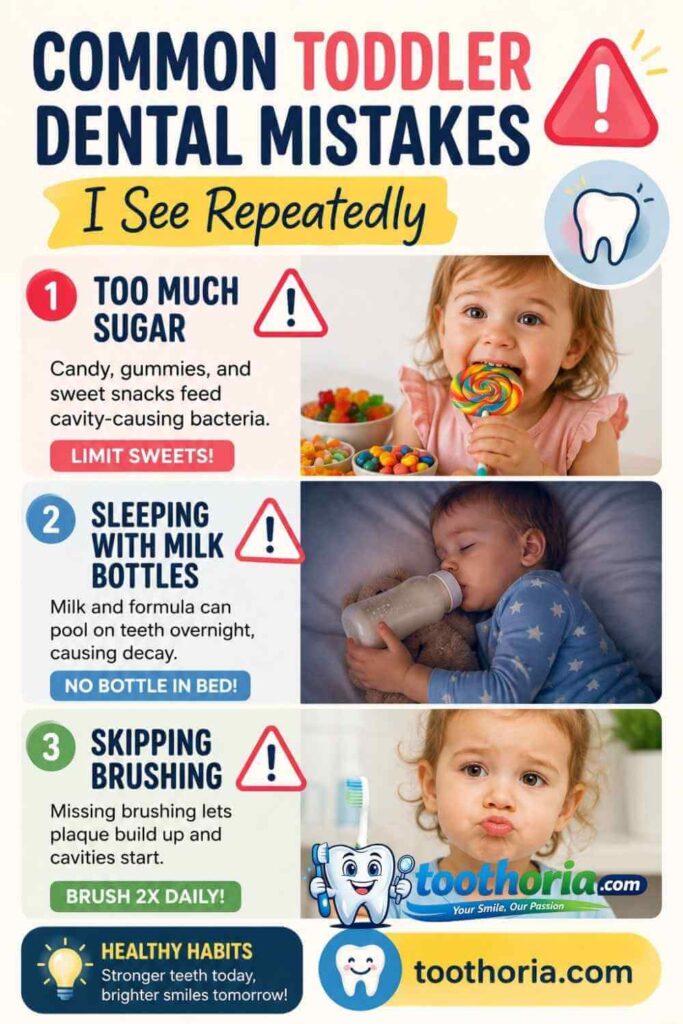
These are the patterns I noticed most often over the years.
Brushing Only Once Daily
Night brushing matters most because saliva decreases during sleep.
Letting Toddlers Brush Alone Too Early
Most children need help much longer than parents think.
Honestly, many 6-year-olds still miss large areas.
Constant Snacking
Frequent grazing means teeth never fully recover from acid attacks.
Assuming “No Pain” Means “No Problem”
Early cavities are often painless.
By the time pain appears, treatment usually becomes more complicated.
A Simple Toddler Dental Routine That Works
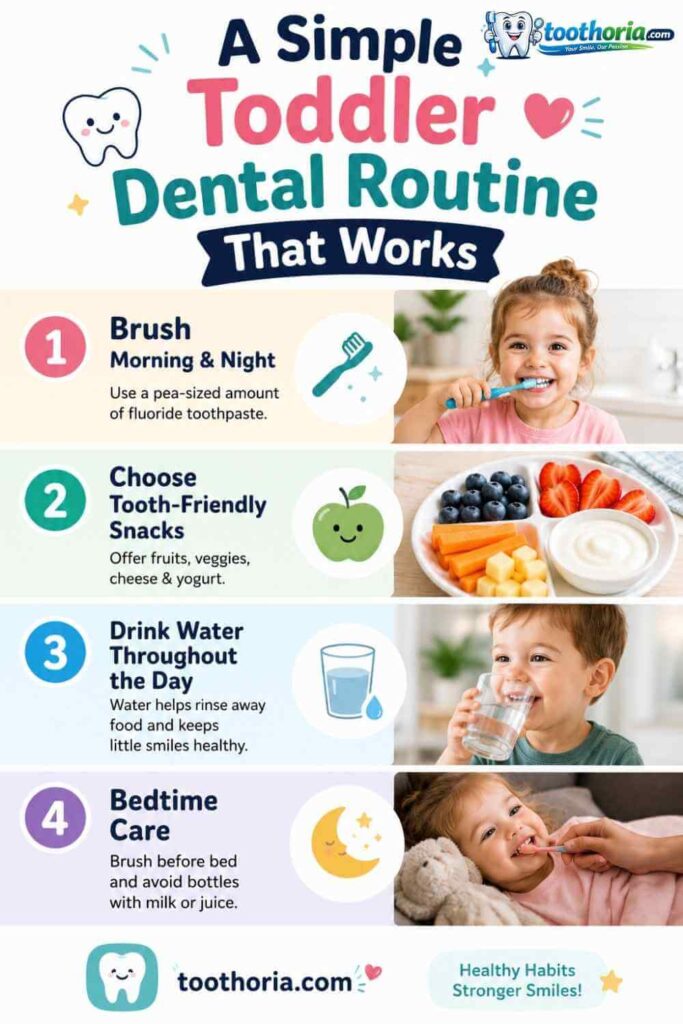
Parents often ask me for the easiest realistic routine.
This is the one I personally recommend most often:
Morning
- Brush with fluoride toothpaste
- Quick rinse or water after breakfast
During the Day
- Limit sticky snacks
- Encourage water often
- Avoid constant sipping drinks
Night
- Brush thoroughly
- Floss touching teeth
- No milk or juice afterward
- Water only before bed
Simple routines done consistently beat complicated routines done occasionally.
What If Your Toddler Hates Brushing?
Very normal.
A few tricks that genuinely help:
- Sing songs during brushing
- Use timers
- Let toddlers choose toothbrush colors
- Brush together as a family
- Use reward charts
- Try electric toothbrushes designed for kids
Sometimes parents feel discouraged after difficult weeks. That’s understandable.
But consistency matters more than perfection.
I’ve seen dramatic improvements in toddlers whose parents simply stayed patient and kept routines predictable.
FAQ
How early can toddlers get cavities?
Even babies can develop cavities shortly after teeth erupt, especially with frequent nighttime milk or juice exposure.
Is fluoride toothpaste safe for toddlers?
Yes, when used in the correct amount. A rice-sized smear is typically recommended for children under age 3.
Should toddlers use electric toothbrushes?
Many toddlers actually brush better with electric toothbrushes because the vibration makes cleaning easier and more engaging.
Are baby teeth really important if they fall out anyway?
Absolutely. Baby teeth support speech, chewing, jaw development, and spacing for adult teeth.
What drinks are safest for toddler teeth?
Plain water is best between meals. Milk with meals is generally fine. Frequent juice sipping increases cavity risk.
How do dentists treat cavities in toddlers?
Treatment depends on severity. Small cavities may need fillings, while deeper decay can require crowns or sedation dentistry.
Final Thoughts
Preventive dental care for toddlers is not about creating a perfect routine overnight.
It’s about small habits repeated consistently:
- Brushing daily
- Limiting sugar exposure
- Scheduling early dental visits
- Catching problems before they become painful
Some days will go smoothly.
Other days your toddler may scream because the toothbrush is apparently offensive.
That’s parenting.
The families who usually see the best long-term results are not the “perfect” ones. They’re the consistent ones.
And honestly, that matters far more.