

Have you ever noticed a strong, unpleasant smell coming from your mouth even after brushing your teeth? You might be dealing with something called perio breath. It is not just regular bad breath. It is a specific type of odor that comes from a deeper problem inside your gums and teeth. Many people do not even know they have it until someone else tells them or their dentist brings it up.
Perio breath is closely tied to gum disease, also called periodontal disease. When harmful bacteria build up under your gumline, they release gases that smell truly awful. These are not the same bacteria that cause morning breath. They are far more aggressive, and they live deep inside pockets in your gums where your toothbrush simply cannot reach. That is what makes perio-related bad breath so different and so stubborn.
The good news is that perio-related bad breath can be treated. It does not have to be a permanent part of your life. In this guide, you will learn exactly what perio breath is, what it smells like, what causes it, how to know if you have it, and most importantly, what you can do to fix it for good. This is everything you need to know, written simply and clearly so anyone can understand it.
What Is Perio Breath?

Perio breath meaning is simple. The word “perio” comes from “periodontal,” which refers to the area around your teeth, specifically your gums and the bone that holds your teeth in place. Bad breath perio is the bad breath caused by periodontal disease or gum disease.
It is different from the kind of bad breath you get after eating garlic or onions. That goes away after a few hours. perio-related bad breath does not go away with mints, gum, or even regular brushing. It keeps coming back because the source of the smell is bacteria living deep in your gum tissue.
When gum disease progresses, it creates small pockets between your teeth and gums. These pockets trap food, plaque, and bacteria. As those bacteria break down food and tissue, they release sulfur compounds. Those sulfur compounds are what create the strong, foul odor we call perio breath.
What Does Perio Breath Smell Like?
This is one of the most common questions people search for, and honestly, it is a fair one. Peridontal breath smell is very distinct. It is not like any other type of bad breath.
Most people describe perio-related bad breath as a deep, rotting smell. It has a strong sulfur or egg-like quality to it. Some people say it smells musty or like something decaying. It is a thick, heavy odor that seems to sit in the mouth and does not go away no matter how much you brush.
Does Perio Breath Smell Like Poop?
Yes, in some cases, bad breath perio does smell like poop. This happens because the bacteria involved in advanced gum disease produce the same types of gases that are found in fecal matter. These are called volatile sulfur compounds, and they are the same chemicals responsible for the smell of rotting organic material.
If your breath has a fecal or sewage-like quality to it, that is a strong sign that your gum disease may be in a more advanced stage. This is not something to ignore. The worse the smell, the more likely it is that you need professional dental treatment as soon as possible.
Perio Breath vs. Halitosis: What Is the Difference?
People often confuse perio breath vs. halitosis. Here is the simple difference.
Halitosis is a general term for chronic bad breath. It can come from many sources, such as your stomach, your diet, dry mouth, or poor oral hygiene. perio-related bad breath is a specific type of halitosis that comes directly from gum disease. Not all halitosis is perio breath, but perio breath is always a form of halitosis.
If your bad breath keeps coming back and your gums bleed when you brush or floss, you are likely dealing with peridontalo breath specifically, not just general halitosis.
Perio Breath Symptoms: How to Know If You Have It
One of the hardest parts about perio-related bad breath is that many people cannot detect it themselves. Can you smell your own perio breath? Often, no. Your nose adjusts to your own body odors over time. This is called olfactory adaptation. It means your brain stops registering smells it is used to.
Here are the most common perio breath symptoms to watch for:
Persistent bad breath that does not go away after brushing, flossing, or using mouthwash is the number one sign. If your breath is still bad an hour after you brush, take that seriously.
Bleeding gums when you brush or floss are a strong indicator of gum inflammation. Inflammation and bacteria go hand in hand.
Swollen or red gums that look puffy or feel tender are a classic sign of active gum disease.
Loose teeth or teeth that seem to shift can happen when gum disease has advanced to the point where it starts affecting the bone supporting your teeth.
A bad taste in your mouth that lingers throughout the day, especially in the morning, is another common perio breath symptom.
Receding gums that make your teeth look longer than before are a sign that the gum tissue is pulling away, creating more space for bacteria.
If you have three or more of these symptoms together, visit your dentist. Do not wait.
What Causes Perio Breath?
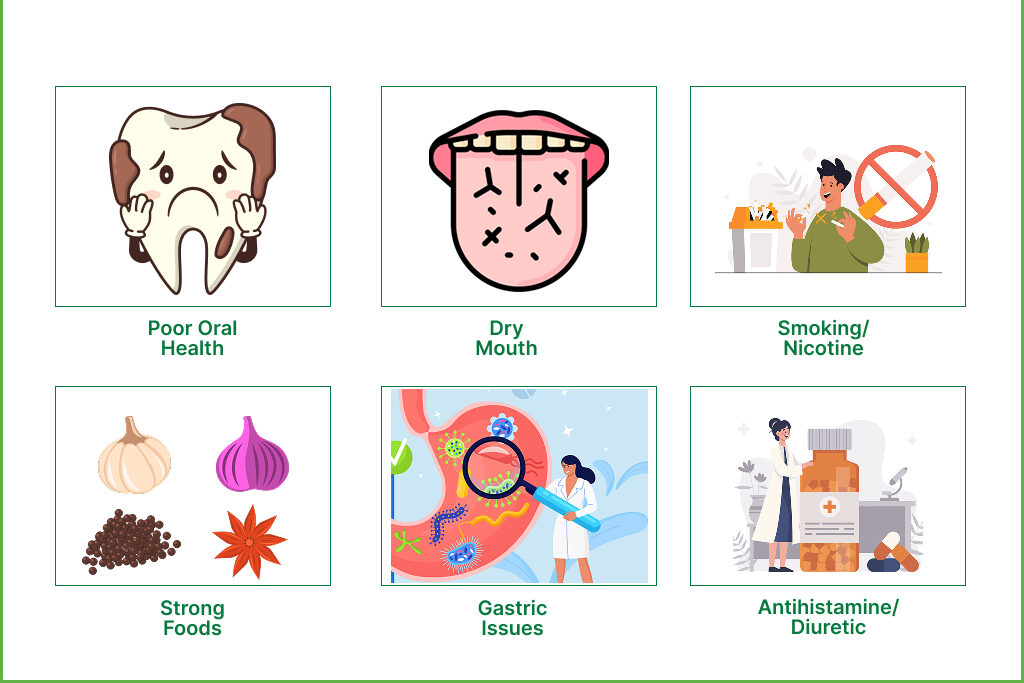
Understanding what causes perio breath helps you take the right steps to fix it. The main cause is gum disease, but several things contribute to why gum disease develops in the first place.
Poor Oral Hygiene
When you do not brush and floss properly, plaque builds up on your teeth and along your gumline. Plaque is a sticky film full of bacteria. If it is not removed regularly, it hardens into tartar, which can only be removed by a dental professional. The longer tartar stays on your teeth, the more bacteria multiply, and the more likely gum disease becomes.
Bacterial Overgrowth Under the Gumline
The specific bacteria that cause perio breath thrive in low-oxygen environments. Once they get deep into gum pockets, they are very hard to reach. They feed on food particles and dead tissue, releasing sulfur gases as a byproduct. This is the direct cause of that rotting smell.
Smoking and Tobacco Use
Smoking is one of the biggest risk factors for gum disease and bad breath perio. Tobacco reduces blood flow to your gums, which makes it harder for your body to fight infections. Smokers are much more likely to develop severe gum disease and have much worse perio breath as a result.
Dry Mouth
Saliva is your mouth’s natural cleaning system. It washes away bacteria and food particles constantly. When your mouth is dry, bacteria multiply faster. Dry mouth can be caused by medications, breathing through your mouth, or simply not drinking enough water.
Does Mouth Breathing Cause Perio Disease?
Yes, mouth breathing can contribute to gum disease and perio breath. When you breathe through your mouth, it dries out your gum tissue and reduces saliva flow. This creates a more favorable environment for harmful bacteria to grow. People who are chronic mouth breathers, especially at night, are at a higher risk of developing gum inflammation and bad breath.
Diabetes and Other Health Conditions
People with uncontrolled diabetes are at significantly higher risk of gum disease. High blood sugar creates an environment where bacteria thrive. Other conditions that suppress the immune system can also make gum disease worse.
Hormonal Changes
Hormonal shifts, like those during pregnancy or even perimenopause, can affect gum sensitivity and make gum disease more likely. While perimenopausal shortness of breath is a different topic entirely, it is worth noting that hormonal changes during the perimenopausal period can affect oral health too.
How to Know If You Have Perio Breath
Asking yourself “How to know if I have perio breath” is smart, but self-diagnosis is tricky. As mentioned above, you may not be able to smell it yourself. Here are some practical ways to check.
The Wrist Test: Lick the inside of your wrist, let it dry for ten seconds, and then smell it. This is not a perfect test, but it can give you a rough idea of your breath odor.
Ask Someone You Trust: This is the most direct method. Ask a close family member or partner if your breath has an unusual smell. Tell them to be honest. It might feel awkward, but it is worth it.
Talk to Your Dentist: The best way to know for sure is to ask your dentist. They can check the depth of your gum pockets and tell you right away if gum disease is the source of your breath issues.
Perio Breath Treatment: What Actually Works
Here is the part most people want to get to. Can perio breath be cured? Yes, it can. And does perio-related bad breath go away with the right treatment? Absolutely, with consistent care and professional help. Here is how to fix perio breath for real.
Professional Deep Cleaning (Scaling and Root Planing)
This is the most effective treatment for perio breath at the clinical level. Your dentist or periodontist will use special tools to remove tartar and bacteria from deep below your gumline. This process is called scaling and root planing, and it is often referred to as a “deep cleaning.” It is not the same as a regular cleaning.
After a deep gum cleaning, many patients notice a dramatic improvement in their breath within a few days. The bacteria that were causing the smell are physically removed from the pockets where they were living.
Consistent Daily Brushing and Flossing
This sounds basic, but it is the foundation of treating and preventing perio breath. Brush twice a day for at least two minutes each time. Use a soft-bristled toothbrush and replace it every three months. Floss every single day, reaching all the way down to the gumline.
Perio Breath Mouthwash
Using the right bad breath perio mouthwash can make a real difference. Look for antiseptic mouthwashes that contain chlorhexidine or cetylpyridinium chloride. These ingredients specifically target the bacteria associated with gum disease. Some people search for whether TheraBreath Perio Therapy counts as a proper treatment. TheraBreath does make a product marketed for periodontal support, and while it can help manage symptoms and reduce bacteria, it is not a replacement for professional treatment.
Use mouthwash after brushing and flossing, not as a substitute for them.
Antibiotics in Some Cases
In more advanced cases of gum disease, your dentist may prescribe antibiotic gels, chips, or antibiotics for gum infection that are placed directly in the gum pockets or taken by mouth. These help reduce the bacterial load and support healing. Read best antibiotics for gum infection.
Surgical Treatment for Advanced Cases
If gum disease has progressed significantly, surgical options like flap surgery or bone grafting may be needed. These treatments are done by a periodontist and address the deeper structural damage caused by advanced periodontal disease.
How to Get Rid of Perio Breath at Home
While professional treatment is essential, there is a lot you can do at home to speed up recovery and keep perio breath away.
Upgrade Your Brushing Technique
Most people do not brush properly. Use gentle circular motions rather than scrubbing back and forth. Pay extra attention to the gumline, where bacteria tend to hide. An electric toothbrush can be more effective than a manual one at reducing plaque.
Use an Interdental Brush or Water Flosser
Regular floss is great, but for people with gum disease, interdental brushes or water flossers can reach areas that regular floss misses. A water flosser, in particular, can flush bacteria out of deeper pockets better than string floss alone.
Tongue scraping
A huge amount of bacteria live on the surface of your tongue. Buy a tongue scraper and use it every morning. This alone can make a noticeable difference in how fresh your breath is throughout the day.
Stay Hydrated
Drink water consistently throughout the day. This keeps your mouth moist and helps flush away bacteria and food particles naturally.
Quit Smoking
If you smoke, this is the most impactful lifestyle change you can make for your gum health. Talk to your doctor about support programs or nicotine replacement options.
Best Ways to Hide Perio Breath Temporarily
If you need to manage peridontal breath in social situations while undergoing treatment, the best ways to hide perio breath include chewing sugar-free gum, drinking water frequently, avoiding strong-smelling foods like coffee and garlic, and using a zinc-based breath spray which can neutralize sulfur compounds temporarily. These are not cures. They just buy you time while the real treatment works.
Can Perio Breath Go Away Permanently?
Can you get rid of peridontal breath for good? Yes, but it requires commitment. If gum disease is treated thoroughly and you maintain excellent oral hygiene going forward, perio-related bad breath can be fully resolved. Can perio breath go away on its own without treatment? In very mild cases of early gingivitis, improved hygiene might be enough. But once it progresses to true periodontal disease, professional help is required.
How to cure gum disease breath permanently comes down to three things: treat the gum disease with professional care, maintain your oral hygiene every single day, and go back to your dentist regularly for checkups and cleanings.
Perio Breath and Emotional Impact
People with perio breath often deal with more than just a physical problem. The social anxiety around bad breath is real. Many people become withdrawn, avoid close conversations, or feel embarrassed in social situations. This is completely understandable.
If you have been dealing with perio breath for a while, know that you are not alone. Bad breath perio is extremely common, and it is a medical issue, not a personal failing. Treatment works, and many people experience life-changing improvements in their confidence and quality of life after addressing their gum disease.
Conclusion
Perio breath is more than just bad breath. It is a clear signal from your body that something is going on with your gum health. From the distinct rotting or sulfur-like smell to the persistent nature that no mint or mouthwash can fix, peridontal breath stands apart from ordinary bad breath. Understanding what perio breath is, recognizing its symptoms, and knowing what causes it puts you in a much better position to take action. The answer to “Does gum disease breath go away?” is yes, but only when the root cause, gum disease, is properly treated.
If you are dealing with perio-related bad breath, do not wait and hope it gets better on its own. Book a dental appointment, get a proper evaluation of your gum health, and start a perio breath treatment plan. With the right professional care combined with a strong daily oral hygiene routine, you can completely eliminate perio breath, protect your smile, and walk into every conversation with real confidence. Your oral health affects your whole life, and taking this seriously is one of the best things you can do for yourself.
Frequently Asked Questions
What does perio breath smell like?
Perio-related bad breath has a strong, rotting, or sulfur-like smell. Many people describe it as similar to decay or in severe cases, even fecal matter. It is caused by sulfur gases released by bacteria living deep in infected gum pockets.
How do you get rid of perio breath?
The most effective way is through professional dental treatment, specifically deep cleaning procedures called scaling and root planing. At home, consistent brushing, flossing, tongue scraping, and using an antibacterial mouthwash all help significantly.
Is perio breath a thing?
Yes, absolutely. Perio-related bad breath is a real and recognized dental condition. It is the specific type of bad breath caused by periodontal (gum) disease, and it is one of the most common symptoms dentists look for when diagnosing gum issues.
What causes periodontal breath?
Periodontal breath is caused by harmful bacteria that live in deep gum pockets created by gum disease. These bacteria break down tissue and food particles and release volatile sulfur compounds as a byproduct. Those sulfur gases are what create the distinctive foul odor.