
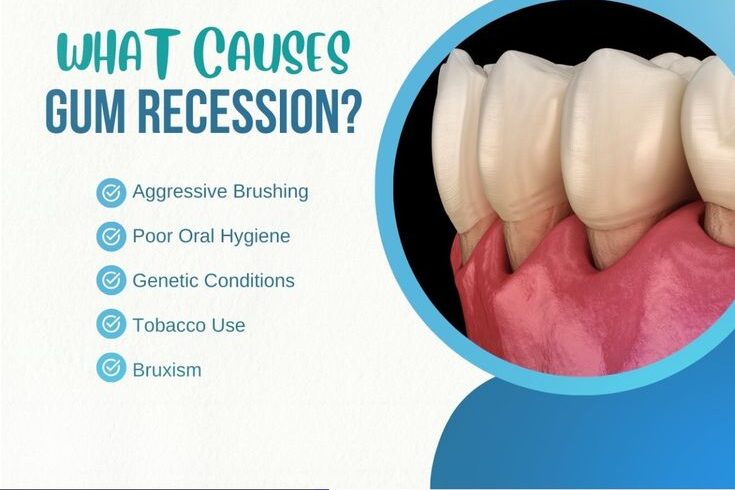
What is gum recession? Gum recession is something most people do not notice until it is already causing pain. You might feel a sudden sensitivity when drinking cold water or notice your teeth look longer than they used to. That is gum recession happening right in front of you. It is one of the most common dental problems in adults worldwide, yet most people have no idea what it actually is or what causes it until a dentist points it out during a routine checkup.
Gum recession happens when the gum tissue surrounding your teeth starts pulling back, moving away from the tooth and exposing the root underneath. That exposed root has no enamel covering it, which makes it extremely sensitive and vulnerable to decay, bacteria, and further damage. The earlier you catch gum recession, the easier it is to manage and slow down.
What Causes Gum Recession?
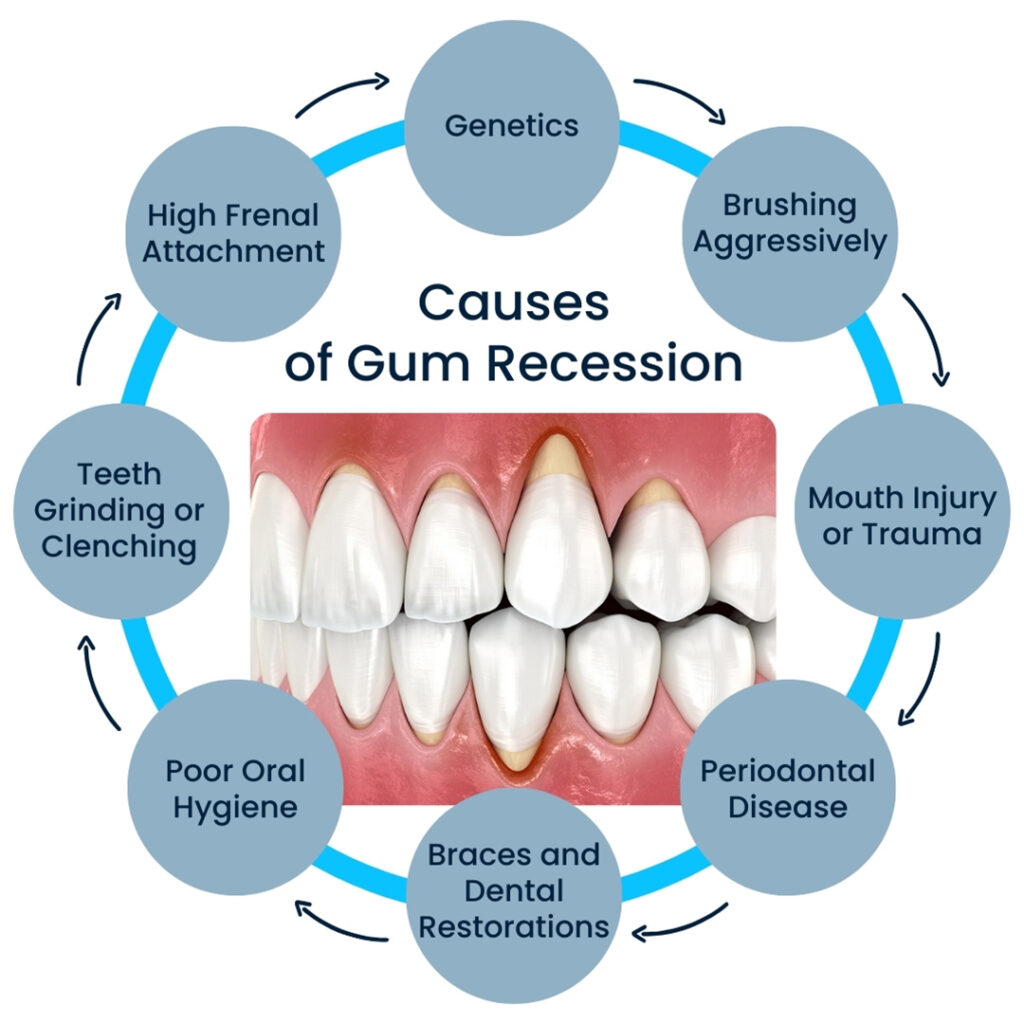
Gum recession does not happen overnight. It builds up slowly over months or years, and several different things can trigger it.
- Aggressive brushing is the number one cause. Scrubbing your teeth too hard with a medium- or hard-bristle brush gradually wears the gum tissue away
- Gum disease (periodontitis) is a bacterial infection that destroys the soft tissue and bone holding teeth in place
- Genetics means some people are simply born with thinner gum tissue that recedes more easily regardless of oral hygiene habits
- Teeth grinding or clenching puts continuous mechanical pressure on gums that slowly pushes tissue back
- Hormonal changes in women during pregnancy or menopause can make gums more sensitive and prone to recession
- Tobacco use reduces blood flow to gum tissue, making it weaker and more likely to recede
- Misaligned teeth create uneven pressure on specific spots along the gumline
- Lip or tongue piercings rubbing repeatedly against gum tissue can cause localized recession over time
Early Warning Signs of Gum Recession
Catching gum recession early makes a huge difference. These are the signs to watch for:
- Teeth that look visibly longer than before
- A notch or groove you can feel with your tongue near the gumline
- Increased sensitivity to hot, cold, or sweet foods and drinks
- Bleeding after brushing or flossing
- Red, swollen, or tender gum tissue
- Teeth that feel slightly loose in advanced cases
- Visible dark or yellowish root surface near the base of a tooth
If you notice any of these signs of gum recession, book a dental appointment as soon as possible. What is gum recession in early stages? It is a condition that can be managed with simple non-surgical treatments and the right home care routine before it causes serious damage.
How Dentists Diagnose Gum Recession
A dentist diagnoses gum recession using a small instrument called a periodontal probe. They gently measure the depth of the pocket between your tooth and gum tissue. Healthy gums have a pocket depth of 1 to 3 millimeters. Anything deeper signals disease or recession. X-rays are also taken to check whether the underlying bone has been affected, which helps the dentist decide how aggressive the treatment needs to be.
Types of Gum Recession
Not all gum recession is the same. Understanding what is gum recession in its different forms helps dentists classify it into the right categories based on severity and choose the most effective treatment for each case.
Mild recession involves slight tissue loss with no bone damage. This is the easiest stage to manage with improved home care and professional cleaning.
Moderate recession involves more significant tissue and possibly some early bone loss. Treatment may include deep cleaning procedures like scaling and root planing.
Severe recession involves major tissue and bone loss with significant root exposure. This stage often requires surgical intervention, such as a gum graft.
Can Gum Recession Be Reversed?
This is the most important question people ask about what is gum recession recovery, and the honest answer is no, not naturally. Gum tissue does not regenerate on its own once it has receded. However, gum recession can absolutely be stopped from getting worse, and in cases requiring it, a dentist can surgically restore lost tissue through a gum graft procedure.
What you can do at home is protect the tissue you still have. Using a soft-bristled toothbrush, brushing with gentle pressure, using a clinically proven gum recession toothpaste with stannous fluoride, and visiting your dentist regularly are the most effective steps you can take to stop gum recession from progressing further.
Treatment Options for Gum Recession
Non-Surgical Treatments
- Scaling and root planing is a deep cleaning procedure that removes plaque and tartar from below the gumline, allowing inflamed tissue to heal and sometimes reattach slightly
- Desensitizing agents applied by a dentist can reduce pain from exposed roots while treatment continues
- Antimicrobial therapy using medicated mouthwash or localized antibiotic placement helps kill bacteria causing active gum disease
Surgical Treatments
- A connective tissue graft takes tissue from the roof of your mouth and attaches it to the receded area to cover exposed roots
- A free gingival graft uses tissue directly from the palate and is typically used for patients with very thin gum tissue
- Pinhole surgical technique is a newer minimally invasive method where a small hole is made above the recession and gum tissue is gently repositioned downward without cutting or stitches
- Guided tissue regeneration uses a special membrane to stimulate the regrowth of bone and tissue in areas of significant loss
How to Prevent Gum Recession
Prevention is always easier than treatment when it comes to what is gum recession and how it progresses. Building these simple daily habits into your routine makes the biggest difference in keeping your gums healthy and stopping recession before it starts:
- Switch to a soft-bristled toothbrush immediately
- Use light pressure and small circular strokes when brushing
- Floss once daily to remove plaque between teeth
- Use a stannous fluoride toothpaste designed for gum health
- Wear a nightguard if you grind your teeth
- Quit smoking or using tobacco products
- Visit your dentist every six months for professional cleaning
- Avoid tongue or lip piercings near the gumline
Frequently Asked Questions
What is gum recession in simple terms?
It is when your gums pull back from your teeth, exposing the sensitive root underneath.
Is gum recession serious?
Yes. Left untreated, it leads to sensitivity, decay on exposed roots, and eventually tooth loss.
At what age does gum recession start?
It can start as early as your 30s but is most common in adults over 40. Aggressive brushing can cause it at any age.
Can gum recession heal on its own?
No. Gum tissue does not grow back naturally. A dentist can surgically restore it or help you stop further loss.
What is the fastest way to stop gum recession?
See a dentist immediately, switch to a soft brush, use a stannous fluoride toothpaste, and stop brushing aggressively.
Does gum recession cause tooth loss? Does gum recession cause tooth loss?
In severe untreated cases, yes, because the bone and tissue supporting the tooth eventually break down completely.
Conclusion
Gum recession is a slow, silent condition that millions of people live with without realizing it until significant damage has already been done. What is gum recession doing to your mouth right now? It is quietly exposing your roots, weakening your tissue, and putting your teeth at risk every single day. Recognizing the early signs of gum recession and taking action with the right brushing habits and professional dental care can make the difference between saving your gums and losing teeth. Whether your gum recession is mild or moderate, the best time to act is always right now before it gets any worse.