
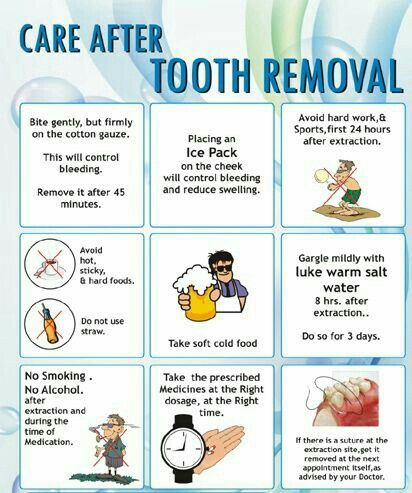
Getting a tooth pulled is something most people dread. But the procedure itself is usually over in minutes. The real challenge is what comes after. Most complications happen not because of the extraction itself, but because of what patients do during recovery.
Knowing the things to avoid after tooth extraction is genuinely more important than most people realize. One small mistake, like using a straw or eating the wrong food, can trigger a painful complication that sets your healing back by days.
This guide is straightforward, practical, and covers everything you need to know. No complicated medical terms. Just clear, honest advice that helps you heal faster.
What Actually Happens After a Tooth Is Pulled

When your tooth comes out, understanding things to avoid after tooth extraction starts with knowing what happens inside the socket. A blood clot forms inside the empty socket and that clot is not just bleeding stopping. It is the foundation of your entire recovery. New tissue and bone grow underneath it while the gum closes over the top
If that clot gets disturbed, the bone and nerve underneath are left completely exposed. That condition is called dry socket, and it is one of the most painful things a dental patient can experience. The throbbing pain usually starts two to four days after the extraction and radiates up into the jaw and ear.
The good news is that dry socket is almost entirely preventable. Every single restriction in this guide exists to keep that clot safe and give your body the conditions it needs to heal.
Things to Avoid After Tooth Extraction: The Full List
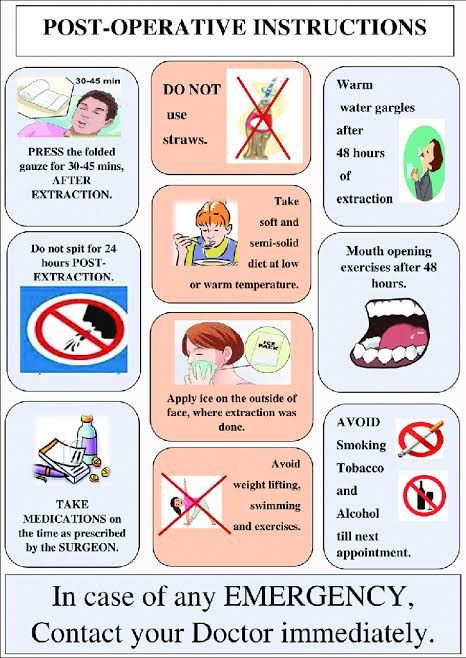
1. Using a Straw
This is the number one cause of dry socket. When you sip through a straw, your mouth creates suction. That suction pressure is strong enough to pull the blood clot right out of the socket before it has time to stabilize.
Avoiding straws is one of the top things to avoid after tooth extraction, so skip them for at least one full week. For wisdom tooth removal, make it two weeks. If you have a smoothie, eat it with a spoon. Tilt a cup gently to sip water. It feels awkward at first, but it is worth it.
2. Smoking and Vaping
Smoking after tooth extraction is the single biggest risk factor for dry socket. The same suction that makes straws dangerous applies here too. Every inhale creates negative pressure in your mouth that can dislodge the clot.
Beyond the suction, the chemicals in smoke slow tissue healing and increase infection risk. Vaping is equally problematic. The suction mechanics are the same, and the heat adds extra irritation to fresh tissue.
Dentists recommend avoiding smoking for at least 72 hours at minimum. The ideal recommendation is two full weeks. If you need nicotine, use patches or gum during recovery since these do not involve any suction.
3. Spitting and Forceful Rinsing
Most patients do not realize that spitting is one of the things to avoid after tooth extraction since it creates suction too. Avoid spitting for the first 24 hours entirely. The same goes for aggressively rinsing your mouth with water or mouthwash.
After 24 hours, you can rinse gently with warm salt water. Dissolve half a teaspoon of salt in a cup of warm water, tilt your head toward the extraction side, and let the water drain out naturally. Do not swish it around and do not spit it out forcefully.
4. Alcohol-Based Mouthwash
Regular mouthwash feels clean, but the alcohol content is actually harmful to a fresh extraction site. It can dissolve the blood clot and irritate the tender tissue around the socket. Stick to plain salt water rinses for at least the first week. Your mouth will be just as clean without the risk.
Activities & Things to Avoid After Tooth Extraction
Physical activity raises your heart rate and blood pressure. That increased circulation puts extra pressure on the extraction site and makes the blood clot more likely to dislodge or bleed again.
Avoid these for 48 to 72 hours:
- Running, jogging, or cycling
- Weightlifting or any resistance training
- Team sports or swimming
- Heavy housework like moving furniture
- Bending over repeatedly
Even activities that seem minor are among the things to avoid after tooth extraction. Bending down to pick things up repeatedly, or walking in intense heat, raises blood pressure enough to affect the socket. Take it easy and let your body focus its energy on healing.
When Can You Exercise Again?
Light walking is usually fine after 48 hours. Moderate activity like yoga or casual cycling can resume around day three to five. High-intensity training should wait a full week. When you do return, pay attention to your mouth. Any throbbing at the extraction site means you pushed too hard too soon.
What to Eat After Tooth Extraction
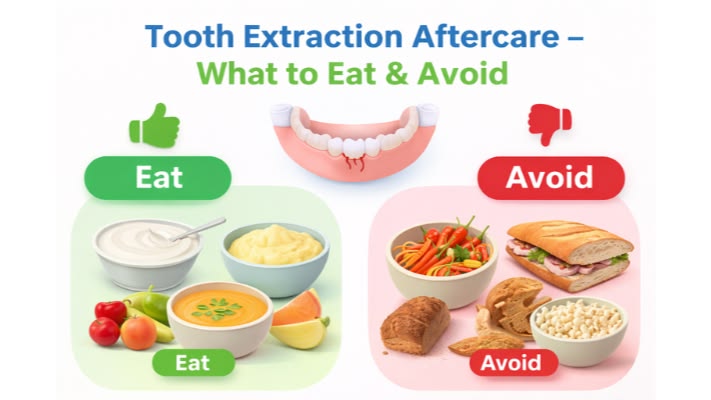
Understanding what to eat after tooth extraction alongside what to avoid makes recovery a lot more manageable. The goal is simple. You need foods that give you nutrition without requiring hard chewing, without leaving particles that can get stuck in the socket, and without irritating healing tissue.
| Avoid | Eat Instead |
| Chips, crackers, nuts | Mashed potatoes, hummus |
| Steak, bagels, chewy meat | Soft fish, scrambled eggs |
| Popcorn, raw vegetables | Soft cooked vegetables |
| Spicy foods | Plain yogurt, mild soups |
| Sticky candy, caramel | Pudding, applesauce |
| Citrus, tomatoes | Banana, avocado, melon |
| Seeds and small grains | Well-cooked oatmeal |
The rule that surprises most people is this. Even soft foods should be eaten on the opposite side of your mouth from the extraction. Food passing directly over the socket, even something as soft as mashed potatoes, can disturb the healing area.
Soft Foods to Eat After Tooth Extraction All Week
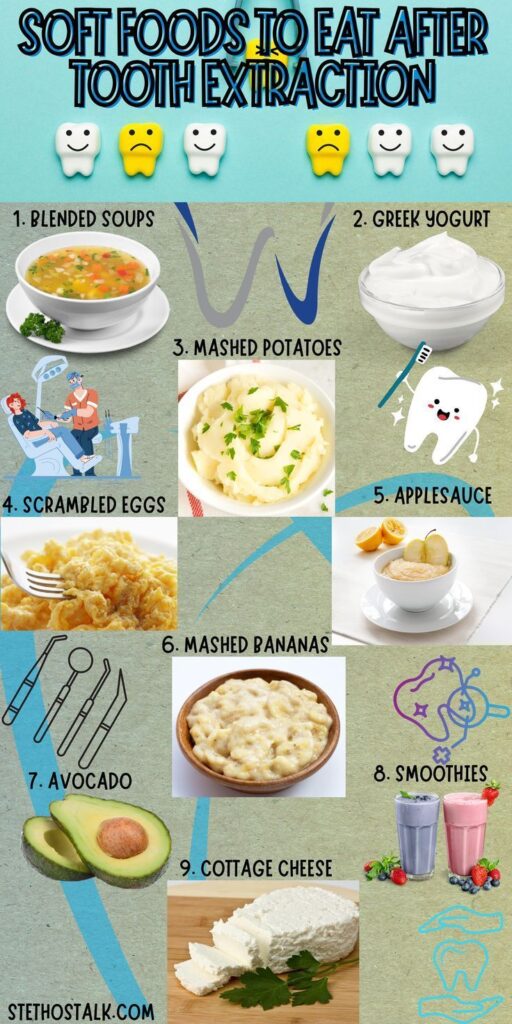
One of the most common complaints during recovery is feeling limited with food options, but managing your diet is among the key things to avoid after tooth extraction going wrong. The list of soft foods to eat after tooth extraction is more varied than most people expect.
Breakfast: Scrambled eggs, smooth oatmeal, Greek yogurt, ripe banana, smoothie eaten with a spoon.
Lunch and Dinner: Mashed potatoes, pureed soup, soft pasta with a light sauce, steamed fish, mashed sweet potato, soft tofu, lentil soup, risotto.
Snacks: Applesauce, pudding, soft cheese, ice cream, avocado, hummus with very soft pita.
By day five to seven, most patients can begin introducing slightly firmer options. Just keep chewing away from the extraction site until the socket has visibly started to close over.
How to Stop Bleeding After Tooth Extraction
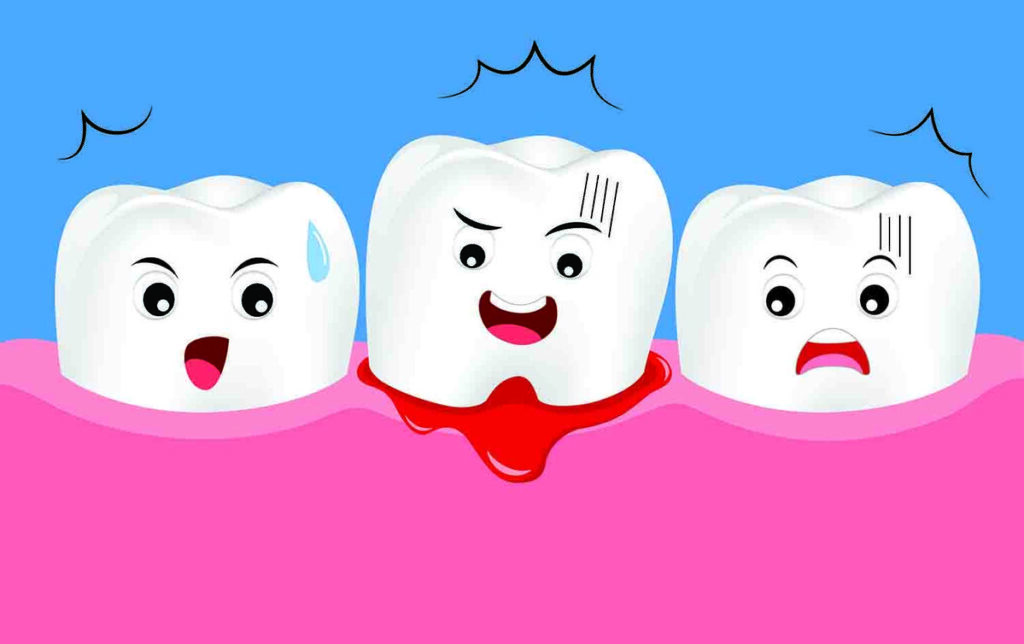
Some bleeding right after the procedure is completely normal and is one of the least alarming things to avoid after tooth extraction going wrong. The clot needs 30 to 45 minutes of steady pressure to form properly. Here is how to stop bleeding after tooth extraction correctly.
Bite down firmly on the gauze your dentist provides. Do not keep lifting it to check. Every time you peek, you interrupt the clotting process. Hold steady pressure for a full 30 to 45 minutes before checking.
Keep your head elevated. Lying flat increases blood flow to the head and encourages more bleeding. Sit upright or use an extra pillow when resting.
Avoid talking too much, eating, or any physical activity for the first hour. All movement in and around the mouth disturbs the forming clot.
A tip worth knowing: A moist black tea bag pressed firmly onto the socket for 30 minutes can help stop stubborn bleeding. Black tea contains tannic acid, which is a natural compound that promotes blood clotting. Many dentists recommend this trick when standard gauze is not enough.
When to Call Your Dentist About Bleeding
Light oozing and pink-tinted saliva for up to 24 hours is normal. But call your dentist right away if gauze soaks through completely every 20 to 30 minutes for several hours, if you see bright red pulsing blood, if a large firm swelling develops inside the socket, or if bleeding has not slowed at all after 6 hours.
Drinks to Avoid After Tooth Extraction
| Avoid This | Why | Drink This Instead |
| Straws | Suction dislodges clot | Sip from cup directly |
| Hot coffee or tea | Heat dissolves clot | Lukewarm herbal tea |
| Alcohol | Thins blood, reacts with medication | Coconut water |
| Carbonated soda | Fizzing irritates socket | Still water |
| Energy drinks | Acidic and inflammatory | Plain water |
| Citrus juice | Highly acidic, stings tissue | Diluted apple juice |
Hot drinks deserve a special mention when it comes to things to avoid after tooth extraction. It is not just about the liquid itself. The heat from a hot beverage can actually dissolve or loosen a freshly formed blood clot. Switch to lukewarm or room temperature drinks for the first 48 hours at least.
Medications and Supplements That Slow Healing
Most people take their prescribed painkillers without thinking twice. What they do not realize is that several common over-the-counter medications and supplements can interfere with recovery.
Aspirin is a blood thinner. Taking it after extraction increases your risk of prolonged bleeding and clot disruption. Use acetaminophen (Tylenol) for pain instead unless your dentist has specifically told you otherwise.
Fish oil, Vitamin E in high doses, garlic supplements, and ginkgo biloba all have natural blood-thinning effects. Pause these for a week during recovery. It is a small change that makes a real difference.
If you are on prescription blood thinners like warfarin, do not change anything without speaking to your doctor first. Your dentist should know about all medications before the extraction so they can plan accordingly.
Sleeping and Resting After Tooth Extraction

Sleep is when your body does most of its repair work. Skimping on rest after dental surgery genuinely slows healing. Take it easy for at least 24 hours after a standard extraction, and 48 to 72 hours after wisdom tooth removal.
Sleep with your head slightly elevated for the first two nights. An extra pillow is all you need. This simple habit reduces overnight swelling and keeps the socket area calm while you sleep.
One of the important things to avoid after tooth extraction is sleeping directly on the same side as the extraction. The pressure from the pillow against your jaw can cause pain and disturb the wound. Sleep on the opposite side or on your back for the best results.
One more thing to remember. Never eat or drink anything substantial while you are still numb from the anesthesia. Numbness lasts two to four hours after the procedure. During that time, you cannot feel what is happening inside your mouth and can easily bite your tongue or cheek without knowing it.
Quick Recovery Timeline
| Day | What to Expect | Key Things to Avoid |
| Day 1 | Clot forms, some bleeding, swelling starts | Straws, rinsing, exercise, hot drinks, smoking |
| Days 2 to 3 | Swelling peaks, pain is highest | Hard foods, alcohol, vigorous activity |
| Days 4 to 7 | Swelling reduces, pain eases | Crunchy foods, smoking, intense exercise |
| Week 2 | Gum closes over, major improvement | Still avoid very chewy or hard foods |
| Week 3 onward | Mostly healed, bone filling begins | Most restrictions lifted |
Normal Signs vs. Warning Signs
| Normal | Call Your Dentist |
| Mild pain for 2 to 3 days | Severe worsening pain after day 3 |
| Light bleeding for up to 24 hours | Heavy bleeding for more than 4 hours |
| Swelling that peaks then reduces | Swelling still growing after day 4 |
| Mild jaw stiffness | Fever above 101 degrees |
| Slight bad taste for a few days | Foul smell or visible bone in socket |
FAQs
Q1. Can I drink water after tooth extraction?
Yes. Drink plain still water at room temperature. Avoid hot, carbonated, or acidic drinks for the first 48 hours.
Q2. When can I eat normal food after tooth extraction?
Most patients can return to normal eating around day 7. Start soft, then gradually introduce firmer foods as comfort allows.
Q3. How long does a tooth extraction take to heal?
The gum surface heals in about 1 to 2 weeks. Full bone healing underneath takes 3 to 6 months.
Q4. Can I brush my teeth after tooth extraction?
Yes, but avoid the extraction site for the first 24 hours. After that, brush gently around it using a soft-bristled toothbrush.
Q5. How do I know if I have dry socket?
Severe throbbing pain starting 2 to 4 days after extraction, often with a bad smell or visible empty socket. Call your dentist immediately if this happens.
Conclusion
The things to avoid after tooth extraction mostly come down to one simple principle. Protect the blood clot and let your body heal in peace. Avoid suction, heat, hard foods, physical strain, and smoking for the first few days, and you dramatically reduce your risk of any complications.
The restriction window is short. Most patients feel significantly better by day three or four. Whether it is knowing what to eat after tooth extraction to stay nourished, choosing the right soft foods to eat after tooth extraction each day, understanding which activities to avoid after tooth extraction, or knowing exactly how to stop bleeding after tooth extraction if it continues, this guide gives you a complete picture from day one through full recovery. Be patient with yourself for a few days, follow these guidelines, and your mouth will heal faster and cleaner than you expect.