
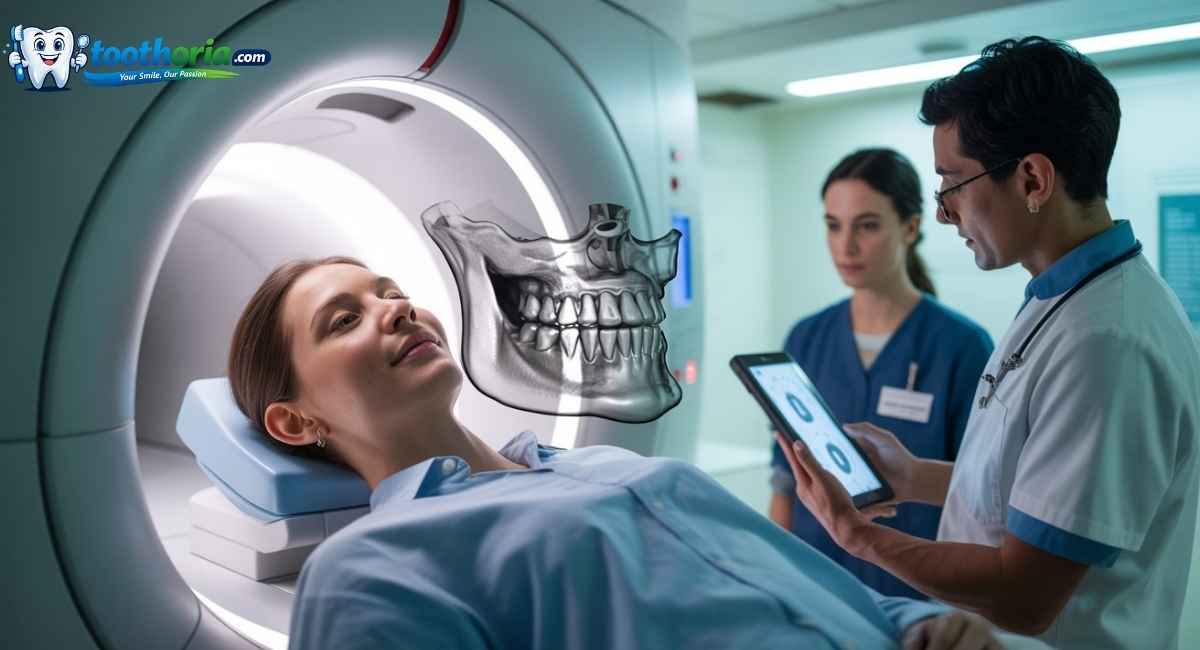
Dental implants are a popular solution for missing teeth, offering strength, durability, and natural aesthetics. However, many patients wonder about their safety during medical imaging, particularly MRI scans. This comprehensive guide explains everything you need to know, including implant materials, MRI interactions, potential risks, and best precautions.
Understanding Dental Implants and Their Materials
Dental implants replace missing teeth by anchoring artificial teeth directly into the jawbone. They consist of three main parts: the implant post, abutment, and crown. Understanding the materials used in implants is essential for evaluating MRI compatibility.
Types of Dental Implants: Titanium, Zirconia, and Older Metals
Most modern implants are made from titanium, a biocompatible and non-magnetic metal. Titanium integrates with the jawbone through a process called osseointegration, creating a stable base for the replacement tooth.
Zirconia implants are a ceramic alternative. They are white, metal-free, and also non-magnetic, making them safe for MRI.
Older implants or certain dental appliances may contain stainless steel or cobalt-chromium alloys, which are ferromagnetic. These materials may interact differently with MRI magnetic fields, so patients should always disclose older implants to their healthcare providers.
For more details on different implant types, procedures, and benefits, check our Dental Implants guide.
Why Implant Material Matters for MRI Scans
MRI technology uses a strong magnetic field to generate detailed images of soft tissues. Materials that are non-magnetic, like titanium and zirconia, do not move or heat up during scans.
However, implants with magnetic or ferromagnetic components can cause artifacts, which are distortions in the imaging, particularly in head or jaw scans. Knowing your implant material ensures the best scan quality and safety.
How MRI Works and Its Interaction with Metal
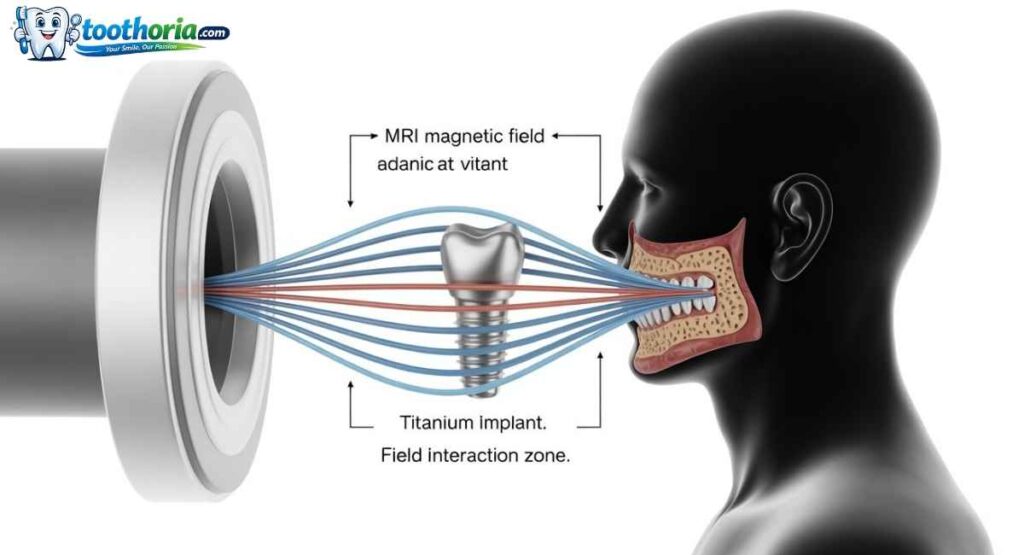
Magnetic Resonance Imaging (MRI) is a non-invasive diagnostic tool used to examine internal organs, tissues, and bones. It is safe for most patients, including those with dental implants, if proper precautions are followed.
MRI Technology Explained in Simple Terms
MRI uses a strong magnetic field and radio waves to create detailed images. Unlike X-rays or CT scans, MRI does not expose the body to radiation. The machine detects changes in water molecules inside tissues, producing high-resolution images that help diagnose various medical conditions.
Why Metal in the Mouth Raises Concerns During MRI
Metal objects in the body can sometimes interact with MRI magnets, creating safety risks or affecting image quality. The concerns include:
- Movement or shifting of magnetic metals
- Heating of metal during the scan
- Artifacts that reduce clarity in images near metal objects
Modern implants made of titanium or zirconia are non-magnetic, eliminating these risks. Awareness of implant type ensures a safe and accurate MRI experience.
Are Dental Implants Safe During MRI Scans?
Patients often worry whether their implants will interfere with MRI scans. Research and dental experience show that modern implants are safe, but some considerations remain.
Why Modern Implants Are MRI-Compatible
- Titanium and zirconia implants do not respond to magnetic fields.
- There is no risk of implant movement or heating.
- MRI scans can safely be performed for any part of the body, including brain, spine, or jaw.
Potential Risks with Older or Mixed-Metal Implants
- Implants or bridges with ferromagnetic components can cause minor magnetic interaction.
- Older appliances may lead to localized discomfort during long scans.
- Patients with multiple dental restorations should inform the MRI team to assess scan quality.
How Implants May Affect MRI Image Quality
- Implants may create artifacts or shadows in the scan, especially if the area of interest is near the jaw or teeth.
- Skilled MRI technicians can adjust settings to reduce distortion.
- These artifacts do not pose a health risk; they only affect image clarity.
Important Precautions Before an MRI with Dental Work
While most implants are safe, following precautions ensures a smooth and effective MRI scan.
Informing Your Doctor and MRI Technician About Implants
- Provide details of implant type and material.
- Mention date of implant placement and manufacturer if available.
- Disclosing your dental history helps technicians adjust scan parameters.
Removing Removable Metal Appliances Before Scans
- Partial dentures, retainers, or bridges may contain metal and should be removed.
- This reduces the risk of heating and artifact formation.
Alternative Imaging Options When MRI May Be Limited
- In rare cases where artifacts could interfere with diagnostics, your doctor may recommend:
- CT scans
- Cone Beam Computed Tomography (CBCT)
- Standard X-rays
These alternatives provide accurate imaging without affecting implant safety.
Special Scenarios Requiring Extra Care
Some patients may need additional precautions depending on implant type and location.
Older Implants With Magnetic Components
- Implants or screws containing ferromagnetic metals may pose minor safety risks.
- Patients should always inform both the dentist and radiologist if implants are older than ten years.
Dental Implants Near the MRI Target Area
- MRI scans of the head or jaw may be affected by implant artifacts.
- Technicians can use specific sequences to minimize distortion, ensuring clear images.
Myths vs Facts About Dental Implants and MRI
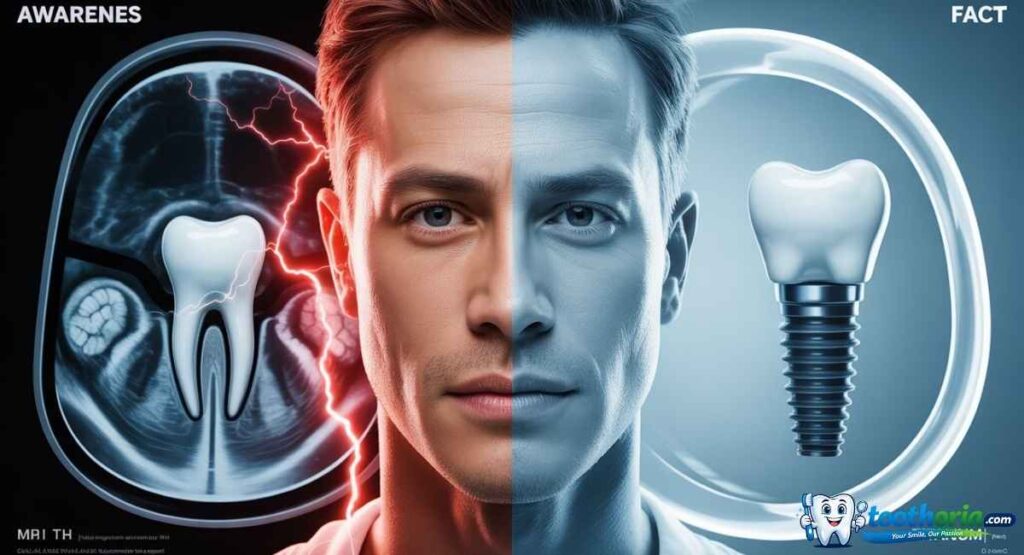
Myth: MRI Can Move or Damage Titanium Implants
Fact: Titanium implants are non-magnetic and do not move, heat, or get damaged.
Myth: All Dental Metals Are Unsafe for MRI
Fact: Only ferromagnetic metals pose a risk. Modern dental implants are MRI-compatible.
Frequently Asked Questions About MRI and Dental Implants
1. Can I get an MRI immediately after implant surgery?
- Usually, it’s recommended to wait until the implant has fully integrated with the bone (3–6 months).
2. Will an MRI damage my dental implants?
- No. Modern implants are safe and unaffected by MRI magnetic fields.
3. Are crowns, bridges, or braces treated differently in MRI scans?
- Removable appliances with metal may need to be taken out.
- Permanent titanium or zirconia implants do not require removal.
4. Do I need documentation of my implants before the MRI?
- Yes. Bringing implant records or x-rays helps technicians identify materials and plan scans.
Conclusion
Dental implants are a safe and effective solution for missing teeth, and modern implants made of titanium or zirconia do not pose risks during MRI scans. Patients should always inform their MRI technician and doctor about any dental work, including the type, material, and location of implants. While minor image artifacts may appear near the implant site, they do not affect safety or the overall effectiveness of the scan.
Following simple precautions, such as removing removable metal appliances and providing implant documentation, ensures a smooth and safe MRI experience. With proper communication and awareness, patients can confidently undergo MRI scans without worry.
For more guidance on dental implants, oral care, and related procedures, exploreToothoria’s resources to stay informed and maintain optimal oral health.