
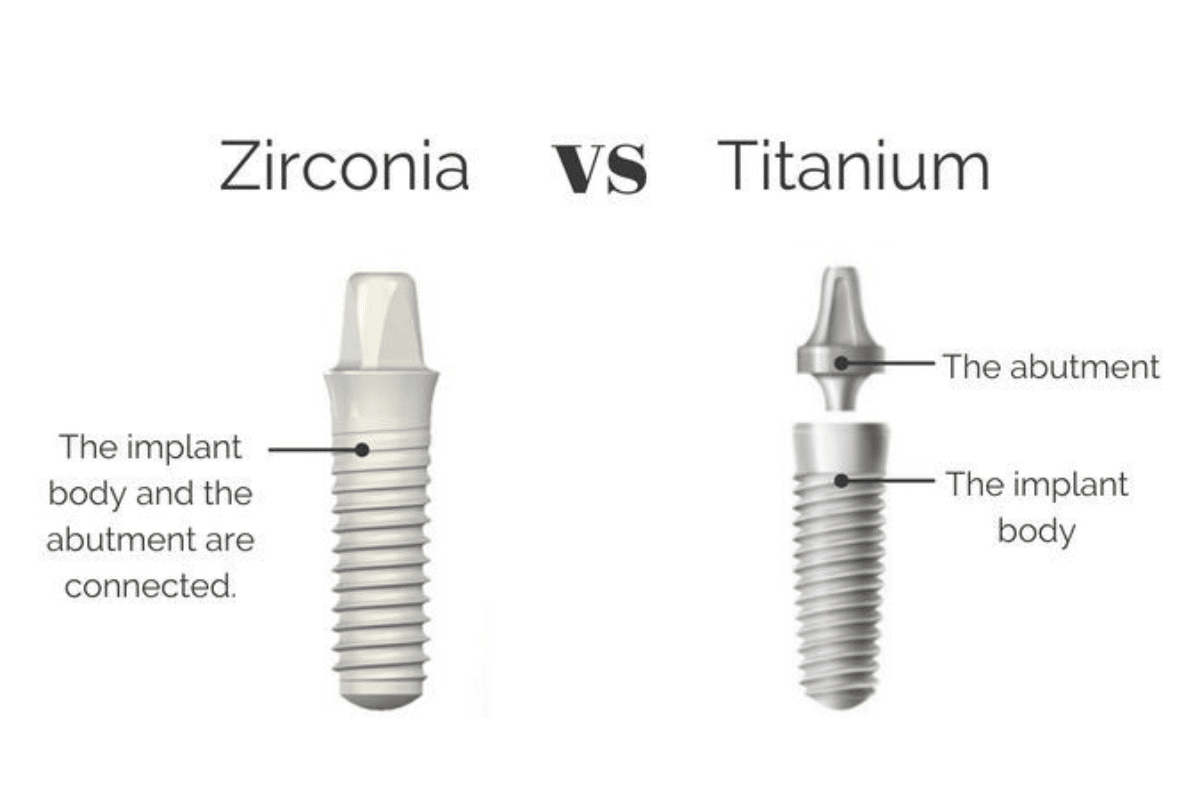
Zirconia dental implants have emerged as a compelling metal-free alternative to traditional titanium implants, offering solutions for patients concerned about biocompatibility, aesthetics, or metal sensitivities. As ceramic implant technology has matured over the past decade, success rates now rival titanium while addressing specific patient needs that conventional implants cannot fully satisfy.
Understanding the financial investment required for zirconia implants becomes essential as more patients explore this premium tooth replacement option. The pricing typically exceeds traditional titanium solutions, raising important questions about whether the additional investment delivers meaningful benefits for your specific situation and oral health goals.
This comprehensive guide examines every aspect of ceramic implant pricing, from material advantages to realistic cost expectations, insurance coverage to long-term value considerations. Whether you’re exploring metal-free options due to allergies, aesthetic concerns, or holistic health preferences, you’ll find research-backed insights that clarify whether zirconia technology justifies its premium pricing for your individual needs.
Understanding Zirconia Tooth Implant Cost Fundamentals
What Influences Ceramic Implant Pricing
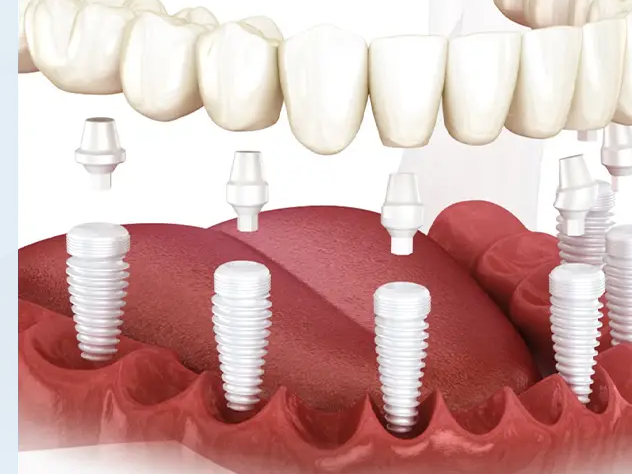
Zirconia tooth implants are fabricated from zirconium dioxide, a white crystalline ceramic material offering exceptional strength while maintaining complete biocompatibility. The manufacturing process involves specialized CAD/CAM milling equipment, precise sintering ovens maintaining exact temperature profiles, and rigorous quality control, all contributing to higher production costs compared to titanium alternatives.
Only a handful of manufacturers produce FDA-approved zirconia implants, limiting market competition that typically drives prices down. Straumann, Z-Systems, and CeramTec dominate the ceramic implant market, while dozens of companies manufacture titanium implants. This restricted supply maintains premium pricing that may gradually decrease as more manufacturers enter the market.
The material’s raw costs exceed titanium by 30-50%, but manufacturing complexity represents the larger expense difference. Producing medical-grade zirconia implants requires substantial capital investments in specialized equipment and expertise, translating directly to higher patient costs through the entire supply chain.
Complete Treatment Investment Breakdown
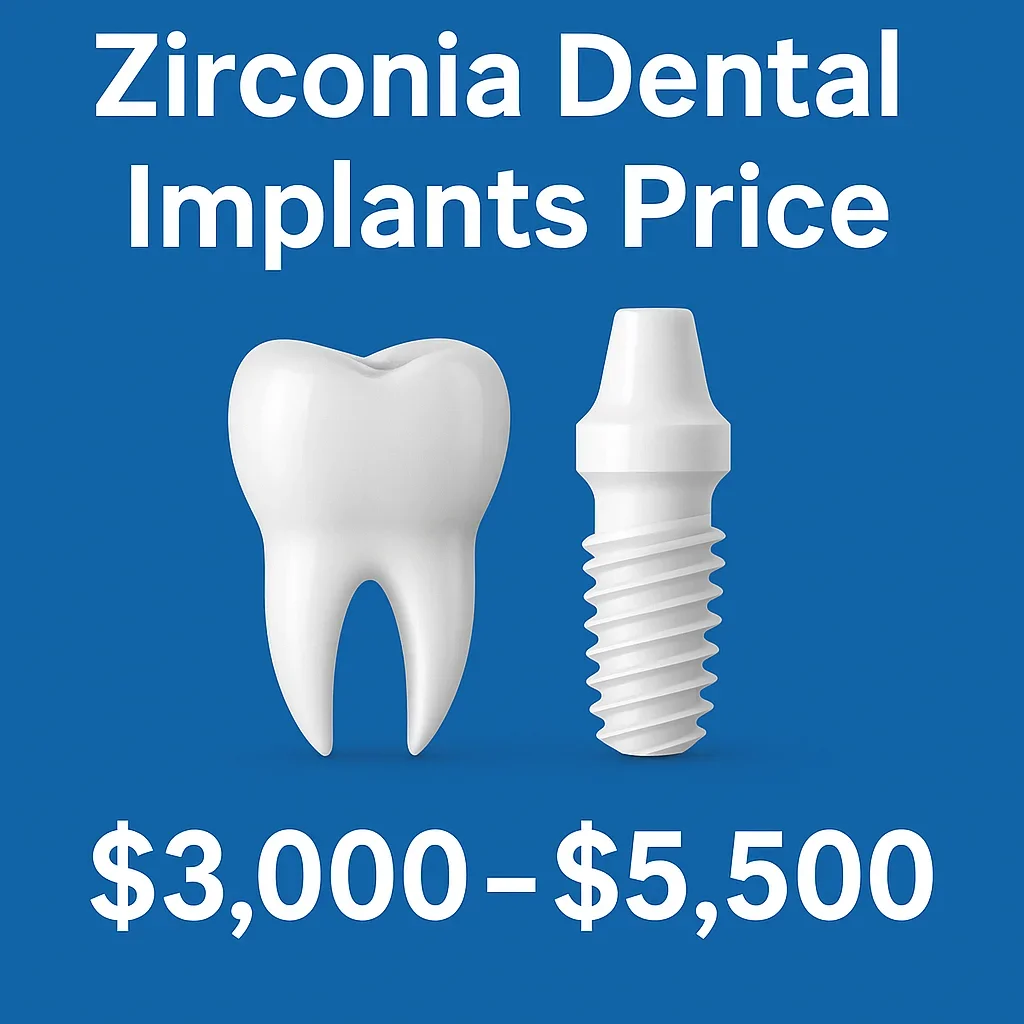
A complete zirconia tooth implant, including fixture, abutment (if two-piece), and crown, typically costs $4,000 to $8,000, compared to $3,000 to $6,000 for titanium equivalents. The premium reflects higher material costs, more complex manufacturing processes, specialized surgical protocols, and currently limited competition among ceramic implant manufacturers.
The implant fixture itself accounts for much of the price difference, costing $2,000 to $3,500 for zirconia versus $1,500 to $2,500 for titanium. Surgical placement fees remain comparable regardless of material choice at $1,500 to $3,500, as the procedure follows similar protocols. The final crown may cost slightly more ($1,200 to $3,000) when matched to zirconia’s bright white base, requiring premium ceramics for seamless aesthetics.
Geographic Price Variations
Geographic location influences zirconia tooth implant cost more dramatically than titanium pricing. Urban centers with practices specializing in ceramic implants charge $6,000 to $8,500 per tooth, while general practices in smaller markets offering zirconia as an option may charge $4,000 to $5,500. The specialized training required for optimal ceramic implant placement partially explains these regional variations.
Coastal metropolitan areas see the highest pricing due to elevated overhead costs and the concentration of holistic or biological dentists who predominantly work with metal-free materials. Midwest and Southern regions typically offer more competitive ceramic implant pricing, though availability remains less widespread than in major urban markets.
Comparing Zirconia Tooth Implant Cost to Titanium
Material and Component Price Differences
The zirconia tooth implant cost a premium of $1,000 to $2,500 per tooth compared to titanium, raising questions about tangible benefits justifying the investment. Material composition represents the primary cost driver, zirconia’s advanced ceramic formulation requires more expensive raw materials and sophisticated processing compared to relatively straightforward titanium manufacturing.
One-piece zirconia designs, where the implant body and abutment are manufactured as a single unit, eliminate the implant-abutment connection and its associated micro gaps that can harbour bacteria. This monolithic construction reduces manufacturing complexity in some ways while requiring precise surgical placement since angulation cannot be adjusted after insertion, a factor affecting both technique and pricing.
Two-piece zirconia systems have entered the market recently, combining ceramic material benefits with the versatility of separate abutments. These hybrid designs cost 10-20% more than one-piece zirconia implants ($5,000-$9,000 total) but provide greater flexibility for challenging angulations or when immediate placement isn’t clinically appropriate.
Clinical Performance Value Assessment
Modern zirconia implants demonstrate 92-98% success rates in published studies, approaching titanium’s well-established 95-98% success range. Early ceramic implants from the 1980s-90s suffered high failure rates due to material weaknesses, but contemporary yttria-stabilized zirconia has eliminated those historical concerns through improved material science and manufacturing precision.
The premium cost of the zirconia tooth implant buys specific advantages: superior aesthetics for front teeth, true metal-free restoration for patients with sensitivities, and potentially reduced long-term inflammation risks. Whether these benefits justify paying $1,000 to $2,500 more depends entirely on your individual priorities, clinical situation, and health philosophy.
Aesthetic Benefits and Pricing Justification
For front teeth where gum tissue may thin over time, zirconia’s white color prevents the dark shadowing that sometimes appears with titanium implants showing through translucent gingiva. This aesthetic advantage matters most for patients with high smile lines, thin gingival biotypes, or those receiving immediate implants where gum architecture remains less predictable.
The value of this aesthetic benefit varies dramatically, minimal for back teeth not visible when smiling, potentially significant for central incisors affecting your daily confidence and social interactions. Patients should evaluate whether the specific tooth location, their gum thickness, and smile line justify the ceramic implant’s premium pricing for aesthetic reasons alone.
Additional Procedures Affecting Total Zirconia Tooth Implant Cost
Bone Grafting Requirements
Bone grafting costs remain identical whether receiving zirconia or titanium implants, typically $300 to $3,500 depending on graft extent and materials used. However, zirconia’s one-piece design sometimes allows immediate placement into extraction sockets more successfully than titanium, potentially eliminating separate grafting procedures and their associated costs in select clinical scenarios.
Sinus lift procedures necessary for upper posterior implants add $1,500 to $3,000 per side regardless of implant material choice. The biocompatible nature of zirconia may promote faster healing and better tissue integration in grafted areas, though research remains ongoing to quantify these potential benefits.
Advanced Imaging and Surgical Planning
3D cone beam CT scans ($300-$600) and computer-guided surgical planning ($300-$1,000) prove especially critical for one-piece zirconia implants since the abutment angle cannot be adjusted after placement. These diagnostic investments ensure optimal positioning, making them essential rather than optional expenses when choosing ceramic implant technology.
Digital treatment planning software allows virtual implant placement before surgery, identifying potential complications and ensuring adequate angulation for final crown delivery. While these technologies benefit titanium implant placement as well, they become non-negotiable for achieving predictable outcomes with one-piece zirconia systems.
Soft Tissue Management
Gum grafting to create adequate keratinized tissue around implants costs $600 to $1,500 per area regardless of implant material. However, research suggests zirconia’s white color and biocompatible surface may support healthier, more stable soft tissue over time, potentially reducing long-term maintenance interventions and associated costs.
The ceramic material’s low plaque affinity, accumulating 50-60% less bacterial biofilm than titanium surfaces, may contribute to superior gingival health over decades of service. This property could translate to reduced periodontal maintenance expenses, though long-term cost-benefit data remains limited given ceramic implants’ relatively recent mainstream adoption.
Insurance Coverage for Zirconia Tooth Implant Cost
Current Coverage Landscape
Dental insurance rarely differentiates between implant materials when determining coverage percentages. If your policy covers implants at 50% up to annual maximums, that percentage applies equally to zirconia and titanium. However, the higher base cost of ceramic implants means your out-of-pocket expense increases proportionally even with identical coverage percentages.
For example, 50% coverage with a $2,000 annual maximum on a $4,500 titanium implant means insurance pays $2,000 and you pay $2,500. The same coverage on a $6,500 zirconia implant means insurance still pays only $2,000 (hitting the maximum), while you pay $4,500, a $2,000 difference entirely from your pocket despite identical insurance benefits.
Some insurance companies classify material upgrades as cosmetic enhancements, potentially reducing coverage percentages for zirconia compared to titanium. Pre-authorization becomes especially important when choosing ceramic implants to understand exact coverage before committing to treatment and avoid unexpected out-of-pocket expenses.
Medical Necessity Arguments
Patients with documented metal allergies or sensitivities may successfully argue medical necessity for ceramic implants, potentially improving insurance coverage. Written documentation from allergists or physicians confirming titanium sensitivity strengthens these claims and may convince insurance reviewers to provide full implant coverage rather than reduced cosmetic procedure benefits.
True titanium allergies affect less than 1% of the population, making this a relatively rare concern. However, titanium sensitivity differs from classic allergies, potentially causing subtle inflammatory responses that manifest as implant failure or unexplained peri-implant bone loss. Documenting these medical issues creates stronger insurance appeals for ceramic implant coverage.
Tax-Advantaged Payment Options
HSA (Health Savings Account) and FSA (Flexible Spending Account) funds cover zirconia tooth implant cost identically to titanium, providing 20-35% effective savings through pre-tax contributions regardless of material choice. This tax advantage partially offsets the premium pricing, making ceramic implants more financially accessible than initial sticker prices suggest.
For a patient in the 24% tax bracket, a $6,500 zirconia implant effectively costs $4,940 when paid with HSA funds, bringing it closer to titanium pricing while accessing ceramic technology’s benefits. Maximizing these tax-advantaged accounts represents one of the most effective strategies for managing premium dental treatment costs.
Financing Solutions for Zirconia Tooth Implant Cost
Extended Payment Plans
The higher zirconia tooth implant cost makes extended financing particularly important for budget management. Many practices offer 24-36 month payment plans for ceramic implants versus 12-24 months for titanium, recognizing the larger financial commitment required for metal-free technology.
Interest-free promotional periods of 12-18 months allow spreading costs while avoiding interest charges if balances are paid within promotional windows. A $6,500 ceramic implant divided over 18 months equals approximately $361 monthly with no interest, making premium technology accessible without overwhelming monthly budgets.
Down payment requirements of 25-40% mean you’ll need $1,600 to $3,200 available before beginning zirconia implant treatment. Some practices waive or reduce down payments for patients with excellent credit or long-standing relationships, making initial access easier while maintaining monthly payment manageability throughout treatment.
Healthcare Credit Card Options
CareCredit and similar healthcare financing options approve credit limits sufficient for multiple zirconia implants, often $15,000-$25,000 for qualified applicants. The 24-month no-interest option particularly suits ceramic implant pricing, allowing $6,500 divided into $271 monthly payments without interest charges versus 12 months requiring $542 monthly payments.
LendingClub Patient Solutions and Alphaeon Credit provide competitive healthcare financing alternatives worth comparing. Shopping between these options helps identify the best promotional terms, interest rates, and approval amounts for your creditworthiness and specific zirconia tooth implant cost scenario.
Personal Loan Alternatives
Personal loans from credit unions or online lenders provide fixed-rate alternatives with rates of 6-18% for qualified borrowers. A $6,500 loan at 10% APR over 36 months costs approximately $210 monthly with $1,060 total interest, manageable for many budgets while accessing premium ceramic implant technology.
Medical-specific loans through companies like United Medical Credit or Prosper Healthcare Lending specialize in healthcare financing, potentially offering better terms than general personal loans. Pre-qualification processes allow rate shopping without hard credit inquiries, helping identify optimal financing before committing to treatment.
Who Benefits Most from the Zirconia Tooth Implant Cost Investment
Ideal Candidate Profiles
Patients replacing front teeth visible when smiling receive maximum benefit from zirconia’s aesthetic advantages. The white implant base prevents dark shadows through gum tissue, maintaining a natural appearance even if gums thin over decades. This aesthetic superiority often justifies the premium cost for central incisors, lateral incisors, and canines, affecting daily social confidence.
Individuals with documented metal sensitivities, autoimmune conditions, or philosophical preferences for metal-free dentistry find zirconia’s biocompatibility worth the investment. Those who’ve experienced unexplained titanium implant failures may achieve better outcomes with ceramic alternatives, making the higher cost an investment in success rather than a luxury upgrade.
Patients with thin gingival biotypes, high smile lines, or immediate implant placement into fresh extraction sockets gain both functional and aesthetic benefits from ceramic technology. The combination of superior tissue response and color-matching creates optimal conditions for long-term soft tissue stability and appearance.
When Titanium Remains More Practical
Posterior teeth (molars and premolars) not visible when smiling receive minimal aesthetic benefit from ceramic implants, making the premium cost harder to justify. Titanium’s proven track record, broader availability of replacement parts, and lower cost make it the practical choice for most back tooth replacements where function matters more than appearance.
Complex cases requiring precise angulation adjustments benefit from titanium’s two-piece design flexibility. While two-piece zirconia systems exist, they cost even more ($5,000-$9,000) and have shorter clinical track records. Patients with severe bone loss, sinus proximity issues, or anatomical challenges often achieve more predictable results with conventional titanium technology.
Budget-conscious patients without metal sensitivities or specific aesthetic concerns should prioritize treatment completion over material selection. A successfully placed titanium implant provides 95%+ of zirconia’s functional benefits at 25-40% lower cost, making it the sensible choice when finances limit options or multiple implants are needed.
Long-Term Value of Zirconia Tooth Implant Cost
Durability and Lifespan Expectations
Well-placed zirconia implants demonstrate excellent long-term survival, with 10-year data showing 92-95% success rates comparable to titanium’s established benchmarks. The material’s fracture resistance has improved dramatically, with modern yttria-stabilized formulations showing failure rates under 1% annually, essentially matching titanium’s mechanical reliability.
The one-piece design eliminates abutment screw loosening or fracture, common minor complications with two-piece titanium systems requiring repair appointments. This potentially reduces long-term maintenance costs and inconvenient office visits, adding value beyond initial placement that may justify the higher zirconia tooth implant cost over decades of service.
However, the inability to replace just the abutment if problems arise means entire implant replacement if the coronal portion fractures, a rare but possible scenario. This represents a potential long-term cost consideration, though actual clinical incidence remains very low with properly designed and placed ceramic implants.
Calculating Cost Per Year
A $6,500 zirconia implant lasting 25 years costs $260 annually, while a $4,500 titanium implant over the same period costs $180 annually, an $80 yearly difference. Whether this $2,000 total premium delivers equivalent value depends entirely on whether you experience the aesthetic, biocompatibility, or tissue health benefits that justify ceramic technology for your specific situation.
Crown replacement every 10-15 years affects both materials equally, costing $1,200-$3,000 regardless of underlying implant material. The primary cost difference remains the initial placement investment, making the decision point your immediate financial capacity and prioritization of zirconia’s specific advantages for your individual needs.
Tissue Health and Maintenance Savings
Research indicates zirconia surfaces accumulate 50-60% less plaque than titanium, potentially reducing peri-implantitis risks and associated treatment costs over decades. While preventing complications through excellent hygiene remains essential regardless of material, ceramic implants’ antimicrobial properties may provide additional protection worth considering in long-term value calculations.
Healthier soft tissue response to ceramic materials could translate to fewer professional maintenance interventions, reduced periodontal treatments, and better long-term stability. While difficult to quantify precisely, these potential savings may partially offset the higher zirconia tooth implant cost when evaluated over 20-30 year service life.
Cost-Saving Strategies for Ceramic Implants
Dental School Programs
A growing number of dental schools now offer zirconia implants through their advanced specialty programs, providing 30-40% savings compared to private practice. A $6,500 private practice ceramic implant might cost $4,000-$4,500 at a university clinic, bringing it close to private practice titanium pricing while accessing ceramic technology.
Treatment timelines extend due to educational components, typically requiring 30-50% more appointments than private practice. However, quality remains high under expert faculty supervision, and students trained in latest ceramic implant techniques often provide cutting-edge care that makes dental schools attractive options for cost-conscious patients wanting metal-free technology.
Bundling Multiple Implants
Replacing multiple teeth with ceramic implants creates opportunities for package pricing negotiations. Three zirconia implants individually costing $19,500 might be negotiated down to $16,000-$17,000 when committing to comprehensive treatment. Dentists appreciate the business certainty of larger cases and often share savings with patients willing to proceed with complete care.
Seasonal Promotions
Some practices promoting ceramic implant technology offer introductory pricing or limited-time specials to attract patients to this premium service. End-of-year or summer promotional periods sometimes yield 10-15% discounts, reducing a $6,500 zirconia implant to $5,525-$5,850, closer to premium titanium pricing while accessing ceramic benefits and metal-free technology.
FAQs
How long does a zirconia tooth implant last?
Zirconia dental implants typically last 10-15 years with proper care, though long-term clinical data remains limited compared to titanium implants with 20-30+ year track records. Success rates range from 92-98% over five years, with longevity depending on oral hygiene, bone quality, and implant placement precision.
Is zirconia good for dental implants?
Yes, zirconia implants offer excellent biocompatibility, natural tooth-like aesthetics, and are ideal for patients with metal allergies or sensitivities. However, they’re more brittle than titanium, have less extensive clinical research, and may not suit high-stress areas or patients with insufficient bone density.
Which is better, titanium or zirconium?
Titanium remains the gold standard with 50+ years of research, superior strength, and proven 95-98% long-term success rates, making it better for most patients. Zirconia offers aesthetic advantages for front teeth and benefits metal-sensitive patients, but lacks titanium’s extensive clinical track record and mechanical durability.
What are the disadvantages of zirconia implants?
Zirconia implants are more prone to fracture under heavy bite forces, cost 20-40% more than titanium, and have limited long-term clinical studies beyond 10 years. They’re one-piece designs (no separate abutment), reducing flexibility for angled placements, and fewer dentists have experience placing them compared to traditional titanium implants.
Making Your Investment Decision
Understanding the zirconia tooth implant cost in complete context, including material advantages, clinical outcomes, aesthetic benefits, and biocompatibility considerations, empowers confident treatment decisions aligned with your priorities and budget. The 15-30% premium over titanium delivers specific benefits that matter tremendously for some patients while offering minimal additional value for others.
For front teeth visible when smiling, patients with metal sensitivities, or those prioritizing biocompatible materials and superior tissue response, zirconia’s advantages often justify the $1,000-$2,500 additional investment per tooth. The aesthetic superiority, reduced inflammation potential, and peace of mind from metal-free restoration create tangible benefits worth the premium for appropriate candidates.
However, for posterior teeth, budget-limited situations, or complex cases requiring maximum flexibility, titanium’s proven performance, lower cost, and broader availability make it the practical choice. The key lies in matching technology to your specific clinical needs, aesthetic priorities, and financial capacity rather than assuming newer necessarily means better for every situation.
Consulting with experienced implant specialists who offer both materials ensures unbiased recommendations based on your individual circumstances rather than practice inventory or financial incentives. Transparent discussions about costs, benefits, and realistic outcome expectations help you invest wisely in permanent tooth replacement that serves you well for decades to come.