

Discovering a blister with blood in mouth can be alarming, especially if you woke up with a blood blister in the mouth without knowing why. These dark red or purple lesions, medically known as oral blood blisters, appear suddenly on your tongue, cheeks, or palate and can cause significant discomfort.
Blood blister in mouth formations are typically benign and self-limiting, affecting approximately 0.5 to 1 percent of people. Unlike regular mouth ulcers, a blood blister in the mouth contains trapped blood beneath the mucosal layer, creating a raised, fluid-filled pocket that ranges from 3 mm to 30 mm in size.
While most blood mouth blisters heal naturally within 7 to 10 days, understanding their causes, treatment options, and warning signs helps you manage them effectively. This guide covers everything you need to know about oral blood blisters, including what to do with a blood blister in mouth and when professional care is necessary.
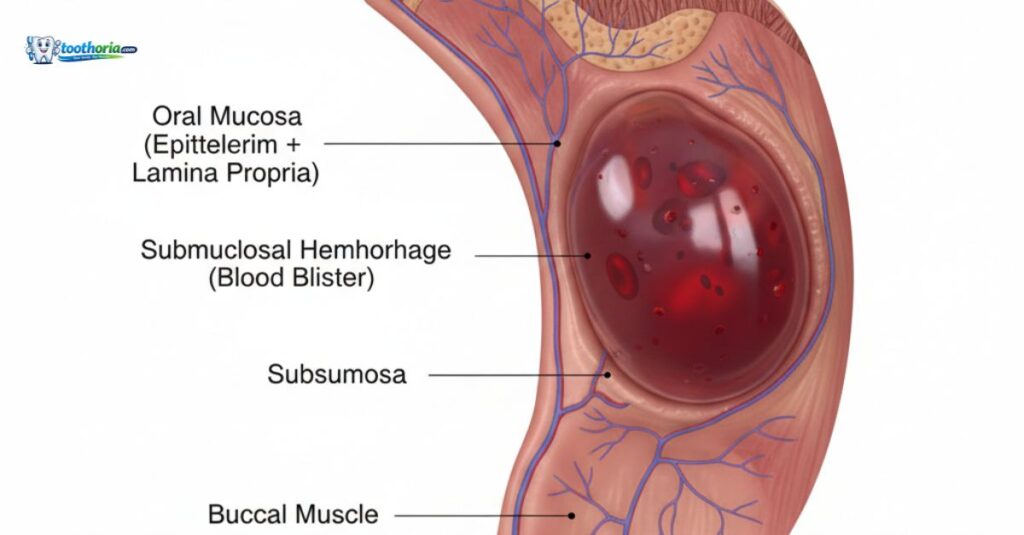
What Is a Blood Blister Inside the Cheek?
Definition and Appearance
A blood blister in mouth (angina bullosa haemorrhagic) is a sub epithelial blister containing blood that forms suddenly without a systemic cause. Key characteristics include:
Visual Features:
- Color: Dark red, purple, or bluish-black appearance
- Texture: Smooth, dome-shaped, tense surface
- Size: Typically 3 to 30mm in diameter
- Location: Most common on soft palate (52 percent), followed by buccal mucosa (20 percent)
- Onset: Appears within 1 to 4 hours of the triggering event
Common Locations
A blood blister in mouth can develop on multiple oral surfaces:
- Soft palate (most frequent location at 52 percent of cases)
- Buccal mucosa or inside cheek (20 percent of cases)
- Tongue (12 percent of cases)
- Inner lips (8 percent of cases)
- Gums and floor of mouth (remaining cases)
Blood Blister in Mouth vs Melanoma: Critical Differences
There is much difference between blood blister vs melanoma:
| Feature | Blood Blister in Mouth | Oral Melanoma |
| Onset | Sudden (hours) | Gradual (weeks/months) |
| Color | Uniform dark red/purple | Irregular, multiple colors |
| Borders | Smooth, well-defined | Irregular, asymmetric |
| Duration | Heals in 7 to 14 days | Persists, grows |
| Symptoms | Ruptures easily | Hard, fixed to tissue |
| Pain | Mild to moderate | Often painless initially |
Warning: Any pigmented oral lesion persisting beyond 3 weeks requires immediate professional evaluation to rule out melanoma.
Primary Causes of Blood Blister in Mouth
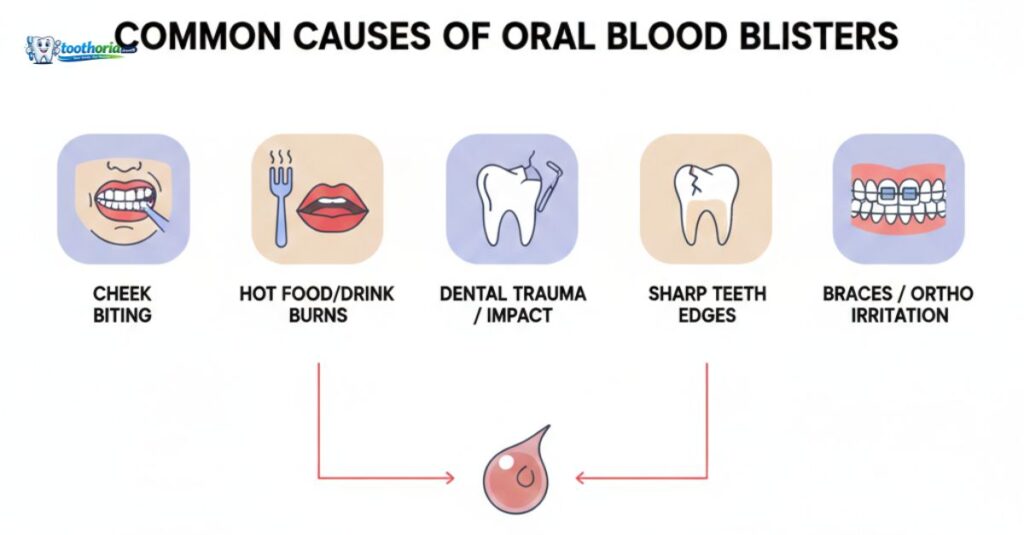
1. Mechanical Trauma (70 Percent of Cases)
The leading cause of blood blisters in the cheek and other oral locations includes several common triggers:
Common mechanical causes:
- Accidental cheek biting during eating
- Nocturnal teeth grinding (bruxism)
- Aggressive tooth brushing
- Hard or crunchy food consumption
- Dental procedures (suction trauma, rubber dam clamps)
- Sports injuries or facial trauma
2. Negative Pressure and Suction
Blood blister in mouth can form from various suction-related activities:
- Drinking through straws vigorously
- Forceful spitting
- Intense oral suction during sleep
- High-pressure oral irrigators
- Tongue-thrusting habits
3. Nutritional Deficiencies
Key deficiencies linked to blood blister in mouth:
| Nutrient | Role | Deficiency Signs |
| Vitamin C | Collagen synthesis, capillary strength | Easy bruising, bleeding gums |
| Iron | Mucosal integrity | Thin, fragile oral tissues |
| Vitamin B12 | Cell turnover | Glossitis, mouth ulcers |
| Folate | Tissue repair | Mucosal atrophy |
4. Medications That Increase Risk
High-risk medications include:
Anticoagulants and antiplatelet agents:
- Warfarin and direct oral anticoagulants
- Aspirin and clopidogrel (5.7 times increased risk)
Other medications:
- Corticosteroids (cause mucosal thinning)
- Chemotherapy drugs (induce mucositis)
- Immunosuppressants (impair healing)
5. Systemic Health Conditions
Causes of blood blister in mouth related to health issues:
- Hypertension (capillary fragility with 2.3 times higher prevalence)
- Diabetes mellitus (microvascular damage with 3 times higher risk when HbA1c exceeds 7.5 percent)
- Autoimmune disorders (lupus, scleroderma)
- Blood disorders (thrombocytopenia, hemophilia)
- Vitamin deficiencies (scurvy, pernicious anemia)
Symptoms and Clinical Presentation
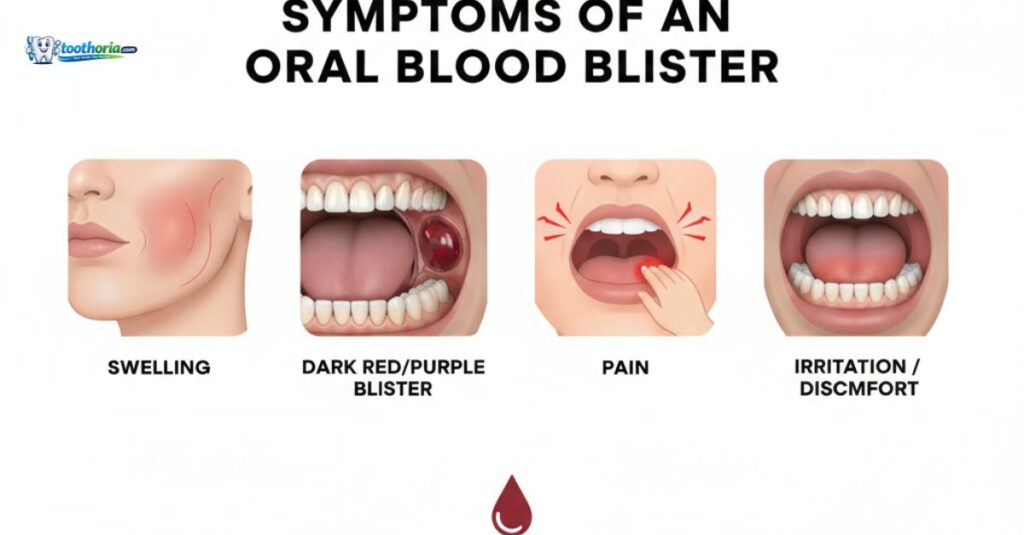
Physical Sensations
When you have a blood blister on your tongue or cheek, expect the following:
Initial phase (0 to 24 hours):
- Sudden awareness of oral mass or bubble sensation
- Dull aching or pressure sensation
- Sharp pain when compressed by teeth
- Metallic taste from blood
After rupture (24 to 48 hours):
- Brief, sharp pain upon rupture
- Release of dark blood-tinged fluid
- Burning or stinging at the erosion site
- Increased sensitivity to hot, cold, or acidic foods
Functional Impact
How a blood blister in mouth affects daily life:
Speech difficulties: Tongue lesions impair the articulation of certain sounds
Eating challenges: Need to avoid rough, hot, and acidic foods
Sleep disruption: Nocturnal pain from compression during sleep
Social anxiety: Visible lesions cause self-consciousness
Healing Timeline
Natural evolution of a blood blister in mouth:
- 0 to 4 hours: Rapid formation, reaches full size
- 24 to 48 hours: Spontaneous rupture if undisturbed
- 3 to 7 days: Gradual resorption or healing of erosion
- 7 to 14 days: Complete epithelial healing without scarring
Red Flag: Lesions persisting beyond 3 weeks require professional evaluation.
Should You See a Dentist? Quick Self-Assessment
Take 30 seconds to check your symptoms:
☐ Has the blister lasted more than 3 weeks?
☐ Is it growing rapidly (doubled in size within 24 hours)?
☐ Do you have multiple blood blister in mouth appearing simultaneously?
☐ Are you experiencing fever, severe pain, or difficulty swallowing?
☐ Does it look irregular with multiple colors (not uniform dark red)?
☐ Is there pus, foul odor, or signs of infection?
☐ Are you on blood thinners and experiencing unusual bleeding?
Your Score:
0-1: Home treatment should work. Keep reading below.
2-3: Monitor for 48-72 hours. Call dentist if it worsens.
4+: Schedule dental appointment within 24-48 hours.
How to Treat a Blood Blister in Mouth
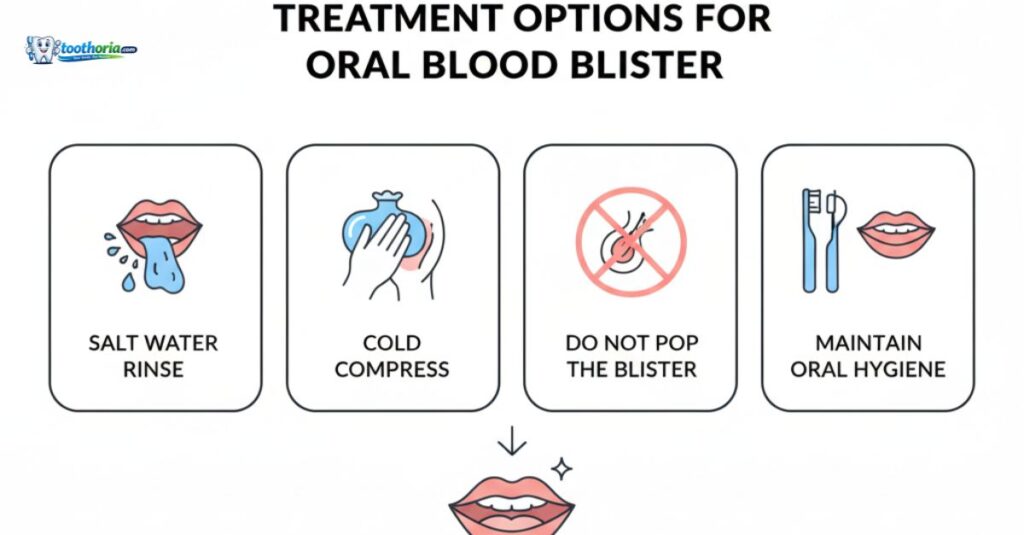
Immediate Management Steps
When you first notice the lesion:
- Do not pop it (increases infection risk and delays healing)
- Rinse gently with cool water to clean the area
- Apply ice wrapped in a cloth on the outside of the cheek (10 minutes on, 10 minutes off)
- Document with photos to track progression
- Avoid trauma by eating soft foods and chewing carefully
Home Treatment Options
Effective remedies for a blood blister inside the cheek:
Saltwater rinses (4 to 6 times daily):
- Mix one-half teaspoon of salt in 8 ounces of warm water
- Reduces bacteria and decreases inflammation
- Promotes healing through enhanced circulation
Topical anesthetics:
- Benzocaine products like Anbesol or Orajel for 30 to 60 minutes of relief
- Lidocaine gels applied before meals
- Apply with a clean cotton swab
Medical-grade honey:
- Manuka honey with verified antimicrobial ratings
- Reduces healing time by 40 percent
- Apply a thin layer 3 to 4 times daily
Cold compress:
- Ice wrapped in a cloth against the cheek
- 10 minutes on, 10 minutes off
- Reduces swelling and numbs pain
Pain Management
Medication options:
| Medication | Dosage | Benefits | Cautions |
| Ibuprofen | 400 mg every 6 to 8 hours | Anti-inflammatory plus pain relief | Avoid with anticoagulants |
| Acetaminophen | 500 to 1000mg every 6 hours | Safe pain relief | No anti-inflammatory effect |
| Topical benzocaine | As needed | Localized numbing | Do not overuse |
Dietary Modifications
Foods to avoid with blood blister in mouth:
- Rough or crunchy items (chips, crackers, toast)
- Hot beverages and foods
- Acidic items (citrus, tomatoes, vinegar)
- Spicy foods
- Salty snacks
Safe foods during healing:
- Yogurt, smoothies, milkshakes
- Mashed potatoes, scrambled eggs
- Oatmeal, cream soups
- Soft pasta, cooked vegetables
- Ice cream, pudding
When to Seek Professional Medical Care

Emergency Warning Signs
Seek immediate care if you experience:
Critical symptoms requiring urgent evaluation:
- Multiple blood blister in mouth appear simultaneously
- Fever or systemic illness accompanying oral lesions
- Breathing or swallowing difficulty due to size or location
- Profuse bleeding not stopping within 10 to 15 minutes
- Signs of infection (pus, foul odor, spreading redness)
- Lesions persisting beyond 3 weeks
- Rapid expansion (doubling in size within 24 hours)
Professional Treatment Options
For persistent or severe cases:
Diagnostic procedures:
- Complete blood count (CBC)
- Coagulation studies (PT, PTT, INR)
- Nutritional screening (iron, B12, folate, vitamin C)
- Autoimmune panel if recurrent
- Biopsy for lesions exceeding 3 weeks or suspicious features
Professional interventions:
- Sterile drainage for large, functionally impairing lesions
- Intralesional steroids (triamcinolone injection for recurrent cases with 60 percent reduction in recurrence)
- Cauterization for persistent bleeding
- Biopsy to rule out serious pathology
Recurrent Blood Blister Management
If experiencing 3 or more episodes in 6 months:
- Comprehensive medical evaluation
- Medication review and adjustment
- Nutritional supplementation
- Night guard for bruxism
- Treatment of underlying conditions
How to Prevent Blood Blister in Mouth
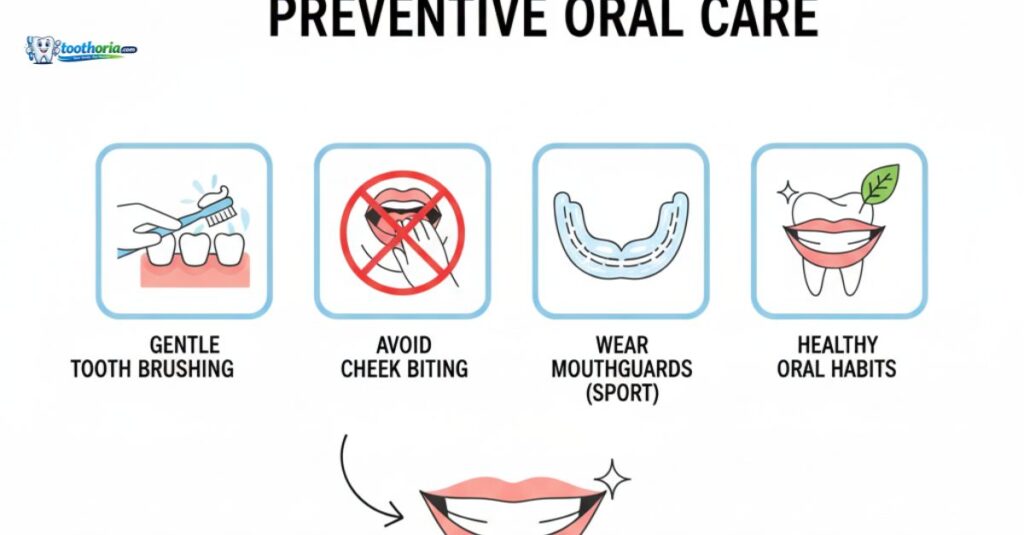
Nutritional Support
Key nutrients for oral health:
Vitamin C (90 mg fo men, 75 mg for women daily):
- Citrus fruits, strawberries, kiwi
- Bell peppers, broccoli, Brussels sprouts
- Strengthens capillary walls
Iron-rich foods:
- Heme iron (15 to 35 percent absorption): Red meat, liver, oysters
- Non-heme iron (2 to 20 percent absorption): Spinach, lentils, fortified cereals
- Combine with vitamin C for enhanced absorption
B-vitamin complex:
- Whole grains, eggs, dairy
- Legumes, leafy greens
- Maintains healthy oral mucosa
Oral Hygiene Best Practices
Protect against blister with blood in mouth inside the cheek:
Recommended practices:
- Use soft-bristled toothbrush with gentle circular motions
- Electric toothbrush with pressure sensor
- Alcohol-free mouthwash to prevent desiccation
- Gentle flossing technique (no snapping)
- Water flosser at low pressure (3 to 5 setting)
Protective Equipment
For high-risk activities:
- Custom athletic mouthguards (80 to 90 percent reduction in oral injuries)
- Night guards for bruxism (70 percent reduction in tissue trauma)
- Proper dental appliance fitting with regular adjustments for dentures or orthodontics
Lifestyle Modifications
Reduce risk factors:
- Chew food slowly and mindfully
- Avoid extremely hot foods or beverages
- Manage stress to reduce bruxism
- Address malocclusion through orthodontics
- Limit rough-textured foods
- Stay hydrated for mucosal protection
Special Considerations: Infant Blisters in Mouth and Gum Cyst
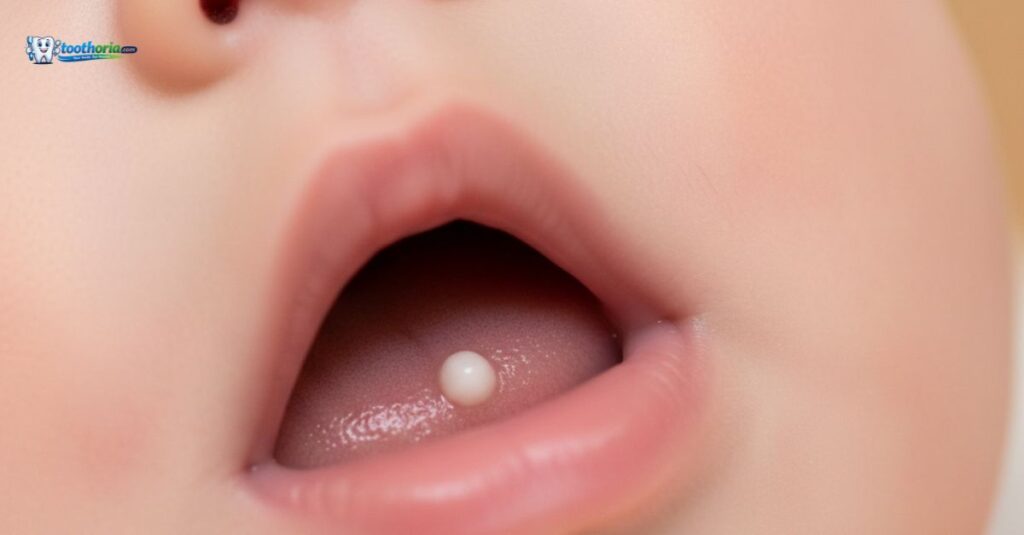
Infant blisters in the mouth are fairly common in newborns and young babies and are often harmless.
Benign and common causes include:
- Sucking blisters caused by vigorous nursing or thumb sucking
- Blisters filled with clear or blood-tinged fluid
- Lesions that usually resolve on their own within 1 to 2 weeks
Parents should still monitor oral changes closely, as early dental awareness plays an important role in a child’s long-term oral health, especially when deciding whether a kids’ dentist or a family dentist is the right choice for their child.
Serious conditions requiring immediate medical evaluation include:
- Neonatal herpes simplex, which can be life-threatening
- Congenital syphilis
- Epidermolysis bullosa, a genetic disorder affecting skin and oral tissues
- Multiple or recurrent blisters accompanied by fever
Gum Cyst vs Blood Blister
Deeply understand gum cyst vs blood blister:
| Feature | Gum Cyst | Blood Blister |
| Onset | Gradual (weeks/months) | Sudden (hours) |
| Content | Clear/semi-solid fluid | Blood |
| Color | Normal/slightly blue | Dark red/purple |
| Consistency | Firm, non-fluctuant | Soft, fluctuant |
| Duration | Persists indefinitely | Heals in 1 to 2 weeks |
| Location | Near teeth/roots | Any oral mucosa |
| X-ray | Shows radiolucent area | No findings |
FAQs
What causes a blood blister in the mouth?
Blood blisters in the mouth are caused by accidental cheek biting, hard foods, dental procedures, vitamin deficiencies, and blood-thinning medications like aspirin or warfarin.
How to get rid of a blood blister in mouth fast?
Do not pop the blister. Rinse with warm saltwater 4-6 times daily, eat soft foods, apply ice externally, use topical anesthetics for pain, and take ibuprofen. Most heal naturally within 7-14 days.
What STD has a blood blister in mouth?
No STD specifically causes blood blisters. Herpes simplex virus causes clear fluid-filled blisters. True blood blisters are non-infectious and not sexually transmitted.
Do blood blisters in mouth need antibiotics?
No. Blood blisters are not bacterial infections and do not require antibiotics unless signs of secondary infection develop.
Conclusion
A blood blister in mouth is typically a benign, self-limiting condition that heals within 7 to 14 days with proper care. Most blood blister inside cheek formations result from minor trauma, negative pressure, or nutritional deficiencies rather than serious disease. Understanding what causes these oral blood blisters empowers you to manage them effectively at home through conservative treatment approaches.
When you discover a blood blister in mouth, resist the urge to pop it and allow natural healing with supportive care, including saltwater rinses, dietary modifications, topical anesthetics, and pain management. The key to optimal outcomes lies in gentle management combined with vigilant monitoring for warning signs. However, maintain awareness that any blood mouth blisters persisting beyond 3 weeks, recurring frequently, or exhibiting irregular features require immediate professional evaluation to rule out serious conditions like melanoma or systemic disorders. By combining appropriate self-care with informed recognition of when professional intervention is needed, you can confidently navigate a blood blister on the tongue or other oral locations while protecting your overall oral health.